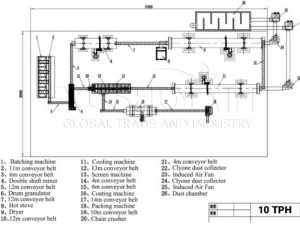
30 Tons per Hour Powdered Carbon-Based Fertilizer Production Line

Introduction

In response to the growing demand for sustainable agricultural practices, the 30 tons per hour powdered organic fertilizer production  is designed to efficiently produce high-quality carbon-based fertilizers. This production line integrates advanced technology to ensure optimal productivity, cost-effectiveness, and environmental sustainability. And if you have any things want to know, you can come my web: https://www.charbasedfertilizermachine.com/product/organic-fertilizer-manufacturing/

Raw Material Handling and Preparation

Raw Material Storage

  • Raw Materials: Biochar, organic waste, minerals, additives
  • Storage Facilities: Silos, bunkers, covered storage areas
  • Material Handling Equipment: Front-end loaders, conveyors, hoppersCrushing and Grinding

Crushing and Grinding

  • Equipment: Jaw crushers, hammer mills, roller mills
  • Purpose: Reduce the size of raw materials for easier mixing and processing

The crush process and grind process are more important process in organic fertilizer making.

Mixing and Blending

 Batch Mixers

  • Types: Ribbon blenders, paddle mixers
  • Function: Homogenize the raw materials to ensure a consistent final product

 Continuous Mixers

  • Types: Twin-shaft mixers, rotary drum mixers
  • Function: Provide a continuous and consistent blending of materials. If you want your organic fertilizer make more fine, then you can buy theses machines when you make powdered organic fertilizer.

    Screening and Grading

     Vibrating Screens

    • Function: Separate granules based on size to ensure uniformity
    • Equipment: Multi-deck vibrating screens

     Oversize and Undersize Granule Handling

Cooling

Secador de tambor rotativo

Rotary Coolers

  • Function: Reduce the temperature of the granules post-drying
  • Purpose: Ensure safe storage and packaging

Packaging

Weighing and Bagging

Equipment Used in an Organic Fertilizer Powder Production Line

An organic fertilizer powder production  involves several key pieces of equipment that work in a specific order to convert raw organic materials into finely powdered organic fertilizer. If you want to learn more details, you can come to my web. Here’s a detailed look at the equipment used and the typical sequence of operations:

  • Composting Turner:
    • Purpose: To compost and ferment organic materials, such as animal manure, agricultural residues, and other organic waste. And it is the most important process in the organic fertilizer powder making.
    • Types: Crawler turner, self-propelled turner, chain plate turner, etc.

Crusher:

  • Purpose: To crush composted materials into finer particles, making them easier to process in subsequent steps.
  • Types: Hammer mill, chain crusher, cage crusher, etc.

  • Screening Machine:
    • Purpose: To separate fine powdered materials from larger particles and impurities.
    • Types: Rotary drum screener, vibrating screen, etc.
  • Mixer:
    • Purpose: To blend different raw materials uniformly, ensuring a consistent nutrient composition in the final product.
    • Types: Horizontal mixer, vertical mixer, etc.

  • Granulator :
    • Purpose: If granules are also desired, a granulator can be included to form pellets from the powdered material. It also the important process if you want to make organic fertilizer powder production line.
    • Types: Disk granulator, rotary drum granulator, etc.

  • Dryer:
    • Purpose: To reduce the moisture content of the material, ensuring it is dry enough for further processing and storage.
    • Types: Rotary drum dryer, fluidized bed dryer, etc.
  • Cooling Machine:
    • Purpose: To cool down the dried fertilizer, making it easier to handle and preventing moisture absorption.
    • Types: Rotary cooler, counter-flow cooler, etc.
  • Packaging Machine:
    • Purpose: To pack the final powdered fertilizer into bags for storage, transport, and sale.
    • Types: Automatic packing machine, semi-automatic packing machine, etc.

Order of Operations in an Organic Fertilizer Powder Production Line

  1. Composting and Fermentation:
    • Organic materials are first collected and placed in a composting area.
  • A compost turner is used to regularly turn the materials, ensuring proper aeration and decomposition.
  • This process can take several weeks to months, depending on the materials and environmental conditions. And is the important process of making organic fertilizer powder prodcution.

  • Crushing:
    • Once the composting process is complete, the composted material is transferred to a crusher.
    • The crusher breaks down the compost into smaller particles, making it easier to handle and process further. This process can make organic fertilizer powder  more small and fine in manufacturing organic fertilizer process.


  • Screening:
    • The crushed material is then passed through a screening machine.
    • The screener separates fine powdered material from larger particles and impurities.
    • The oversized particles may be returned to the crusher for further processing.
  • Mixing:
      • The screened fine powder is transferred to a mixer.
      • Various raw materials, including nutrient additives, can be added to the mixer to ensure a consistent and balanced nutrient composition.
      • Granulation:
        • If granulated fertilizer is also desired, the mixed powder can be sent to a granulator.
        • The granulator forms the powder into pellets of uniform size.
        • This step is optional for a powder production line but essential for producing organic granular fertilizers.
      • Drying:
        • The mixed (and possibly granulated) material is then transferred to a dryer.
        • The dryer reduces the moisture content, ensuring the fertilizer is dry and stable for storage and packaging.
      • Cooling:
        • After drying, the material is typically hot and needs to be cooled down.
        • A cooling machine brings the temperature down, making the material easier to handle and preventing moisture absorption.
      • Packaging:
        • Finally, the cooled fertilizer powder is transferred to a packaging machine.
        • The packaging machine fills and seals bags of the desired size, ready for storage, transport, and sale.

    In the end, if you want to make organic fertilizer and you don’t know how to do it, you can visit my website:https://www.charbasedfertilizermachine.com/product/organic-fertilizer-manufacturing/

How to make organic compost?

Organic fertilizer fermentation is commonly carried out using aerobic methods. The trench composting system is a popular method used by organic fertilizer production companies. In this system, aerobic bacteria absorb, oxidize, and decompose waste materials under good ventilation and sufficient oxygen conditions. Through their metabolic activities, aerobic microorganisms convert a portion of the absorbed organic matter into simple inorganic substances, releasing energy needed for microbial growth activities and synthesizing new cellular cytoplasm, allowing microorganisms to continuously grow, reproduce, and produce more biomass.

Nitrogen NPK and organic fertilizer making

The Groove Fermentation System: A Popular Choice for Organic Fertilizer Production

Typically adopted by organic fertilizer manufacturing enterprises, the groove fermentation system is a sophisticated method that ensures optimal aeration and sufficient oxygen for the aerobic bacteria to thrive. This system is comprised of six major components: the pre-mixing system, the material distribution system, the turning and fermentation system, the material collection system, the aeration system, and the exhaust gas deodorization system. Each component plays a crucial role in maintaining the right moisture content, carbon-to-nitrogen ratio, and looseness in the compost, thereby facilitating oxygen diffusion and ensuring an effective fermentation process.

Understanding the Components of the Groove Fermentation System

1. Pre-mixing System

Prior to entry into the fermentation groove, chicken or pig manure and filler materials are blended using a mixer. This step is vital to achieving the appropriate moisture content (50%-60%) and carbon-to-nitrogen ratio (25:1 to 30:1), which are essential for successful composting.

2. Turning and Fermentation System

The design of the fermentation groove, whether it comprises a single or multiple grooves, is based on the span of the turning machine and the fermentation cycle, ensuring the structural integrity to withstand the pressures exerted during the process.

Click here for more details.

Groove Fermentation Workshop Construction

3. Material Distribution System

The system could either feature a single groove structure, where compost enters from one end and exits from the other, or a multi-groove setup, where an automatic distribution machine fills the front 3-4 meters of the fermentation groove, with materials moving 4 meters with each turn.

4. Material Collection System

In multi-groove structures, an automatic collection device gathers materials from the fermentation groove after each turn, moving them to the maturation workshop.

5. Aeration for Oxygen Supply

A high-pressure blower supplies oxygen forcefully, with air entering the compost pile from beneath through an aeration board.

6. Exhaust Gas Deodorization

Throughout the composting process, water vapor along with odorous gases like ammonia and hydrogen sulfide are emitted. Jet fans installed at the top of the composting workshop facilitate air flow, while exhaust outlets on the sides channel the odorous gases to biofilters for treatment.

activated carbon filter

7. Maturation Workshop

Post-fermentation, the compost, still not fully matured, undergoes a secondary maturation process to reach the desired level of decomposition.

Where to buy  High-quality Compost Machines?

Transitioning smoothly into the realm of composting solutions, it’s worth noting the advanced technology brought forward by Yushunxin’s compost machines. Yushunxin offers an array of compost turners and fermentation pots designed to cater to diverse composting needs, including rail type compost turner; windrow type (moving type compost turner, crawler type compost turner); and fermentation pots (vertical or horizontal). Each of these machines is engineered to optimize the aerobic fermentation process, ensuring efficient breakdown of organic materials into high-quality compost.

Compost Machines
Compost Machines

Conclusion

Finally, the method of organic fertilizer fermentation plays a pivotal role in sustainable agriculture, with aerobic fermentation being the most efficient and environmentally friendly option. The introduction of advanced composting machines by Yushunxin has revolutionized this process, making it more accessible and practical for various applications. These machines, with their innovative design and features, offer a promising solution to meet the growing demand for organic fertilizer. You can visit this website: https://www.fertilizerproductequipment.com/bio-composter-machine/

How to Make 2TPH Organic Fertilizer?

Organic fertilizer is a vital component for promoting healthy and sustainable agricultural practices. Unlike chemical fertilizers, organic fertilizers are derived from natural sources and provide numerous benefits to soil health, plant growth, and the environment. In this comprehensive guide, we will delve into the process of making 2TPH (2 tons per hour) of organic fertilizer. Whether you’re a small-scale farmer or a large agricultural operation, producing your own organic fertilizer can be a cost-effective and eco-friendly solution.

Chapter 1: Understanding Organic Fertilizers

Before diving into the production process, it’s essential to understand what organic fertilizers are and why they are beneficial. Organic fertilizers are made from organic materials such as compost, animal manure, biogas residues, and other natural substances. They improve soil structure, enhance nutrient availability, and promote beneficial microbial activity, leading to healthier crops and increased yields.

Chapter 2: Selecting Raw Materials

The first step in making 2TPH of organic fertilizer is selecting the right raw materials. The choice of raw materials depends on factors like availability, nutrient content, and the specific needs of your crops. Common organic materials used in fertilizer production include compost, poultry or livestock manure, crop residues, and green waste. Ensure that these materials are free from contaminants and pathogens.

Chapter 3: Composting

Composting is a crucial process in organic fertilizer production project. It involves the decomposition of organic materials into nutrient-rich humus. To start composting, create piles of your chosen raw materials, ensuring a balanced mix of carbon-rich (browns) and nitrogen-rich (greens) materials. Regular turning and aeration are essential to maintain proper decomposition and prevent odor issues. The composting process can take several months, so patience is key.

Chapter 4: Grinding and Shredding

Once your compost is fully decomposed and matured, it’s time to prepare it for further processing. Grinding and shredding the composted material into smaller particles is essential to ensure even distribution of nutrients in the final fertilizer blend. This step can be achieved using a grinder or shredder machine, depending on the scale of production.

Chapter 5: Mixing and Blending

Achieving a balanced nutrient profile in your organic fertilizer is vital for optimal plant growth. Mixing and blending various composted materials and additives can help achieve this balance. Consider adding supplementary ingredients like rock dust, bone meal, or fish meal to enhance the nutrient content. Use a mechanical mixer to ensure thorough blending of all components.

Chapter 6: Drying and Pelletizing

The next step is to reduce the moisture content of the mixed materials. Excess moisture can lead to clumping and deterioration of the fertilizer during storage. Drying can be accomplished using a rotary dryer or other suitable equipment. Once adequately dried, the material can be pelletized into uniform-sized granules for ease of application and efficient nutrient release. Pan Pellezizer Machine and rotary drum granulator are the best choice for you.

Chapter 7: Quality Control and Testing

Before packaging your organic fertilizer, it’s essential to conduct quality control tests. These tests include checking nutrient content, pH levels, and ensuring that the product is free from contaminants. Regular testing and quality assurance procedures are critical to producing a consistent and effective organic fertilizer.

Chapter 8: Packaging and Storage

Packaging your organic fertilizer in suitable containers is the final step in the production process. Ensure that the packaging materials are durable and can protect the product from moisture and pests. Proper labeling with nutrient content information and application instructions is also essential. Store the packaged fertilizer in a dry, cool, and well-ventilated area to maintain its quality.

Chapter 9: Application and Benefits

Now that you’ve successfully produced 2TPH of organic fertilizer, it’s time to reap the benefits. Organic fertilizer promotes soil health, reduces the risk of nutrient runoff, and enhances crop yields while minimizing the environmental impact. Follow recommended application rates and methods to maximize the positive effects on your crops and soil.

Conclusion

Producing 2TPH of organic fertilizer is a rewarding endeavor that contributes to sustainable agriculture and healthy ecosystems. By following the steps outlined in this guide, you can create high-quality organic fertilizer tailored to your specific agricultural needs. Remember that organic fertilizer production is a continuous process, and ongoing monitoring and adjustment are key to achieving consistent results. SX also can provide you with NPK fertilizer production project if you need.

How To Choose Machine For Cattle Manure Compost

Choosing the right machine for cattle manure composting is crucial to ensure efficient and effective composting of the organic material. Here are the steps and considerations to help you select the appropriate composting machine for cattle manure:

  1. Determine Your Requirements:

Define the scale of your operation. Are you composting on a small, medium, or large scale?

Consider the amount of cattle manure you need to compost regularly.

Determine the available space for composting and equipment setup.

  1. Composting Method:

Different composting methods include windrow compost production, in-vessel composting and groove type composting. Choose a method that suits your space, available resources, and desired composting method to process cow manure.

  1. Key Considerations:

  • Aeration and Mixing: Effective aeration and mixing are important for proper decomposition. Choose a machine that provides sufficient agitation to ensure oxygen supply and uniform mixing of materials. SX compost machine for cow manure processing is an ideal choice.
  • Moisture Management: Look for a machine that helps maintain the right moisture levels within the compost pile. Proper moisture content is essential for microbial activity. So you can compost cow manure quickly.
  • Temperature Control: Some machines, particularly in-vessel systems, offer better temperature control, which can speed up the composting process and eliminate pathogens.
  • Size and Design: Ensure the machine fits within your available space and is designed for easy loading and unloading of materials.
  • Turner Type: If opting for a compost turner (common in windrow composting), consider options like a self-propelled, tractor-mounted, or wheel-type turner based on your specific needs.
  • Durability and Maintenance: Choose a machine that is built to withstand the demands of composting and requires minimal maintenance. Go here to learn more.
  1. Budget and Costs:

Evaluate your budget for cattle manure fermentation equipment purchase, installation, and ongoing operation.

  1. Environmental Considerations:

Consider the environmental impact of the chosen composting method and machine. Some methods may require more energy or resources.

  1. Training and Expertise:

Consider the level of expertise required to operate the machine. Ensure your team is trained to use the equipment effectively.

  1. Manufacturer Reputation:

Choose equipment from reputable manufacturers known for producing reliable composting machines.

  1. Space Requirements:

Some machines, like in-vessel systems, may require less space, while windrow systems need adequate outdoor area.

In-vessel compost machine
  1. Future Expansion:

Consider whether the chosen machine can accommodate future increases in your composting operation.

  1. Regulatory Compliance:

Ensure that the chosen equipment meets local regulations and standards for waste management and aerobic composting.

  1. Expert Consultation:

If needed, consult experts or professionals in the field of composting to guide your decision.

By carefully evaluating these factors, you can choose the right composting machine for cattle manure that aligns with your production goals, resources, and environmental considerations. You can visit https://fertilizerequipmentmanufacturer.com/how-to-make-compost-with-cow-dung/ for reference.

how to compost pig manure

Composting pig manure is an effective way to transform a waste product into a valuable resource. Pig manure is high in nitrogen, phosphorus, and potassium, making it an excellent source of nutrients for plants. However, it can also be a source of pollution if not managed properly. In this article, we will discuss the steps for composting pig manure to create a nutrient-rich soil amendment for your garden.

Aniaml Manure for Organic Fertilizer Production

Step 1: Collecting Pig Manure

The first step in composting pig manure is to collect it. Pig manure can be collected using a shovel or a manure scraper. It is important to collect only the manure and not the bedding material, as the bedding material will slow down the composting process. Pig manure can be collected in a pile or a bin. If collecting in a pile, it is recommended to turn the pile regularly to ensure proper aeration and decomposition.

Step 2: Preparing the Composting Site

The composting site should be located in a well-drained area and away from water sources, such as streams or ponds. The site should be sunny, as the heat from the sun will help to accelerate the composting process. The composting site should be level and have good air circulation. The site should be prepared by removing any grass or vegetation, and a layer of gravel or wood chips should be added to the bottom to aid in drainage.

Step 3: Building the Compost Pile

The compost pile should be built in layers, starting with a layer of dry, carbon-rich material such as straw or leaves. This layer should be about 6 inches thick. Next, add a layer of pig manure, about 2 to 3 inches thick. Repeat this layering process until the pile is about 3 to 4 feet tall. The top of the pile should be covered with a layer of straw or leaves to help retain moisture.

Step 4: Maintaining the Compost Pile

The compost pile should be kept moist but not wet. If the pile is too wet, it may become anaerobic, which will slow down the composting process and create an unpleasant odor. The pile should be turned regularly to ensure proper aeration and decomposition. The pile should be turned every 3 to 5 days, or when the internal temperature of the pile drops below 100°F. The internal temperature of the pile can be measured using a compost thermometer.

Step 5: Harvesting the Compost

The compost pile will be ready to harvest when it has decomposed into a dark, crumbly, soil-like material. This process can take anywhere from 6 to 12 months, depending on the size of the pile and the environmental conditions. To harvest the compost, the pile should be turned onto a tarp or into a wheelbarrow. Any large pieces of material should be removed, and the compost should be screened to remove any remaining debris.

Windrow Compost Turner

In conclusion, composting pig manure is an effective way to transform a waste product into a valuable resource. By following these simple steps, you can create a nutrient-rich soil amendment for your garden while reducing waste and preventing pollution. Remember to always wear gloves and wash your hands thoroughly after handling pig manure. Happy composting!

Of course, you can check this page for more details about the design and structure of the pig manure machine!

How to Compost Pig Manure

How to use organic fertilizer fermentation tank to compost in your production line

Organic fertilizer fermentation tanks are useful tools for composting organic materials into nutrient-rich fertilizers. Here are the basic steps for using an organic fertilizer fermentation tank in your production line.


Choose your materials

The first step in using an organic fertilizer fermentation tank is to choose the materials you will compost. This can include kitchen scraps, yard waste, and other organic materials. It’s important to ensure that your materials are free of contaminants and that you have a good balance of carbon-rich and nitrogen-rich materials.


Load the tank

Once you have your materials, load them into the fermentation tank. It’s important to fill the tank to the recommended level, as overfilling can prevent proper airflow and hinder the composting process in your fertilizer production line.

Add a starter

To help jumpstart the composting process, add a starter to the tank. This can include composted material by windrow compost turner in SX, animal manure, or a commercial compost starter.


Monitor the temperature

Composting generates heat, and it’s important to monitor the temperature inside the fermentation tank to ensure that it stays within the ideal range. This can typically range between 120-160°F (49-71°C), depending on the materials being composted.


Mix the materials

Periodically mixing the manure materials in the fermentation tank can help promote even decomposition and prevent the formation of hotspots that can slow down the composting process.


Wait for the compost to mature

Depending on the materials being composted and other factors such as temperature and humidity, the compost can take anywhere from several weeks to several months to mature. Once the compost is fully decomposed and has a dark, crumbly texture, it’s ready to use. Click to read more.


Remove the compost

When the compost is ready, it can be removed from the fermentation tank and used as a nutrient-rich fertilizer for your plants.

Overall, using an organic fertilizer fermentation tank can be a highly effective way to turn organic materials into valuable fertilizer. By following these basic steps, you can optimize the composting process and produce high-quality compost for your production line. Therefore, you can visit https://www.fertilizerproductionproject.com/organic-fertilizer-fermentation-tank/ for your reference.

How To Choose Right Organic Compost Turner

How can you choose the best organic fertilizer compost turner is one of the things that a lot of people want to focus on. The reason is simple, a good organic fertilizer compost turning machine is one of those important machines your business needs, and it can actively make a huge difference. Here you have a few great tips to help you choose this properly.

Organic fertilizer compost turner functions

Upon selecting the organic fertilizer compost turner, you want to ensure that it features all the functions you need. The idea here is to have a mixing function to ensure everything is mixed adequately. You also want to see if it can adjust the temperature for raw material piles, something that’s really important to think about in a situation like this. Other features include things like adjusting the moisture and also boosting the permeability of the ingredient piles. You also want to realize the special requirement of the composting process too. Click here to know more 

What kind of organic fertilizer compost turner should you use?

There are various options to keep in mind, and they all come with a large variety of features. These include things like a hydraulic window turner, a groove type turner, a self propelled turner and so on. The idea here is to understand how each organic fertilizer compost turner works and which one is going to give you the better value and quality for the money.

Wheel type compost machine for large scale fertilizer fermentation

That’s why it makes a lot of sense to think about it and ensure that it delivers the right experience. It will be worth the investment, so try to keep that in mind when you want to buy this type of product. We are firm believers that the best organic fertilizer compost turners are durable and reliable, so the investment is indeed worth it. Here, SX fertilizer compost turning equipment is an ideal choice

You do want to check warranty too, just to ensure you have some assistance in case anything goes wrong. On top of that, adding in any safety features is important and certainly a thing that people really want to think about as much as possible. That on its own can make it well worth it all the time,

Conclusion

Yes, selecting the best organic fertilizer compost turner can take a bit of a trial and error. Then again, it’s going to be worth it since it conveys an extraordinary experience and quality. Rest assured that if you pick the best organic fertilizer compost turner, it can be a valuable asset for your business! If you need it, you can check https://fertilizerequipmentmanufacturer.com/organic-fertilizer-compost-turner/ to buy suitable compost turner.