Introduction:
Chicken manure, often viewed as waste, holds immense potential as a valuable resource in making biochar fertilizer. By harnessing the power of carbonization, we can transform this abundant waste into a nutrient-rich fertilizer. In this blog, we will explore two common processes and equipment for making carbon fertilizer from chicken manure, catering to both those who need to produce carbon from scratch and those who already have access to carbon material.
Carbonization Process:
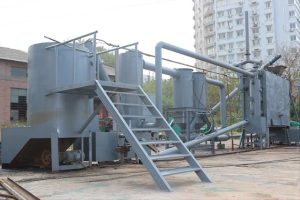
For those without access to carbon material, the first step involves the carbonization of organic materials such as coconut shells, straw or chicken dung using a continuous carbonization furnace. This furnace operates on the principle of thermal decomposition, converting organic matter into carbon. With a capacity of about 500kg/h, materials containing less than 10% per ton can yield approximately 280kg-310kg of final carbon products.

Adding Carbon Powder:
Alternatively, if the customer already possesses carbon material, the process becomes simpler. Carbon powder is added to the chicken manure, creating a carbon-based fertilizer. This method skips the carbonization step and directly incorporates carbon into the mixture. That’s why you need an efficient blender. We recommend a double shaft mixer.
Common Processes:
Both approaches follow a series of common steps to convert chicken manure into carbon-based fertilizer:
Composting:
Chicken manure and biochar fertilizer’s making need to undergoes a composting process to break down organic matter and eliminate pathogens. So you need a composter, we recommend our self-propelled tumbler. You can click our web to get more information abut how to compost : https://www.charbasedfertilizermachine.com/2024/03/30/biochar-making-process/
Mixing:
Carbon material, whether freshly carbonized or in powder form, is thoroughly mixed with the composted chicken manure. This ensures uniform distribution of nutrients.
Crushing:
The making of chicken dung and biochar fertilizer may undergo crushing to achieve a finer consistency, facilitating subsequent processing. So we recommend the new-type organic fertilizer crusher.
Granulating:
The crushed mixture is formed into granules, enhancing its usability and ease of application in the field. That’s why we recommend disc pelletizer.
Screening:
Carbon-based fertilizer granules from chicken manure are screened to remove any oversized or undersized particles, ensuring product consistency.
Packaging:
The final fertilizer product is packaged into appropriate containers for distribution and use by farmers. Our company has palletizers and packaging machines, both of which save time and increase efficiency.
How to compost quickly:
To compost quickly, focus on optimizing temperature, humidity, and ventilation. Maintain a temperature range of 45°C to 60°C, with humidity controlled at 55% to 60%. Adequate ventilation is crucial for supplying oxygen to microorganisms and promoting decomposition. Turn the compost regularly to aerate it and distribute heat evenly. By ensuring these conditions, you accelerate the composting process, yielding nutrient-rich fertilizer in a shorter time frame. Composting not only efficiently recycles organic waste but also produces a sustainable fertilizer rich in essential nutrients, promoting healthier soil and plants while reducing environmental impact. If you need to compost tips, you can click here to learn more.
What are the advantages of our equipment
Environmental Sustainability:
Our equipment utilizes advanced carbonization technology to convert organic waste, such as chicken manure, into high-quality charcoal-based fertilizer. This process not only reduces environmental pollution from organic waste but also promotes a circular economy by efficiently utilizing resources.
Efficient Production:
With high production capacity, our equipment swiftly transforms organic waste into fertilizer. The continuous operation of our carbonization furnace ensures consistent production rates, processing approximately 500 kilograms of raw material per hour.
Cost-Effectiveness:
Compared to traditional fertilizer production methods, charcoal-based fertilizer production offers energy and cost savings. Additionally, our equipment facilitates the conversion of waste into valuable products, reducing waste management costs.