What Is the Cost Difference Between Pelletizing and Granulating in NPK Fertilizer Production?

In modern NPK fertilizer manufacturing, production technology and machinery selection directly affect total fertilizer plant cost. A fertilizer producer who plans a compound fertilizer production line must carefully analyze the cost difference between pelletizing and granulating processes. Both methods transform powder materials into uniform particles, yet they require different equipment configurations, energy inputs, and maintenance budgets. The comparison between pelletizing and granulating becomes a key factor in determining the final NPK fertilizer production plant cost and long-term economic efficiency.

A complete NPK fertilizer production line often includes raw material crushing, batching, mixing, granule-forming, drying, cooling, screening, and packaging sections. Each stage influences the material flow and investment scale. Therefore, understanding the specific requirements of pelletizing or granulation machinery helps optimize plant design and reduces unnecessary fertilizer factory cost during setup and operation.


Raw Materials and Their Role in Compound Fertilizer Granule or Pellet Production

Raw material characteristics determine process selection and production efficiency. Common raw materials for compound or NPK fertilizer production include urea, ammonium sulfate, ammonium chloride, potassium chloride, ammonium nitrate, monoammonium phosphate (MAP), diammonium phosphate (DAP), and various micronutrient powders. These sources provide balanced nitrogen, phosphorus, and potassium components necessary for NPK compound fertilizer manufacturing.

Different materials show different moisture contents, solubility, and hardness. For example, urea and potassium chloride dissolve easily and suit granulating procedures based on drum granulators or rotary wet granulation equipment, while MAP and DAP perform better in dry granulation lines with double roller extrusion granulators. When the raw materials contain more crystal particles or harder substances, a crushing machine and precise batching machine become necessary to maintain consistent granule formation. The compatibility between raw material properties and production machinery determines not only granule quality but also the compound fertilizer manufacturing plant cost related to energy consumption and equipment wear.

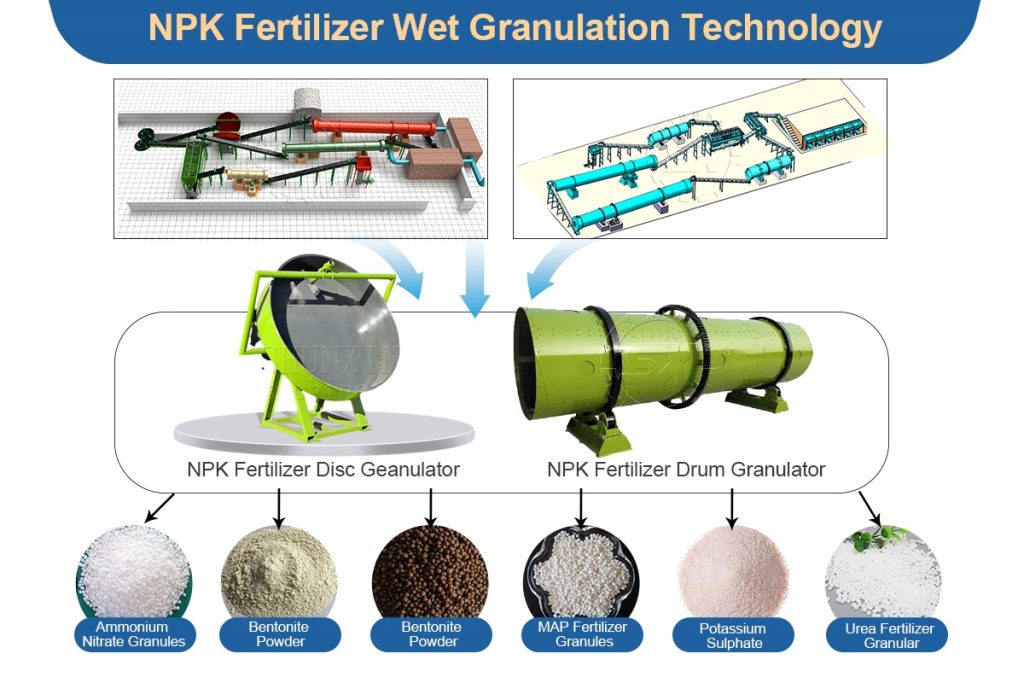
NPK Mixtures Wet Granulation Technology


Pelletizing vs. Granulating: Which Process Brings Higher NPK Fertilizer Plant Setup Cost?

Pelletizing and granulating show distinct differences in mechanical design and investment scale. A pelletizing line usually employs a pelletizer or pellet making machine that compresses powder material into dense pellets. This procedure often requires higher energy input and stronger mechanical pressure. It produces pellets with smooth surface and high bulk density, suitable for long-distance transport. However, the stronger compression and drying process increase the fertilizer plant cost, mainly due to higher energy use and equipment abrasion.

Granulation, on the other hand, forms granules by agglomeration and rolling. Disc granulators, drum granulators, or double roller extrusion granulators are typical choices in NPK fertilizer granulation production lines. Granulating equipment consumes less energy than pelletizing because it relies on rolling or extrusion instead of high compression force. Consequently, granulating lines usually show lower NPK fertilizer production plant setup cost and reduced maintenance expenses. Nevertheless, pelletizing offers better particle strength and more uniform shape, which can improve product image for high-end compound fertilizer markets. The selection depends on expected output, product type, and target market.


Additional Machines That Affect Compound Fertilizer Manufacturing Cost

Besides granulators or pelletizers, several auxiliary machines influence total fertilizer factory cost. A rotary drying machine and cooling machine help stabilize granule moisture and prevent caking. A screening machine separates qualified granules from oversized or undersized particles, ensuring uniform product quality. The packing machine, designed for automatic weighing and sealing, improves packaging efficiency and reduces labor cost. Each additional piece of equipment increases initial NPK fertilizer plant setup cost but enhances production stability and long-term output capacity.

Integrating these machines properly helps a fertilizer producer achieve balanced investment and sustainable operation. The overall fertilizer manufacturing procedure becomes more energy-efficient, lowering per-ton production cost over time. Therefore, a project designer must calculate not only equipment purchase price but also long-term operation expense to achieve optimal fertilizer plant cost performance.


Conclusion

In summary, the cost difference between pelletizing and granulating depends on material properties, target product quality, and equipment configuration. Pelletizing requires higher compression equipment and energy, leading to a larger fertilizer production plant cost. Granulating, in contrast, provides a more economical setup with lower operation cost, suitable for many compound fertilizer manufacturers seeking balanced investment and efficiency.

A professional fertilizer equipment manufacturer such as Yushunxin supplies complete NPK fertilizer production lines, including disc granulators, double roller extrusion granulators, rotary drum granulators, rotary dryers, and screening machines. Reliable machinery support enables stable granulation or pelletizing performance and helps fertilizer producers reduce overall NPK fertilizer plant cost while maintaining consistent product quality. You can visit: https://www.fertilizerproductequipment.com/npk-fetilizer-plant-cost/

How Do Manufacturing Processes Affect NPK Fertilizer Production Costs?

The efficiency of manufacturing processes plays a critical role in determining the costs associated with the production of NPK (Nitrogen, Phosphorus, and Potassium) fertilizers. Understanding how various factors influence production expenses enables fertilizer manufacturers to streamline operations, improve profitability, and enhance product quality. This blog explores the raw materials suitable for NPK fertilizer production, the importance of specific machinery in the production line, and how these elements collectively impact overall production costs.

What Raw Materials Are Suitable for NPK Fertilizer Production?

The choice of raw materials directly impacts the cost structure of NPK fertilizer production. Commonly used raw materials include ammonium sulfate, urea, triple superphosphate, potassium chloride, and various micronutrients. Each of these raw materials contributes essential nutrients necessary for plant growth, and their availability can significantly influence the production costs.

For instance, ammonium sulfate is frequently used as a nitrogen source due to its high nutrient content and reasonable cost. Similarly, potassium chloride serves as a key potassium source and is widely available, which helps in keeping production costs manageable. The selection of these materials should also take into account their procurement costs, transportation fees, and storage expenses. By optimizing the raw material choices, manufacturers can enhance their competitive edge in the fertilizer market.

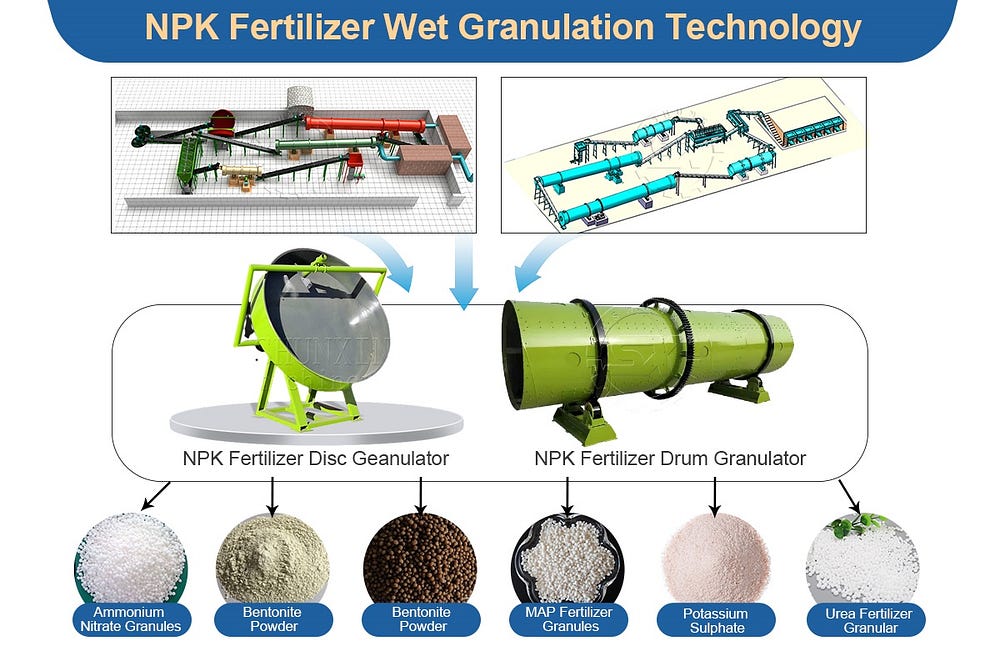
NPK Mixtures Wet Granulation Technology

How Do Machinery Features Impact Fertilizer Production Costs?

The selection and characteristics of machinery directly affect the operational efficiency of an NPK fertilizer production line. Machines such as granulators, batching machines, and drying systems play crucial roles in the manufacturing process, each contributing to overall production costs.

For instance, a disc granulator is often employed for its ability to produce uniform granules efficiently. The granulation process is vital for ensuring that the NPK fertilizers are easy to apply and dissolve effectively in soil. A well-designed granulator enhances product consistency and reduces waste, leading to lower production costs over time.

Moreover, the inclusion of a rotary drying machine or a cooling machine can optimize the drying and cooling phases of the production process. This equipment helps in maintaining the quality of the final product while minimizing energy consumption. By investing in advanced machinery, manufacturers can achieve greater throughput with lower operational costs, which ultimately influences the overall npk fertilizer manufacturing plant cost.

What Role Do Production Procedures Play in Cost Management?

The production procedure adopted in NPK fertilizer manufacturing significantly influences cost management strategies. Efficient processes not only reduce waste but also improve the overall output of the production line. Implementing a systematic batching process, for example, ensures that the correct proportions of raw materials are used without excess, driving down raw material costs.

Additionally, integrating a screening machine into the production line allows for the removal of impurities, ensuring that only high-quality granules are packed. This step not only enhances product quality but also reduces the risk of returns, which can further lower overall costs. Streamlining production processes through automation and efficient workflow design can enhance productivity and reduce labor costs.

Conclusion

In conclusion, the manufacturing processes involved in NPK fertilizer production play a vital role in determining production costs. By carefully selecting suitable raw materials, investing in advanced machinery, and optimizing production procedures, manufacturers can significantly reduce their overall fertilizer plant setup cost. Understanding these elements allows for better planning and execution of production strategies, enabling companies to thrive in a competitive market.

For those looking to enhance their NPK fertilizer production capabilities and reduce costs, investing in high-quality equipment from a professional fertilizer equipment manufacturer like Yushunxin can make a substantial difference. Their range of machinery is designed to improve efficiency and product quality, thereby maximizing profitability in fertilizer production. You can visit: https://www.fertilizerproductequipment.com/npk-fetilizer-plant-cost/
Key Factors Influencing the Cost of Setting Up A NPK Fertilizer Manufacturing Plant

Setting up a NPK fertilizer production plant involves various critical factors that directly impact the overall cost. For investors and manufacturers considering this venture, understanding these factors is essential to make informed decisions. By analyzing the elements that affect the fertilizer plant setup cost, one can optimize investment and ensure efficient operation of the facility.

What Raw Materials Are Suitable for NPK Fertilizer Production?

The selection of raw materials is a fundamental aspect that influences the NPK fertilizer manufacturing plant cost. Common raw materials suitable for NPK fertilizer production include urea, ammonium nitrate, ammonium phosphate, potassium chloride, and micronutrients like zinc sulfate and boron. These components are blended to create customized fertilizer formulations that meet specific crop nutrition requirements. The availability, quality, and price of these raw materials directly affect the fertilizer factory cost. Additionally, sourcing raw materials locally can reduce transportation expenses, thereby impacting the overall plant setup cost.

NPK Mixtures Wet Granulation Technology

How Do Equipment Features Affect Granule Production Costs?

The machinery and equipment used in granule production play a significant role in determining the NPK fertilizer plant cost. Advanced granulating machines, such as granulators, pelletizers, and ball-making equipment, enhance production efficiency but may require a higher initial investment. Equipment features like automation, capacity, energy consumption, and durability are crucial considerations. For instance, investing in a high-capacity granulator can increase production output but also raises the initial fertilizer manufacturing plant cost. Balancing equipment features with budget constraints is essential to optimize production without excessively inflating the plant setup cost.

Why Is the Choice of Production Process Important for Cost Management?

The chosen production process or procedure significantly affects both operational efficiency and setup costs. Different granulation methods, including drum granulation, disc granulation, extrusion pelletizing, and blending processes, require specific machinery and technical expertise. The complexity and automation level of the production process can lead to variations in the compound fertilizer factory cost. A simplified production process may reduce initial costs but could impact product quality and operational efficiency. Therefore, selecting an appropriate production process that aligns with production goals is vital for managing the fertilizer plant setup cost effectively.

Conclusion

Understanding the factors that influence the cost of setting up a NPK fertilizer manufacturing plant is crucial for making strategic investment decisions. Raw material selection, equipment features, and production processes are key elements that determine the overall fertilizer manufacturing plant cost. By carefully evaluating these factors, investors and manufacturers can optimize costs while ensuring high-quality granule production. Partnering with a professional fertilizer equipment manufacturer, such as Yushunxin, provides expert guidance and customized solutions to establish an efficient and cost-effective fertilizer production facility. You can visit: https://www.fertilizerproductequipment.com/npk-fetilizer-plant-cost/