Tips For Cattle Manure Fertilizer Manufacturing

Manufacturing fertilizer from cattle manure involves several steps to ensure the production of high-quality, nutrient-rich fertilizer while minimizing environmental impacts. Here are some tips to consider for cattle manure fertilizer manufacturing:

1. Raw Material Collection and Preparation:

Collect fresh cattle manure and any additional organic materials required for the composting or fermentation process.

2. Nutrient Management:

According to local crop requirements, determine the nutrient content and composition of the cattle manure fertilizer. And develop suitable manure management systems for cattle. For example, consider mixing the manure with carbon-rich materials (such as straw, sawdust, or leaves) to achieve the optimal carbon-to-nitrogen ratio for composting.

3. Composting or Fermentation:

Composting or fermenting the cattle manure is crucial to break down organic matter, reduce pathogens, and enhance nutrient availability.
Turn the compost pile regularly to provide oxygen and ensure even decomposition. Monitor temperature and moisture levels.

4. Quality Control:

Regularly test the compost for temperature, moisture, and nutrient content to ensure proper decomposition and maturity.
Adjust the composting process if necessary to achieve optimal results.

5. Granulation or Pelletization:

If producing granulated cow dung fertilizer, consider using cow manure granulation equipment to form uniform fertilizer granules.
Ensure that the granules are of consistent size and composition. Click here to learn more

6. Drying and Cooling:

If required, dry the granulated fertilizer to reduce moisture content and prevent caking.
Allow the fertilizer to cool before packaging is a tip for faster cow manure fertilizer production..

7. Packaging and Storage:

Package the finished fertilizer in appropriate containers, such as bags or bulk storage.
Store the fertilizer in a dry, cool, and well-ventilated area to prevent deterioration.

8. Environmental Considerations:

Implement proper odor control measures to minimize nuisance odors.
Ensure that runoff and leachate from the manufacturing process are properly managed to prevent pollution.

9. Compliance with Regulations:

Familiarize yourself with local regulations regarding composting, fertilizer production, and waste management.
Ensure that your manufacturing process adheres to these regulations.

10. Worker Safety:

Provide appropriate personal protective equipment (PPE) for workers involved in the manufacturing process, especially during compost turning and equipment operation.

11. Record Keeping:

Maintain detailed records of the manufacturing process, including raw materials used, composting/fermentation parameters, testing results, and application rates.

12. Continuous Improvement:

Continuously monitor and evaluate your manufacturing process to identify areas for improvement and optimize efficiency and product quality.

By following these tips, you can effectively manufacture high-quality fertilizer from cattle manure, contributing to sustainable agriculture practices and soil enrichment. If you need cow manure fertilizer making, you can visit https://www.fertilizerbusinessplan.com/manure-management-systems-for-cattle/ for more information.

How to Make Organic Fertilizer in New Type Organic Fertilizer Granulator?

Organic fertilizer is gaining popularity among gardeners and farmers due to its environmentally friendly nature and ability to enhance soil fertility. One effective method of producing organic fertilizer is by using a New Type Organic Fertilizer Granulator. This innovative equipment not only helps in converting organic materials into high-quality fertilizer granules but also ensures a sustainable and eco-conscious approach to farming. In this guide, we will take you through the step-by-step process of making organic fertilizer using a New Type Organic Fertilizer Granulator, complete with detailed instructions and important tips.

new type granulator for making organic pellets

Step 1: Gather Your Ingredients

Before you begin the process of making organic fertilizer, it’s crucial to gather all the necessary ingredients. Organic materials such as kitchen scraps, yard waste, livestock manure, and crop residues are excellent choices. These materials contain essential nutrients that, when processed, will enrich the soil and promote plant growth.

Step 2: Pre-Treatment of Organic Materials

To ensure that the organic materials are in the optimal condition for granulation, pre-treatment is necessary. This may involve shredding or crushing larger materials, such as branches or crop residues, into smaller pieces. Smaller particles are easier to granulate and result in more uniform fertilizer pellets.

Step 3: Mixing and Fermentation

Proper mixing and fermentation of organic materials are crucial for creating high-quality organic fertilizer. Mix the various materials in appropriate ratios to achieve a balanced nutrient content. This mixture should then be left to undergo a controlled fermentation process. Fermentation not only breaks down complex organic compounds but also helps eliminate harmful pathogens, ensuring the safety of the final fertilizer product.

Step 4: Drying the Fermented Mixture

After fermentation, the mixture may contain excess moisture. Drying the fermented material is essential to achieve the right consistency for granulation. Spread the fermented mixture in a thin layer and allow it to dry naturally under the sun. Alternatively, a mechanical dryer can be used to speed up the drying process.

Step 5: Granulation Process

The highlight of this guide is the use of the New Type Organic Fertilizer Granulator for creating fertilizer granules. This advanced equipment utilizes high-speed rotary mechanical stirring force, combining the dried organic materials with a binder. As the materials are mixed and stirred, they form into small granules.

Step 6: Curing the Granules

Once the granulation process is complete, the newly formed fertilizer granules need to be cured. Curing involves allowing the granules to rest and stabilize, ensuring that they maintain their shape and nutrient content. This step usually takes place in a controlled environment with proper ventilation to prevent moisture buildup.

Step 7: Screening and Packaging

After curing, the fertilizer granules should be screened to separate any oversized or undersized particles. The screened granules are then ready for packaging. Use environmentally friendly packaging materials to maintain the organic and sustainable theme of the fertilizer. Clearly label the packages with the nutrient content and usage instructions.

Step 8: Application of Organic Fertilizer

The final organic fertilizer product can now be applied to your garden or farm. Follow the recommended application rates based on the specific needs of your plants. Organic fertilizer improves soil structure, enhances nutrient retention, and promotes microbial activity, leading to healthier plants and increased yields.

Conclusion

Making organic fertilizer using a New Type Organic Fertilizer Granulator is a rewarding and eco-conscious way to enhance soil fertility and plant growth. By following these step-by-step instructions, you can produce high-quality organic fertilizer that nourishes your crops while minimizing environmental impact. Remember, organic fertilizers not only benefit your garden but also contribute to the overall health of our planet. If you want to make organic fertilizer in this machine, you can but a new type stirring granulator production line in your factory.

Как превратить свиной навоз в органическое удобрение?

Превращение свиного навоза в органическое удобрение включает в себя процесс компостирования, при котором органические материалы разлагаются под воздействием микроорганизмов, тепла и влаги. Вот шаги, которые можно предпринять:

1. Сбор и подготовка навоза: Соберите свиной навоз и убедитесь, что в нем нет посторонних материалов, таких как пластик или металл. Лучше всего использовать навоз, смешанный с соломой или другими подстилочными материалами.

2. Измельчение: Если навоз не в достаточно мелкой форме, его можно измельчить, чтобы ускорить процесс разложения.

3. Смешивание с другими материалами: Желательно смешивать свиной навоз с другими органическими материалами, такими как солома, опилки, листья, чтобы обеспечить хороший баланс углеродных и азотных соединений. Это поможет ускорить процесс компостирования.

4. Создание компостной кучи: Сформируйте кучу из смешанных материалов на специальной компостной площадке или в контейнере. Размер кучи должен быть достаточно большим для поддержания тепла и влаги внутри.

Линия по производству органических удобрений в гранулах свиного навоза мощностью 10 000 тонн

5. Повороты и перекладывание: Регулярно перекладывайте и переворачивайте компостную кучу. Это поможет обеспечить хорошую циркуляцию воздуха и распределение влаги. Также это поможет ускорить процесс разложения.

6. Слежение за влажностью: Убедитесь, что компост всегда остается достаточно влажным, но не слишком мокрым. Влага важна для активности микроорганизмов.

7. Время компостирования: Процесс компостирования может занять несколько месяцев до года, в зависимости от условий, размера кучи и других факторов.

8. Завершение компостирования: Когда материалы полностью разложатся и превратятся в темную, крошечную массу, компостирование завершено. Получившийся компост можно использовать как органическое удобрение для почвы, чтобы улучшить ее плодородность и структуру.

Помните, что правильное компостирование требует внимания к деталям и поддержания оптимальных условий. Важно также соблюдать гигиенические стандарты, особенно если вы планируете использовать получившийся компост на плодовых и овощных культурах. Чтобы узнать больше о том, как использовать свиной навоз в качестве удобрения, посетите: https://www.sxmashina.com/liniya-po-proizvodstvu-poroshkoobraznykh-organicheskikh-udobreniy/

Línea de Fermentación y Compostaje a Gran Escala: Optimizando la Transformación de Estiércol en Fertilizantes Orgánicos de Calidad

Cuando se trata de utilizar el estiércol animal como un recurso valioso para enriquecer el suelo, la fermentación y el compostaje son pasos esenciales. Sin embargo, el proceso de fermentación es crucial, ya que el estiércol crudo puede contener compuestos dañinos para el crecimiento de las plantas. Entonces, ¿cómo podemos acelerar y facilitar este proceso en una escala más grande? Aquí es donde entran en juego nuestras máquinas especializadas, diseñadas para transformar los residuos en fertilizantes orgánicos de alta calidad.

Selección de Equipos para Compostaje y Fermentación a Gran Escala

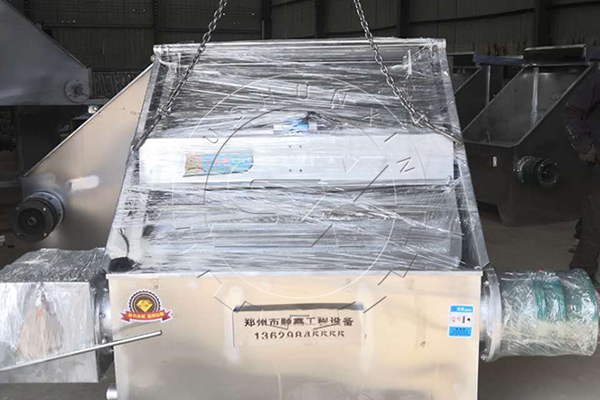
  1. Separador Sólido-Líquido para Controlar la Humedad: Los niveles de humedad en los excrementos animales sin procesar pueden ser muy elevados, lo que dificulta el proceso de fermentación. Aquí es donde el separador sólido-líquido juega un papel fundamental. Con capacidad de deshidratar hasta 30-40m³/h, esta máquina es ideal para escala grande. Elimina la humedad de manera eficiente, dejando el estiércol con un contenido de humedad óptimo del 30-50% antes del compostaje. Además, esta acción reduce el volumen y mejora la calidad del compost resultante.

    Separador Sólido-Líquido para Controlar la Humedad
    Separador Sólido-Líquido para Controlar la Humedad
  2. Cultivos Microbianos para Acelerar la Fermentación: Los cultivos microbianos son esenciales en el proceso de fermentación y descomposición de los materiales orgánicos. Al agregarlos después de la etapa de deshidratación, se acelera la descomposición y transformación de nutrientes en el compost. Estos cultivos, seleccionados por su capacidad de descomponer materia orgánica y convertirla en nutrientes asimilables, optimizan la calidad del fertilizante orgánico.
  3. Volteadora de Composta con Rueda para Eficiencia: La volteadora de ruedas es un elemento fundamental en el proceso de fermentación a gran escala. Con su amplio ancho de volteo de hasta 30 metros y profundidad de hasta 3 metros, es altamente eficiente. Su diseño de transmisión eficaz reduce el consumo de energía en un 70%, mientras que su alto grado de automatización aumenta la eficiencia al eliminar la intervención manual.

    Volteadora de Composta con Rueda para Eficiencia
    Volteadora de Composta con Rueda para Eficiencia
  4. Fermentación en Tanques para Espacios Limitados: Si el espacio es un desafío pero aún deseas llevar a cabo la fermentación a gran escala, los tanques de fermentación son tu respuesta. Con capacidades de hasta 150 metros cúbicos, estos tanques controlan el proceso de fermentación de manera automática, optimizando la calidad del fertilizante orgánico en un proceso rápido de solo 10 horas.
  5. Trituradora Vertical de Nuevo Tipo para Calidad del Fertilizante: Después de la fermentación, el fertilizante orgánico puede presentar problemas de aglomeración. Una trituradora adecuada es vital para garantizar la calidad. Nuestra trituradora vertical de nuevo tipo ofrece alta adaptabilidad, larga vida útil y facilidad en el reemplazo de piezas desgastables.

    Trituradora Vertical de Nuevo Tipo para Calidad del Fertilizante
    Trituradora Vertical de Nuevo Tipo para Calidad del Fertilizante

Los sistemas de fermentación y compostaje a gran escala implican la utilización de equipos especializados para maximizar la eficiencia y la calidad del producto final. Desde la deshidratación hasta la trituración, cada paso es crucial en la transformación del estiércol en fertilizantes orgánicos de alto valor. Adaptamos nuestras soluciones a las necesidades específicas de los clientes, proporcionando consultas y servicios profesionales para asegurar el éxito de tu proyecto.

How to Adopt Wet Granulation Process to Make Fertilizer?

Fertilizers play a pivotal role in enhancing agricultural productivity and ensuring food security. Among the various manufacturing processes, wet granulation stands out as an effective method to produce high-quality fertilizers with improved properties. This article delves into the intricacies of adopting the wet granulation process to manufacture fertilizers, outlining the steps, benefits, and considerations involved.

Introduction to Wet Granulation Process

Wet granulation is a widely employed technique in the pharmaceutical, chemical, and agricultural industries to convert fine powders into granules. In the context of fertilizer production, wet granulation involves the agglomeration of individual fertilizer components, such as nitrogen (N), phosphorus (P), and potassium (K), along with micronutrients and additives, into uniform granules. This process imparts several advantages to the final product, including improved flowability, reduced dustiness, and enhanced nutrient release characteristics.

Step-by-Step Guide to Wet Granulation for Fertilizer Production

  1. Material Selection: Begin by carefully selecting the raw materials for your fertilizer formulation. Consider factors such as nutrient content, solubility, and compatibility. It’s essential to strike the right balance to ensure optimal granulation and subsequent plant uptake.
  2. Mixing: Thoroughly mix the selected materials to create a homogenous blend. This step is critical to ensure uniform nutrient distribution throughout the final granules.
  3. Granulation Solution: Prepare a granulation solution by dissolving a binder, often a water-soluble polymer, in water. This solution will act as the adhesive that binds the powder particles together.
  4. Granulation Process: Introduce the granulation solution into the mixer containing the powdered fertilizer materials. Gradually add the solution while agitating the mixture. The binder will form bridges between particles, leading to granule formation. Hence, you can use rotary drum granulator equipment or disc pelletizer machine.
  5. Wet Screening: After granulation, the moist mass needs to be screened to obtain granules of the desired size range. Oversized or undersized granules can be recycled or adjusted during subsequent processing.
  6. Drying: The wet granules must undergo a drying process to reduce their moisture content to a suitable level, usually around 10%. This step is crucial to prevent caking during storage and transportation.
  7. Sizing and Sieving: Granules may undergo additional sizing and sieving to ensure uniformity in particle size, further improving their flowability and application properties.
  8. Coating (Optional): In some cases, a protective or controlled-release coating may be applied to the granules. This can enhance nutrient release patterns, increase shelf life, and minimize nutrient losses due to volatilization or leaching.
  9. Quality Control: Rigorous quality control measures should be implemented throughout the process to monitor granule size, nutrient content, and physical properties.
  10. Packaging: Once the granules meet the desired specifications, they can be packaged in appropriate containers for distribution and use.
Rotary Drum Pelletizer
disc pelletizer for organic fertilizer

Benefits and Considerations

The wet granulation process offers several benefits for fertilizer production:

  • Enhanced Nutrient Release: Granules produced through wet granulation tend to release nutrients in a controlled manner, optimizing their availability to plants.
  • Improved Handling and Application: Granules possess better flowability, reducing dust generation during handling and ensuring more uniform application in the field.
  • Customization: The process allows for flexibility in formulation and nutrient composition, catering to specific crop and soil requirements.
  • Environmental Considerations: Wet granulation can minimize nutrient losses, leading to a more environmentally sustainable fertilizer production process.

However, certain considerations should be taken into account:

  • Equipment and Infrastructure: Adopting wet granulation requires specialized equipment such as mixers, granulators, dryers, and sieves.
  • Binder Selection: The choice of binder and its compatibility with the fertilizer components is crucial for successful granulation.
  • Energy Consumption: Drying is an energy-intensive step in wet granulation, and optimizing energy usage is important.

Conclusion

The wet granulation process offers a valuable avenue for fertilizer manufacturers to produce high-quality, effective, and environmentally friendly products. By following the step-by-step guide and considering the benefits and challenges, fertilizer producers can adopt wet granulation to enhance their production processes and contribute to sustainable agriculture.

How To Choose Machine For Cattle Manure Compost

Choosing the right machine for cattle manure composting is crucial to ensure efficient and effective composting of the organic material. Here are the steps and considerations to help you select the appropriate composting machine for cattle manure:

  1. Determine Your Requirements:

Define the scale of your operation. Are you composting on a small, medium, or large scale?

Consider the amount of cattle manure you need to compost regularly.

Determine the available space for composting and equipment setup.

  1. Composting Method:

Different composting methods include windrow compost production, in-vessel composting and groove type composting. Choose a method that suits your space, available resources, and desired composting method to process cow manure.

  1. Key Considerations:

  • Aeration and Mixing: Effective aeration and mixing are important for proper decomposition. Choose a machine that provides sufficient agitation to ensure oxygen supply and uniform mixing of materials. SX compost machine for cow manure processing is an ideal choice.
  • Moisture Management: Look for a machine that helps maintain the right moisture levels within the compost pile. Proper moisture content is essential for microbial activity. So you can compost cow manure quickly.
  • Temperature Control: Some machines, particularly in-vessel systems, offer better temperature control, which can speed up the composting process and eliminate pathogens.
  • Size and Design: Ensure the machine fits within your available space and is designed for easy loading and unloading of materials.
  • Turner Type: If opting for a compost turner (common in windrow composting), consider options like a self-propelled, tractor-mounted, or wheel-type turner based on your specific needs.
  • Durability and Maintenance: Choose a machine that is built to withstand the demands of composting and requires minimal maintenance. Go here to learn more.
  1. Budget and Costs:

Evaluate your budget for cattle manure fermentation equipment purchase, installation, and ongoing operation.

  1. Environmental Considerations:

Consider the environmental impact of the chosen composting method and machine. Some methods may require more energy or resources.

  1. Training and Expertise:

Consider the level of expertise required to operate the machine. Ensure your team is trained to use the equipment effectively.

  1. Manufacturer Reputation:

Choose equipment from reputable manufacturers known for producing reliable composting machines.

  1. Space Requirements:

Some machines, like in-vessel systems, may require less space, while windrow systems need adequate outdoor area.

In-vessel compost machine
  1. Future Expansion:

Consider whether the chosen machine can accommodate future increases in your composting operation.

  1. Regulatory Compliance:

Ensure that the chosen equipment meets local regulations and standards for waste management and aerobic composting.

  1. Expert Consultation:

If needed, consult experts or professionals in the field of composting to guide your decision.

By carefully evaluating these factors, you can choose the right composting machine for cattle manure that aligns with your production goals, resources, and environmental considerations. You can visit https://fertilizerequipmentmanufacturer.com/how-to-make-compost-with-cow-dung/ for reference.

В чем преимущества ворошитель компоста гусеничный?

Ворошитель на гусеничном ходу также называется ворошителем на гусеничном ходу.Он имеет раздвижную конструкцию.После работы он образует новую полосовую кучу, и нет необходимости тратить рабочую силу на организацию компостной кучи. По сравнению с самоходным ворошителем компоста он имеет большую мощность. Ворошилка на гусеничном ходу имеет разумную структуру, сбалансированное усилие, простоту в обращении и лучшую адаптируемость к месту. В то же время этот ворошитель оснащен кабиной, которая может изолировать тепло и запах, создаваемые компостом, и очень удобна для оператора.

Функции:

1. Передовая технология: он имеет высокое накопление ферментированных материалов, большую мощность поворота и выброса, расстояние поворота составляет 0,8-1 м, а высота поворота составляет 0,6-1,8 м.

2. Сбалансированная мощность: используется поворотная муфта, используется плавный пуск, барабан поднимается и опускается за счет гидравлического давления, ферментация достаточна, а загрязнение небольшое.

3. Снижение затрат: он подходит для полосового компостирования, что может сэкономить инфраструктурные проекты, сэкономить место, сэкономить инвестиционные затраты и облегчить расширение.

Ворошитель компоста гусеничный в движении

4. Разумная структура: характерная конструкция гусеницы не только устраняет недостаток низкой производительности традиционного токарно-метательного станка, который использует только легкорельсовый транспорт, но также устраняет недостатки высокой стоимости обычных стоек и легкорельсового токарно-метательного станка, аксессуары для трансмиссии.

5. Удобное управление: низкое энергопотребление, простота управления, сокращение времени работы, короткий цикл ферментации и т. д.

Принцип работы: когда гусеничный токарь работает, двигатель запускается оператором в кабине, и следующие функциональные инструкции могут быть реализованы путем манипулирования группой гидравлических клапанов: управляйте штоком клапана «шагающего двигателя», чтобы заставить машину двигаться вперед, назад и поворачиваться влево и вправо: управлять «роликом». Шток клапана «Роллинг Джейн подъемный цилиндр» позволяет помещать барабан в кучу на нужной высоте от земли, и барабан можно поднять на определенную высоту, что удобно для быстрого перемещения машины и перемещения рабочего места, а шток клапана «цилиндр сцепления двигателя» используется для реализации вращения и остановки барабана; Управляйте штоком клапана «изменение скорости двигателя хода», чтобы реализовать Переключение состояния двойной передачи на высокой и низкой скорости машины.

Чтобы узнать больше, посетите: https://www.sxmashina.com/voroshitel-komposta-gusenichnyy/