Как ведущий производитель оборудования для удобрений, мы с волнением представляем наше последнее нововведение в области устойчивого сельского хозяйства: производственная линия для порошкообразных органических удобрений. Этот прорыв является значительным шагом для поддержки экологически ответственных практик в сельском хозяйстве и удовлетворения растущего спроса на органическую продукцию.
Линия оснащена передовым оборудованием для измельчения и просеивания, которое позволяет производить однородный тонкий порошок, который легче хранить, транспортировать и использовать по сравнению с традиционными удобрениями. Весь процесс спроектирован таким образом, чтобы обеспечить эффективное компостирование и гранулирование при сохранении основных питательных веществ и полезных микроорганизмов, необходимых для богатой почвы.
Отличительной чертой нашей линии является ее экологичный подход. Она работает с минимальным потреблением энергии и соответствует строгим экологическим стандартам, тем самым уменьшая углеродный след от производства удобрений. Кроме того, линия разработана для простоты эксплуатации и обслуживания, обеспечивая производителям удобрений высокую производительность и низкие эксплуатационные расходы.
Мы гордимся тем, что представляем нашу линию для производства порошкообразных органических удобрений на переднем крае устойчивого развития в удобрительной индустрии. Наша цель – предоставлять фермерам правильные инструменты для повышения урожайности экологически чистым способом, и этот запуск является доказательством наших непрекращающихся усилий в достижении этой цели.
Poultry farming is a thriving industry that provides a significant source of protein for consumers worldwide. However, with the growth of poultry production comes a challenge – the disposal of poultry waste. Poultry waste, such as manure and bedding materials, can be a significant environmental problem if not managed properly. Fortunately, fertilizer making machines offer a sustainable and cost-effective solution for converting poultry waste into valuable organic fertilizers. In this blog, we will explore the benefits and process of poultry waste disposal by fertilizer making machines and how this innovative technology is transforming waste management in the poultry industry.
1. The Problem of Poultry Waste Disposal:
Poultry waste, including manure, feathers, bedding materials, and feed residues, can pose a range of environmental and health risks if not managed effectively. Improper disposal of poultry waste can lead to water and soil contamination, emissions of greenhouse gases, and the spread of pathogens and diseases. Traditional disposal methods, such as land application and landfilling, are often inefficient, costly, and unsustainable in the long run. Finding a sustainable solution for poultry poop management is crucial for the environmental sustainability of the poultry industry.
Poultry manure to fertilizer process
2. The Role of Fertilizer Making Machines:
Fertilizer making machines are specialized equipment designed to convert organic waste materials, such as poultry manure, into high-quality organic fertilizers through a process known as composting or fermentation. These machines utilize a series of processes, including shredding, mixing, fermentation, and granulation, to transform poultry waste into nutrient-rich organic fertilizers that can improve soil fertility, enhance crop productivity, and reduce the reliance on chemical fertilizers. Click here to learn more.
3. Benefits of Poultry Waste Disposal by Fertilizer Making Machines:
– Environmental sustainability: Fertilizer making machines provide a sustainable solution for poultry waste disposal by converting organic waste into valuable fertilizers, reducing the environmental impact of waste disposal and promoting a circular economy approach. – Nutrient recycling: Poultry waste contains valuable nutrients, such as nitrogen, phosphorus, and potassium, that can be recycled and reused as organic fertilizers to improve soil health and crop yields. – Cost-effective: By converting poultry waste into organic fertilizers, farmers can reduce their dependence on chemical fertilizers, lower input costs, and improve the overall profitability of their operations. – Pathogen reduction: The poultry manure composting process carried out by fertilizer making machines helps to eliminate pathogens, weed seeds, and odors present in poultry waste, making the resulting fertilizers safe and beneficial for agricultural use. – Soil health improvement: Organic fertilizers produced from poultry waste by fertilizer making machines can enhance soil structure, increase microbial activity, and promote soil health, leading to sustainable and productive agricultural practices.
4. Applications of Organic Fertilizers from Poultry Waste:
– Crop production: Organic fertilizers derived from poultry waste can be used to enhance soil fertility, promote plant growth, and increase crop yields in a wide range of agricultural crops, including fruits, vegetables, grains, and legumes.
– Horticulture: Organic fertilizers are well-suited for use in horticultural applications, such as gardening, landscaping, and ornamental plant cultivation, to improve soil quality, support plant growth, and reduce environmental impact. – Sustainable agriculture: Organic fertilizers from poultry waste play a vital role in sustainable agriculture practices by reducing chemical inputs, minimizing environmental pollution, and promoting soil conservation and biodiversity.
Conclusion:
Fertilizer making machines offer a sustainable and innovative solution for poultry waste disposal by converting organic waste into valuable organic fertilizers that benefit both the environment and agricultural productivity. By embracing this technology, poultry farmers can effectively manage their waste streams, reduce environmental impact, and enhance soil health and crop yields. Poultry waste disposal by fertilizer making machines represents a win-win solution that turns waste into wealth and contributes to a more sustainable and resilient food production system for future generations. If you are interested in poultry manure waste disposal machine, you can visist https://www.manuremanagementplan.com/poultry-waste-disposal-system/ for more details.
NPK fertilizer is a blend of nitrogen (N), phosphorus (P), and potassium (K) that is essential for plant growth. The production of NPK fertilizer is a complex process that involves several steps to ensure that the final product is of high quality and suitable for enhancing soil fertility.
The Raw Material Preparation
The first step in the NPK fertilizer production line is preparing the raw materials. This involves procuring the necessary nitrogen, phosphorus, and potassium sources. Often, these materials come in various forms like ammonia for nitrogen, rock phosphate for phosphorus, and potash for potassium. These materials are carefully measured and mixed in specified proportions to achieve the desired N-P-K ratio for the intended fertilizer formulation.
Granulation Process
Once the raw materials are blended, the mixture is moved to the granulation process. Granulation is crucial as it converts the fine powdered materials into larger, easy-to-handle and -apply granules. There are several granulation methods, such as drum granulation machinery, disc granulation, or extrusion granulator machine, each with its advantages and suitability for different kinds of raw materials.
Drying and Cooling Systems
After granulation, the next step is the drying process. The granules are passed through a dryer to reduce their moisture content, thus ensuring their stability and preventing caking. Post drying, the granules are often cooled to room temperature using a cooler. Cooling is necessary to help the granules retain their shape and increase their shelf life.
Quality Control and Enhancement
Quality control is paramount in NPK fertilizer production. The granules are sieved to separate the correctly sized particles from the oversized or undersized ones. The latter may be crushed and recycled back to the granulation process. Coating agents might be applied to the granules to prevent dust, reduce caking, and enhance their appearance.
Packaging and Storage
The final step in the production line is packaging the NPK fertilizer into bags or bulk containers for transportation and sale. Proper storage is vital to maintain the quality of the fertilizer. The product should be kept in a cool, dry place away from direct sunlight and moisture.
Innovation and Environmental Considerations
Modern NPK fertilizer production lines are increasingly incorporating technological innovations for process optimization and to reduce environmental impact. This includes the use of advanced control systems for precise raw material input and waste reduction strategies to minimize the production line’s ecological footprint.
Conclusion
The production of NPK fertilizers is a critical component of modern agriculture, providing the necessary nutrients for crop growth and soil health. A well-designed NPK fertilizer production line ensures the efficient transformation of raw materials into high-quality fertilizers that meet the specific needs of plants and farmers alike. If you want to produce other compound fertilizer, we can also provide you with different solitions.
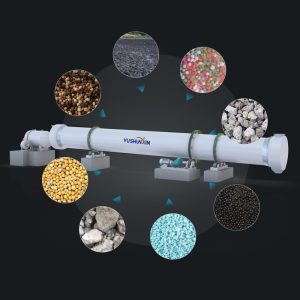
In the pursuit of efficient and effective drying solutions for the fertilizer industry, it proudly presents the rotary drum dryer. With its customization options and reliable performance, this dryer provides an array of benefits that position it as the optimal choice for fulfilling drying requirements.
Rotary Drum Dryer
Versatility and Customization
The fertilizer drum dryer is meticulously crafted to accommodate a diverse range of fertilizer materials, encompassing organic, inorganic, and compound fertilizers. Its adaptability allows seamless handling of various feedstock compositions, enabling the optimization of drying conditions for maximum efficiency. Whether dealing with powders, granules, or sticky materials, this dryer offers comprehensive solutions.
Enhanced Drying Efficiency
Equipped with an advanced rotary drum design, the dryer ensures exceptional heat transfer and ample drying space, leading to swift and uniform drying processes. This translates to reduced energy consumption and drying duration. By employing precise temperature and airflow controls, consistent moisture removal is achieved, ensuring the attainment of optimal moisture content for the fertilizer.
Cost-effective and Energy-efficient
Recognizing the significance of minimizing operational expenditures and conserving energy resources, the fertilizer drying process is meticulously engineered to deliver exceptional cost-effectiveness and energy efficiency. The innovative design enhances heat utilization, minimizes heat loss, and results in substantial savings on fuel costs. Moreover, the customizable drying parameters offer the flexibility to fine-tune the process, effectively eliminating unnecessary energy wastage, thereby promoting cost savings and sustainability.
Fertilizer Drying Production Line
Durability and Low Maintenance
The longevity of equipment is paramount for any business. The rotary dryer is constructed to endure the rigors of continuous operation in demanding environments. Utilizing high-quality materials, robust construction, and reliable components, this dryer ensures durability and longevity. Additionally, the user-friendly design and accessible features facilitate routine maintenance, mitigating downtime and maximizing operational productivity.
In the realm of customizable drying solutions for the fertilizer industry, the fertilizer dryer excels. Boasting versatility, enhanced efficiency, cost-effectiveness, and durability, it strikes an ideal balance for diverse drying needs. For the latest specifications and information, please refer to the official website: https://www.fertilizerdryer.com/drum-dryer-machine/