When freeze-dried food production grows from small orders to commercial supply, production efficiency becomes more important than simply owning a larger machine. Manufacturers need a system that can maintain stable batch cycles, reduce waiting time, and keep every processing stage connected.
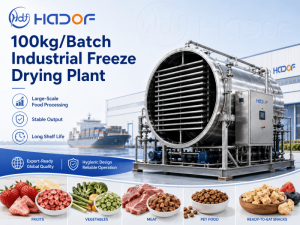
A 100kg/Batch Industrial Freeze Drying Plant provides a practical solution for businesses that need higher batch capacity and more organized production flow. Instead of focusing only on the freeze dryer itself, a commercial plant connects freezing, material transfer, drying, and packaging into one coordinated workflow.
HADOF can configure the production line according to your raw materials, production output, and factory space. This approach helps create a suitable system for stable commercial production without adding unnecessary equipment.
How Does a 100kg Batch Freeze-Drying Plant Improve Production Efficiency?
Batch capacity directly affects how often a factory needs to repeat loading, unloading, and preparation operations.
A smaller freeze dryer may require more cycles to complete large orders. Each cycle requires product preparation, tray loading, freezing, drying, unloading, and cleaning. When production demand increases, repeated operations can consume more labor and reduce daily efficiency.
A 100kg/Batch Industrial Freeze Drying Plant helps manufacturers process more material in each batch. The larger production capacity reduces repeated batch turnover and creates a smoother production schedule.
This advantage becomes more valuable when factories need to maintain regular supply for customers, distributors, or commercial food brands.
Why Does Reducing Waiting Time Matter in Industrial Freeze Drying?
Commercial production depends on the connection between each stage.
A freeze dryer may have sufficient capacity, but the entire line can slow down if raw materials arrive too late or finished products wait too long after drying.
For example, products may wait before entering the freeze dryer because the freezing stage cannot prepare enough material. Finished products may also accumulate if the packaging process cannot match the drying output.
A well-designed production system reduces these delays by connecting each process in the correct order.
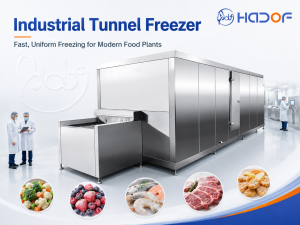
An industrial tunnel freezing machine can support continuous pre-freezing before freeze drying. This helps prepare frozen materials in advance and allows the freeze dryer to maintain a more stable production rhythm.
The purpose of pre-freezing equipment is not only faster freezing. It also helps balance the workflow between preparation and freeze drying.
How Do Food Conveyors Improve Material Transfer Efficiency?
Material transfer becomes a major factor when production volume increases.
Manual movement between cleaning, freezing, freeze drying, and packaging areas can increase labor requirements and create unnecessary waiting time.
A food conveyor system helps connect different processing stages and creates a more continuous production flow.
For a 100kg batch production system, conveyors can support smoother movement of trays, raw materials, or finished products between different areas. This reduces repeated manual handling and helps operators focus on production management instead of frequent transportation tasks.
A practical conveyor layout also helps factories maintain cleaner and more organized workshops.
How Does Packaging Capacity Affect the Overall Production Rhythm?
The freeze-drying process does not end when the drying cycle finishes.
After unloading, finished products still need inspection, handling, and packaging. If the packaging stage cannot match the output of the freeze dryer, finished products may wait and occupy valuable working space.
A suitable food packing machine helps manufacturers complete the final stage more efficiently.
Packaging equipment should match the production speed of the freeze-drying system. A balanced workflow reduces product waiting time and helps maintain consistent daily output.
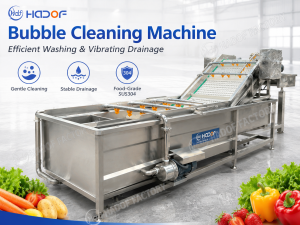
The complete production process should connect:
Raw material preparation → freezing → freeze drying → unloading → inspection → packaging
Each stage supports the performance of the next stage.
Why Should a 100kg Freeze-Drying Plant Work as a Complete System?
A large freeze dryer alone does not guarantee high production efficiency.
Commercial manufacturers need to consider the relationship between equipment capacity, production timing, material movement, and factory layout.
For example:
- insufficient freezing capacity can delay the freeze dryer;
- slow material transfer can increase labor requirements;
- limited packaging speed can create finished-product accumulation;
- poor layout can increase unnecessary movement.
A complete freeze-drying production line helps connect different processes according to actual production requirements.
HADOF can combine freeze drying equipment with freezing, conveying, preparation, and packaging systems according to your raw materials, production capacity, and factory area.
How Does a 100kg Batch System Support Future Expansion?
A 100kg/batch freeze-drying plant provides a stronger foundation for businesses that want to move from small commercial production toward industrial-scale manufacturing.
It allows manufacturers to handle larger orders while maintaining batch-based flexibility. The system can also integrate additional equipment when production requirements increase.
The key advantage does not come only from processing more material in one batch. It comes from reducing repeated operations, improving equipment utilization, and creating a smoother production workflow.
A well-designed 100kg production system helps solve common commercial challenges such as long waiting periods, inefficient material transfer, production interruptions, and packaging delays.
Build a More Efficient Commercial Freeze-Drying Solution
A 100kg/Batch Industrial Freeze Drying Plant works as the core of a commercial freeze-drying system. When freezing, conveying, drying, and packaging stages connect properly, the entire production process becomes more stable and efficient.
HADOF provides customized freeze-drying solutions based on your raw materials, production requirements, and factory space. The right equipment combination helps manufacturers improve production flow and build a practical commercial freeze-drying operation.
If you need related customized services, please visit the HADOF Freeze Dryer homepage for more information: https://www.freezehadof.com/