How to Design a Compost Fertilizer Production Line

Designing an efficient compost fertilizer production line is the foundation of a profitable organic fertilizer business. Whether you are upgrading a small farm system or planning a full industrial plant, a clear design helps you control cost, quality, and future expansion.

Define Your Raw Materials and Capacity

Start by clarifying what materials you will process and how much you expect to handle per day. Many investors focus on chicken manure compostor solutions because poultry farms generate large volumes of nutrient‑rich waste. Others prioritize cow dung compost fertilizer production in dairy or cattle‑intensive regions.

Estimate daily tonnage (e.g., 5–20 tons/day) and moisture content. This determines the size of your composting system, fermentation area, and subsequent processing equipment.

Plan the Composting Process and Layout

Next, choose the composting method and workshop layout. You might use windrow, groove, or in‑vessel systems depending on land availability and automation level. When you select a compost fertilizer making machine for sale, consider turning frequency, fermentation time, odor control, and local environmental regulations.

Design a rational layout: raw material receiving area, pre‑treatment (crushing, mixing), composting zone, aging/storage, granulation line (if any), drying/cooling area, screening and packing. Ensure smooth material flow and minimize cross‑contamination.

Poultry manure composting

Select Core Equipment for Automation Level

Your chosen automation level directly affects labor cost and stability. An automatic compost fertilizer production line will include automatic batching systems, conveyors, turners, crushers, mixers, granulators, dryers, coolers, and packaging machines.

Discuss with industrial compost fertilizer making machine manufacturers about the appropriate models for your capacity. Focus on energy efficiency, wear‑resistant parts, maintenance convenience, and compatibility between different machines in the line.

Integrate Process Control and Quality Standards

A good design must also ensure consistent product quality. Plan for moisture monitoring, temperature tracking during fermentation, and screening to control particle size. If you intend to sell bagged or branded products, design sections for coating and precise weighing/packing.

For organic certification or specific market requirements, incorporate testing points for nutrients, pathogens, and heavy metals, and allocate storage areas for finished goods and quarantine stock.

Consider Turnkey Project and Future Expansion

For new investors or larger plants, a turnkey compost fertilizer production line project is often the most practical choice. Engineering teams can provide site planning, civil drawings, utility design (water, power, ventilation), equipment selection, installation, training, and after‑sales service in one package.

At the design stage, reserve space and power capacity for future expansion. Modular planning allows you to start with a medium‑scale line and upgrade to a larger system without major reconstruction.

Budgeting and Implementation

Finally, translate the design into a realistic budget and timeline. Include land and construction, equipment purchase and installation, utilities, environmental protection systems, and working capital. Compare quotations from multiple suppliers, not only on price but on technical support, spare‑parts availability, and references from existing compost plants.

A well‑designed compost fertilizer production line will convert waste into valuable products with stable quality, lower operating costs, and strong market competitiveness. Careful design at the beginning lays the groundwork for long‑term profitability and sustainable growth. If you are interested in the project, you can visit https://fertilizerequipmentmanufacturer.com/compost-fertilizer-making-machine/

Why buy a cow dung compost making machine

Cow dung has long been valued as a natural fertilizer, offering essential nutrients that enhance soil fertility and plant growth. However, traditional composting methods can be slow and labor-intensive. Enter the cow dung compost making machine—a revolutionary solution for those seeking to streamline and optimize the cow manure composting process.

A cow manure compost making machine is designed to efficiently convert cow manure into nutrient-rich compost, reducing the time and effort associated with traditional methods. These machines are equipped with advanced features that automate the aeration, mixing, and temperature regulation needed for effective composting. The result is a high-quality organic fertilizer that can be used to enrich gardens, farms, and landscapes.

One of the key advantages of using a cow manure composting machine is its ability to accelerate the decomposition process. Traditional composting can take several months, but with a machine, this timeline can be reduced to just a few weeks. This rapid turnaround is achieved through continuous aeration and agitation, which help maintain optimal conditions for microbial activity. The increased efficiency not only saves time but also enhances the quality of the compost, ensuring that it is fully broken down and ready to nourish plants. Click here to learn more.

Moreover, compost making machines are environmentally friendly. By facilitating the recycling of cow dung, they reduce the need for chemical fertilizers, thereby minimizing the environmental impact associated with synthetic inputs. This sustainable approach not only supports healthier soil and plants but also contributes to a reduction in greenhouse gas emissions.

Investing in a cow dung compost making machine can also be economically beneficial. For farmers and agricultural businesses, producing their own organic fertilizer reduces dependency on commercial options, leading to cost savings. Additionally, surplus compost can be sold, creating a potential revenue stream. Here are details on https://fertilizerequipmentmanufacturer.com/how-to-make-compost-with-cow-dung/

In conclusion, a cow dung compost making machine is a valuable asset for anyone looking to efficiently produce organic fertilizer. It offers a sustainable, cost-effective solution that benefits both the environment and agricultural productivity.

How to make organic compost?

Organic fertilizer fermentation is commonly carried out using aerobic methods. The trench composting system is a popular method used by organic fertilizer production companies. In this system, aerobic bacteria absorb, oxidize, and decompose waste materials under good ventilation and sufficient oxygen conditions. Through their metabolic activities, aerobic microorganisms convert a portion of the absorbed organic matter into simple inorganic substances, releasing energy needed for microbial growth activities and synthesizing new cellular cytoplasm, allowing microorganisms to continuously grow, reproduce, and produce more biomass.

Nitrogen NPK and organic fertilizer making

The Groove Fermentation System: A Popular Choice for Organic Fertilizer Production

Typically adopted by organic fertilizer manufacturing enterprises, the groove fermentation system is a sophisticated method that ensures optimal aeration and sufficient oxygen for the aerobic bacteria to thrive. This system is comprised of six major components: the pre-mixing system, the material distribution system, the turning and fermentation system, the material collection system, the aeration system, and the exhaust gas deodorization system. Each component plays a crucial role in maintaining the right moisture content, carbon-to-nitrogen ratio, and looseness in the compost, thereby facilitating oxygen diffusion and ensuring an effective fermentation process.

Understanding the Components of the Groove Fermentation System

1. Pre-mixing System

Prior to entry into the fermentation groove, chicken or pig manure and filler materials are blended using a mixer. This step is vital to achieving the appropriate moisture content (50%-60%) and carbon-to-nitrogen ratio (25:1 to 30:1), which are essential for successful composting.

2. Turning and Fermentation System

The design of the fermentation groove, whether it comprises a single or multiple grooves, is based on the span of the turning machine and the fermentation cycle, ensuring the structural integrity to withstand the pressures exerted during the process.

Click here for more details.

Groove Fermentation Workshop Construction

3. Material Distribution System

The system could either feature a single groove structure, where compost enters from one end and exits from the other, or a multi-groove setup, where an automatic distribution machine fills the front 3-4 meters of the fermentation groove, with materials moving 4 meters with each turn.

4. Material Collection System

In multi-groove structures, an automatic collection device gathers materials from the fermentation groove after each turn, moving them to the maturation workshop.

5. Aeration for Oxygen Supply

A high-pressure blower supplies oxygen forcefully, with air entering the compost pile from beneath through an aeration board.

6. Exhaust Gas Deodorization

Throughout the composting process, water vapor along with odorous gases like ammonia and hydrogen sulfide are emitted. Jet fans installed at the top of the composting workshop facilitate air flow, while exhaust outlets on the sides channel the odorous gases to biofilters for treatment.

activated carbon filter

7. Maturation Workshop

Post-fermentation, the compost, still not fully matured, undergoes a secondary maturation process to reach the desired level of decomposition.

Where to buy  High-quality Compost Machines?

Transitioning smoothly into the realm of composting solutions, it’s worth noting the advanced technology brought forward by Yushunxin’s compost machines. Yushunxin offers an array of compost turners and fermentation pots designed to cater to diverse composting needs, including rail type compost turner; windrow type (moving type compost turner, crawler type compost turner); and fermentation pots (vertical or horizontal). Each of these machines is engineered to optimize the aerobic fermentation process, ensuring efficient breakdown of organic materials into high-quality compost.

Compost Machines
Compost Machines

Conclusion

Finally, the method of organic fertilizer fermentation plays a pivotal role in sustainable agriculture, with aerobic fermentation being the most efficient and environmentally friendly option. The introduction of advanced composting machines by Yushunxin has revolutionized this process, making it more accessible and practical for various applications. These machines, with their innovative design and features, offer a promising solution to meet the growing demand for organic fertilizer. You can visit this website: https://www.fertilizerproductequipment.com/bio-composter-machine/

How Long To Compost Goat Manure

In natural conditions, composting goat manure, like composting other types of animal manure, can take several months to a year to fully decompose and become nutrient-rich compost. But for commercial goat manure fertilizer making, we need to compost goat manure quickly. The exact time it takes for goat manure to compost depends on various factors, including the size of the compost pile, the ratio of green (nitrogen-rich) and brown (carbon-rich) materials, and the environmental conditions.

Here are some general guidelines for composting goat manure:

  • Build a Compost Pile: Start by creating a compost pile. A pile that is at least 3 feet by 3 feet by 3 feet (1 cubic yard) is a good size for efficient composting.
  • Mix with Carbon-Rich Material: Goat manure is considered a “green” or nitrogen-rich material. To create balanced compost, mix the goat manure with carbon-rich “brown” materials such as straw, leaves, sawdust, or shredded newspaper. A common ratio is roughly 3 parts brown materials to 1 part green material. In addition, you can add some fermentation bacteria to speed up the sheep manure compost making process.
  • Turn and Aerated: Regularly turn or aerate the compost pile to provide oxygen to the microorganisms responsible for breaking down the organic matter. This helps speed up the decomposition process. Here, manual turning is not easy, especially for large scale manure fermentation. So it is advisable to buy a goat manure compost machine. Click here to learn more.
  • Maintain Moisture: Keep the compost pile consistently moist, but not waterlogged. Adequate moisture is essential for the decomposition process. Here, you can use fertilizer dewatering machine to remove water from goat manure. And sheep waste compost turner with water tank can add water during composting.
  • Temperature and Environment: Composting occurs faster at higher temperatures. If possible, place the compost pile in a sunny area to encourage microbial activity. A well-insulated compost bin or pile can help maintain higher temperatures, especially in colder climates.
  • Patience: Composting goat manure typically takes several months to a year to produce finished compost. The exact time can vary based on the conditions and materials used. With suitable process and compost equipment, it only needs 15 -30 days.
Goat manure compost making process

You can speed up the process by ensuring the right balance of materials, adequate aeration, and the right moisture levels. Using a compost thermometer to monitor the temperature can also be helpful. When the compost is dark, crumbly, and has an earthy smell, it’s a sign that the goat manure compost fertilizer is finished.

Remember to consider the composted goat manure as a valuable organic fertilizer and soil conditioner for your garden or plants, as it will be rich in nutrients and beneficial microorganisms. If you are interested in goat manure composting, you can visit https://www.manuremanagementplan.com/sheep-manure-compost/.

How To Dispose Of Pig Poop Into Fertilizer

Disposing of pig manure in an environmentally responsible way that turns it into fertilizer involves a process called composting. Properly composted pig manure can be a valuable source of organic matter and nutrients for your garden or crops. Here’s a step-by-step guide on how to dispose of pig poop into fertilizer:

Materials You’ll Need:

Pig manure
Straw, hay, or other carbon-rich materials (to balance the carbon-to-nitrogen ratio)
A compost dedicated area
compost machine
Water source
Temperature monitor

How to Use Pig Manure as Fertilizer

Pig manure fertilizer making Steps:

  • Collect Manure: Start by collecting the pig manure from your pig pens or housing area. This necessary for swine waste management . Make sure to remove any non-organic materials like rocks or plastic.
  • Gather Carbon Materials: To create a balanced compost pile, you’ll need to mix the pig manure with carbon-rich materials like straw, hay, dried leaves, or sawdust. The carbon materials provide the necessary balance of carbon to nitrogen for efficient composting.
  • Mixing: Mixing pig manure with cabon materials evenly for speeding up pig manure composting.
  • Moisten the Pile: Water is essential for composting. Make sure the compost pile is consistently moist, similar to a wrung-out sponge. This is essential for making quality organic fertilizer from piggery manure.
  • Aerate and Turn: Regularly turn or aerate the compost pile. This introduces oxygen, which is crucial for the decomposition process. If you have an aeration tool, use it to poke holes in the pile to promote airflow. Turning the pile with a shovel or pitchfork also accomplishes this.But for commercial pig manure fertilizer making, professional fertilizer compost turner is the best.

  • Maintain Temperature: The compost pile will heat up as it decomposes. This heat is a sign that the microbial activity is breaking down the organic matter. The pile’s internal temperature should ideally reach between 130°F to 160°F (54°C to 71°C). This temperature range helps kill pathogens and weed seeds.
  • Monitor and Adjust: Regularly monitor the compost pile’s moisture level, temperature, and odor. Adjust the carbon-to-nitrogen ratio if needed by adding more carbon-rich materials or manure.
  • Maturation: Composting can take several months to a year, depending on various factors, including temperature, pile size, and management. The compost is ready when it has turned into dark, crumbly, earthy-smelling material. It should no longer resemble fresh manure.
  • Use as Fertilizer: Once the compost has matured, you can use it as a valuable organic fertilizer in your garden or on your crops. Spread it over the soil’s surface and incorporate it into the top few inches of the soil. If you want to make better organic fertilizer with pig poop, you can further process compost into powdery or granular organic fertilizer. Go here for more details.

Properly composted pig manure adds organic matter, nutrients, and beneficial microorganisms to the soil, improving soil structure and fertility. It also helps reduce the risk of environmental pollution associated with improperly managed manure. Always follow local regulations and guidelines for manure management to ensure environmental protection and compliance with any legal requirements. If you want to make pig poop into fertilizer, you can visit https://www.fertilizerbusinessplan.com/pig-farm-waste-management/ for more.

How To Choose Machine For Cattle Manure Compost

Choosing the right machine for cattle manure composting is crucial to ensure efficient and effective composting of the organic material. Here are the steps and considerations to help you select the appropriate composting machine for cattle manure:

  1. Determine Your Requirements:

Define the scale of your operation. Are you composting on a small, medium, or large scale?

Consider the amount of cattle manure you need to compost regularly.

Determine the available space for composting and equipment setup.

  1. Composting Method:

Different composting methods include windrow compost production, in-vessel composting and groove type composting. Choose a method that suits your space, available resources, and desired composting method to process cow manure.

  1. Key Considerations:

  • Aeration and Mixing: Effective aeration and mixing are important for proper decomposition. Choose a machine that provides sufficient agitation to ensure oxygen supply and uniform mixing of materials. SX compost machine for cow manure processing is an ideal choice.
  • Moisture Management: Look for a machine that helps maintain the right moisture levels within the compost pile. Proper moisture content is essential for microbial activity. So you can compost cow manure quickly.
  • Temperature Control: Some machines, particularly in-vessel systems, offer better temperature control, which can speed up the composting process and eliminate pathogens.
  • Size and Design: Ensure the machine fits within your available space and is designed for easy loading and unloading of materials.
  • Turner Type: If opting for a compost turner (common in windrow composting), consider options like a self-propelled, tractor-mounted, or wheel-type turner based on your specific needs.
  • Durability and Maintenance: Choose a machine that is built to withstand the demands of composting and requires minimal maintenance. Go here to learn more.
  1. Budget and Costs:

Evaluate your budget for cattle manure fermentation equipment purchase, installation, and ongoing operation.

  1. Environmental Considerations:

Consider the environmental impact of the chosen composting method and machine. Some methods may require more energy or resources.

  1. Training and Expertise:

Consider the level of expertise required to operate the machine. Ensure your team is trained to use the equipment effectively.

  1. Manufacturer Reputation:

Choose equipment from reputable manufacturers known for producing reliable composting machines.

  1. Space Requirements:

Some machines, like in-vessel systems, may require less space, while windrow systems need adequate outdoor area.

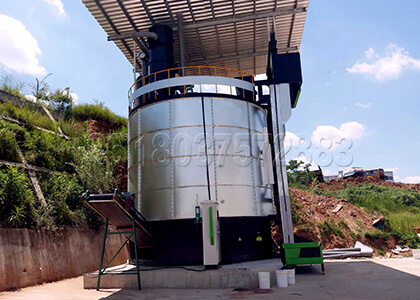
In-vessel compost machine
  1. Future Expansion:

Consider whether the chosen machine can accommodate future increases in your composting operation.

  1. Regulatory Compliance:

Ensure that the chosen equipment meets local regulations and standards for waste management and aerobic composting.

  1. Expert Consultation:

If needed, consult experts or professionals in the field of composting to guide your decision.

By carefully evaluating these factors, you can choose the right composting machine for cattle manure that aligns with your production goals, resources, and environmental considerations. You can visit https://fertilizerequipmentmanufacturer.com/how-to-make-compost-with-cow-dung/ for reference.

how to compost pig manure

Composting pig manure is an effective way to transform a waste product into a valuable resource. Pig manure is high in nitrogen, phosphorus, and potassium, making it an excellent source of nutrients for plants. However, it can also be a source of pollution if not managed properly. In this article, we will discuss the steps for composting pig manure to create a nutrient-rich soil amendment for your garden.

Aniaml Manure for Organic Fertilizer Production

Step 1: Collecting Pig Manure

The first step in composting pig manure is to collect it. Pig manure can be collected using a shovel or a manure scraper. It is important to collect only the manure and not the bedding material, as the bedding material will slow down the composting process. Pig manure can be collected in a pile or a bin. If collecting in a pile, it is recommended to turn the pile regularly to ensure proper aeration and decomposition.

Step 2: Preparing the Composting Site

The composting site should be located in a well-drained area and away from water sources, such as streams or ponds. The site should be sunny, as the heat from the sun will help to accelerate the composting process. The composting site should be level and have good air circulation. The site should be prepared by removing any grass or vegetation, and a layer of gravel or wood chips should be added to the bottom to aid in drainage.

Step 3: Building the Compost Pile

The compost pile should be built in layers, starting with a layer of dry, carbon-rich material such as straw or leaves. This layer should be about 6 inches thick. Next, add a layer of pig manure, about 2 to 3 inches thick. Repeat this layering process until the pile is about 3 to 4 feet tall. The top of the pile should be covered with a layer of straw or leaves to help retain moisture.

Step 4: Maintaining the Compost Pile

The compost pile should be kept moist but not wet. If the pile is too wet, it may become anaerobic, which will slow down the composting process and create an unpleasant odor. The pile should be turned regularly to ensure proper aeration and decomposition. The pile should be turned every 3 to 5 days, or when the internal temperature of the pile drops below 100°F. The internal temperature of the pile can be measured using a compost thermometer.

Step 5: Harvesting the Compost

The compost pile will be ready to harvest when it has decomposed into a dark, crumbly, soil-like material. This process can take anywhere from 6 to 12 months, depending on the size of the pile and the environmental conditions. To harvest the compost, the pile should be turned onto a tarp or into a wheelbarrow. Any large pieces of material should be removed, and the compost should be screened to remove any remaining debris.

Windrow Compost Turner

In conclusion, composting pig manure is an effective way to transform a waste product into a valuable resource. By following these simple steps, you can create a nutrient-rich soil amendment for your garden while reducing waste and preventing pollution. Remember to always wear gloves and wash your hands thoroughly after handling pig manure. Happy composting!

Of course, you can check this page for more details about the design and structure of the pig manure machine!

How to Compost Pig Manure

How To Choose Right Organic Compost Turner

How can you choose the best organic fertilizer compost turner is one of the things that a lot of people want to focus on. The reason is simple, a good organic fertilizer compost turning machine is one of those important machines your business needs, and it can actively make a huge difference. Here you have a few great tips to help you choose this properly.

Organic fertilizer compost turner functions

Upon selecting the organic fertilizer compost turner, you want to ensure that it features all the functions you need. The idea here is to have a mixing function to ensure everything is mixed adequately. You also want to see if it can adjust the temperature for raw material piles, something that’s really important to think about in a situation like this. Other features include things like adjusting the moisture and also boosting the permeability of the ingredient piles. You also want to realize the special requirement of the composting process too. Click here to know more 

What kind of organic fertilizer compost turner should you use?

There are various options to keep in mind, and they all come with a large variety of features. These include things like a hydraulic window turner, a groove type turner, a self propelled turner and so on. The idea here is to understand how each organic fertilizer compost turner works and which one is going to give you the better value and quality for the money.

Wheel type compost machine for large scale fertilizer fermentation

That’s why it makes a lot of sense to think about it and ensure that it delivers the right experience. It will be worth the investment, so try to keep that in mind when you want to buy this type of product. We are firm believers that the best organic fertilizer compost turners are durable and reliable, so the investment is indeed worth it. Here, SX fertilizer compost turning equipment is an ideal choice

You do want to check warranty too, just to ensure you have some assistance in case anything goes wrong. On top of that, adding in any safety features is important and certainly a thing that people really want to think about as much as possible. That on its own can make it well worth it all the time,

Conclusion

Yes, selecting the best organic fertilizer compost turner can take a bit of a trial and error. Then again, it’s going to be worth it since it conveys an extraordinary experience and quality. Rest assured that if you pick the best organic fertilizer compost turner, it can be a valuable asset for your business! If you need it, you can check https://fertilizerequipmentmanufacturer.com/organic-fertilizer-compost-turner/ to buy suitable compost turner.

How to Choose a Reliable Manufacturer to help make Organic Fertilizer Pellets

Trying to find a reliable manufacturer to produce organic fertilizer pellets? You have come to the right place! It is hard to select the right manufacturer because there are so many manufacturers to pick from. Unfortunately, a number of these manufacturers are untrustworthy, unreliable, inexperienced, and also have poor customer support. Deciding on the best manufacturer provides you with satisfaction, helps you save money, and you will get high-quality organic fertilizer pellets

Organic fertilizer pellet polishing machine

Here is how to find a reliable manufacturer to produce organic fertilizer pellets.

Experience

Firstly, you must know the knowledge of such manufacturers. The ideal manufacturers are already making organic fertilizer pellets for several years. And they hire experienced employees. However, some manufacturers do not possess any experience. Choose experienced manufacturers as they are more reliable.

Reputation

Secondly, examine the trustworthiness of the manufacturer. The reason being some manufacturers have a few years of experience, but they have a bad reputation. Reputable manufacturers are the most useful simply because they make excellent organic fertilizer pellets. A lot of people love reputable manufacturers mainly because they have good customer care. Here is a organic pellet machine manufacturer, who is a dedicate feilizer plant deisgner you can take a look, welcome  to https://fertilizerplantdesigner.com/

Price

Exactly how much does the company charge to create organic fertilizer pellets? Comparing the cost of different manufacturers may help you choose an affordable manufacturer. You desire a manufacturer which fits your budget. So, make them inform you the exact amount they charge to help make organic fertilizer pellets. Then, go with a manufacturer which fits your financial allowance.

Check Around

Fourthly, asking around is probably the fastest methods for choosing a reliable manufacturer to produce organic fertilizer pellets. Talk to folks this industry. They might used different manufacturers. So, they may recommend manufacturers they have got enjoyed a good exposure to. It is possible to choose one of these simple manufacturers.

The Net

Moreover, you can use the net for the greatest manufacturers. Nowadays, it is difficult to find a manufacturer that is not going to use the web to market themselves. It is possible to check out the websites and testimonials of the manufacturers. Select a manufacturer with good online reviews. Do not decide on a manufacturer that lacks a web-based presence.

Visit Local Manufacturers

Additionally, if there are actually manufacturers in your area, you can check out them. You will see a little more about these manufacturers by looking at them. You can expect to speak with their employees. And you could negotiate the values. Ask them questions. If their employees will answer your questions without the hesitation, you can choose that manufacturer.

Tour the Facility

Last, although not least, to learn in case the manufacturer could make the organic fertilizer pellets, tour the facility. In case the manufacturer is not going to enable you to tour their facility, which is a red flag. Reliable manufacturers are transparent with their prospective customers. They gives you a tour with their facility. You will understand if they can handle your order.

You know how to purchase a reliable manufacturer to make organic fertilizer pellets. It will require time and a lot of effort to get the right manufacturer. Therefore, usually do not rush to select a manufacturer. Do proper research if you would like find the best manufacturers with a long period of experience. Choosing the right manufacturer will give you satisfaction.

Different Kinds Of Raw Materials Utilized For Making Organic Fertilizers

The globe is radically changing, and many people want to take care of the advancing technological developments in the agricultural industry. However, a number of these changes may be unhealthy for environmental surroundings ultimately causing a food crisis soon. It can be essential to use substances which can be friendly in your farms like organic fertilizers to preserve healthy soils for sufficient food production. Organic fertilizers needs to be less dense compared to their mineral counterpart to aid the arising of issues like soil erosion. Therefore, components that primarily help with production needs to be very gentle to the soil. Some of these materials are the following.

Groove type turner machine works for trench manure composting

Animal Manure.

Manure from animals may be the waste which comes from farm animals like chicken, cows, pigs, as well as goats, dependant upon everything you keep. The feces are crucial because it helps in adding the basic organic matter and nutrients. These factors of fertilizers include nitrogen, which can be utilized by fungi, bacteria, as well as other vital organisms contained in the soil. After that incorporation, higher plants in the ground then feed on these substances in chain making up life usually from the name soil food web. Want to know how animal manure becomes fertilizer, go here.

Municipal Sludge.

Sludge can be a product of sewage treatment plants and comes around if you have complete removal of all waste and solid materials. This sewage may also be from wastewater also. After the removal of the non-essential elements, the sludge will then be taken for processing in sorts of digestion, denaturing, and later on for disposal. At this time, the main mode of destruction will be spilling in plentiful water, masses that happen to be an environmental degradation. Hence the sludge, which happens to be rich in organic matter and nutrients, becomes great for making organic fertilizers. Other essential elements are N, P, K, AND Zn, and others.

Industrial Waste.

Most manufacturing industries have waste which they eliminate in fact their productions. However, the disposing of this waste is actually a challenge plus quite costly. Mineral fertilizer productions have a considerable boost when it comes to nutrients if only there is certainly additional incorporation of industrial waste from the production. This kind of material is tremendously available, with the overwhelming varieties of industries in the world.

Household garbage.

The treatments for household waste had been evolving overtime rapidly. With all the many mushrooming households, you will find a guarantee that it raw material for organic fertilizers is not going to use up all your stock. The researcher can agree that this sort of waste has nutrients that assist the soil in retaining water, improving in the texture, and gives an over-all improvement in the nutrients level.

Agricultural Residue.

Crops residue from farms includes a significant effect on the soil hence the frequent use of it within the making of organic fertilizers. These residues include substances like maize stovers, among other crop wastes. They influence producing K, P, and N.These minerals aid in balancing the ph of the soil for better yields in the farms.

Although the majority of people with little knowledge may overlook these raw materials, they have a significant role from the overall food production. Since just about all the elements are waste, their utility in agriculture guarantees a reduction in environmental pollution, ultimately causing a much better world.

Compost Machines Make Industrial Scale Composting A Viable Business

Backyard composting has been popular for a long time however with the growing awareness of the benefits of using organic fertilizers, industrial scale composting has emerged being a profitable home business opportunity inside the recent times. These industrial composting facilities are capable of processing huge volumes of waste material and convert them into useful organic manure. Numerous strategies for industrial composting have been in use today for example the in-vessel processing, windrow processing and aerated static pile composting. All these methods require usage of industrial machines in order to accelerate and streamline the entire process of composting. What follows is a short guide about the industrial composting process and machines employed in these processes.

Before you start the process of composting, the waste material has to be pre-treated in order to achieve the desired moisture content as well as required carbon nitrogen ratio. Experts recommend achieving a moisture content close to 50 to 60% before the waste material is able to be processed for composting. As an illustration, for those who have entry to huge levels of fresh cow dung, it is suggested to include some ready organic manure with low moisture content in order to lower the entire moisture content from the mixture.

If you use the windrow composting process, the organic material must be arranged in piles in open-air or perhaps in a specially prepared composting site. The material will need to be turned constantly and it is recommended to make use of industrial scale compost fertilizer machines say for example a hydraulic windrow turner or perhaps a compost turner. The windrow must be around 1.5 to 2 m in width and up to 1.2 m in height. The length doesn’t really matter and you will spread it across dependant upon the option of space. In a nutshell, the duration of windrow is dependent upon the actual size of the chosen compost site. With this method, no tank is required but you do need large space for this particular process.

Another method is aerobic composting. In cases like this, you will want forklifts and also huge tanks as a way to perform the composting process. The optimal tanks possess a height as much as 1.3 m plus a width of about 6 m with length including 50 to 100 m. There are various varieties of turners available in the market in order to execute the composting process. These machines are extremely valuable in industrial scale composting since these accelerate the composting process and let you produce organic manure at the faster rate.

Several of the main forms of compost turners include self-propelled type, tow behind type, forklift type and groove type. Every one of these different types get their own advantages and should be employed in various conditions. As an illustration, a completely hydraulic compost turner features a huge capacity and is perfect for a large-scale composting facility.

Overall, industrial scale composting has emerged like a viable and profitable income opportunity, especially with the aid of industrial machines specifically designed for big scale composting. Also, it is eco-friendly and able to diverting huge numbers of organic materials from landfills or waste disposal facilities. Industrial scale composting not simply helps in converting waste material into high-quality organic manure but it also produces jobs and keeps the surroundings clean.