Planning Cleaning and Batch Separation in a Biofertilizer Production Unit

When you compare a production line, equipment capacity is only one part of the procurement decision. Cleaning access, hold points, and batch separation can affect changeover time and your ability to investigate a deviation. A quotation becomes more useful when it shows which surfaces contact material, how you reach them, and what records the operator keeps.

Map every product contact point

Start your biofertilizer production unit cleaning access review with a process flow from feeding through packing. Mark hoppers, mixers, transfer chutes, granulators, screens, coating equipment, recycle loops, and packing equipment. Compare this map with an organic fertilizer granulation line equipment sequence. Ask where residue can remain and how operators reach each point without unsafe improvisation.

Define the boundary between batches

Your microbial fertilizer equipment batch separation brief can identify where one formula or microbial input ends and the next begins. Describe the production order, emptying sequence, temporary storage, recycle handling, and labeling method. If a shared conveyor or screen carries several products, ask how the supplier provides access for changeover and how your team prevents unidentified carryover.

biofertilizer production lines

Review surfaces before selecting equipment

Use a biofertilizer processing line contact surface review to compare surface materials, joints, fasteners, liner edges, discharge gates, and removable parts. Request drawings or photographs that show cleaning doors and inspection points. Dry cleaning, vacuuming, wiping, or washing may suit different formulations and plant controls, so define the method from your actual materials rather than a universal protocol.

Agree how cleaning will be checked

A biofertilizer plant cleaning verification plan can state who inspects, which locations receive attention, what evidence is recorded, and what happens when residue remains. Visual inspection may be adequate for some changeovers, while other products may call for a documented sampling method. Discuss the decision with your quality team and record the acceptance basis instead of copying an arbitrary frequency.

Connect records with production lots

Your biofertilizer production system product traceability specification can connect incoming lots, production orders, cleaning records, rework, and finished bags. The term traceability describes the ability to follow the history or location of an item through recorded identification. Decide which batch identifiers appear at each transfer point and which operator records support an investigation.

YUSHUNXIN outlines wet and dry biofertilizer routes from preparation through packing. Click here for more details and send your formulas, batch sequence, cleaning method, site layout, and required records for a configuration discussion.

For your project review, visit https://www.granulationproject.com/product/biofertilizer-production-unit/
Choosing the Right Biofertilizer Granulation Equipment in 2025

In the modern biofertilizer manufacturing industry, selecting the right granulation equipment has become essential for improving product quality, reducing energy use, and meeting diverse market demands. As more producers upgrade their biofertilizer production systems, three types of granulating machines have proven to be the most efficient and reliable options in 2025.

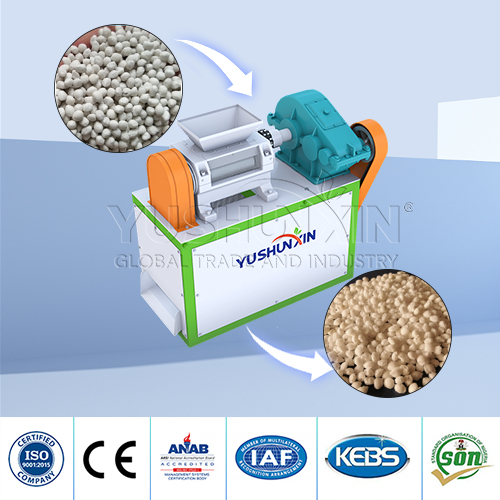
1. Double Roller Extrusion Granulator – For Low-Moisture and Energy-Saving Production

The roller compactor granulator is an ideal choice for plants producing biofertilizer pellets with low moisture content. This dry granulation technology compresses powder materials directly into uniform granules without drying or cooling steps.
Its main advantages include:

Low power consumption and compact structure

Suitable for temperature-sensitive microbial fertilizers

Easy to maintain and fully enclosed for clean operation

For manufacturers seeking a cost-effective way to produce high-strength granules, this granulator remains one of the most popular options.

Гранулы, производимые валковым гранулятором

2. Disc Granulator – For Flexible Control of Particle Size

The pan granulator, also called a disc pelletizer, provides better flexibility in controlling granule size and density. It’s widely used in small and medium-scale organic biofertilizer production lines, especially where raw materials like composted manure, humic acid, or peat are used.
Operators can adjust the inclination angle and rotation speed to create uniform particles. Its simple design and visual operation make it ideal for new investors and research-based fertilizer plants.

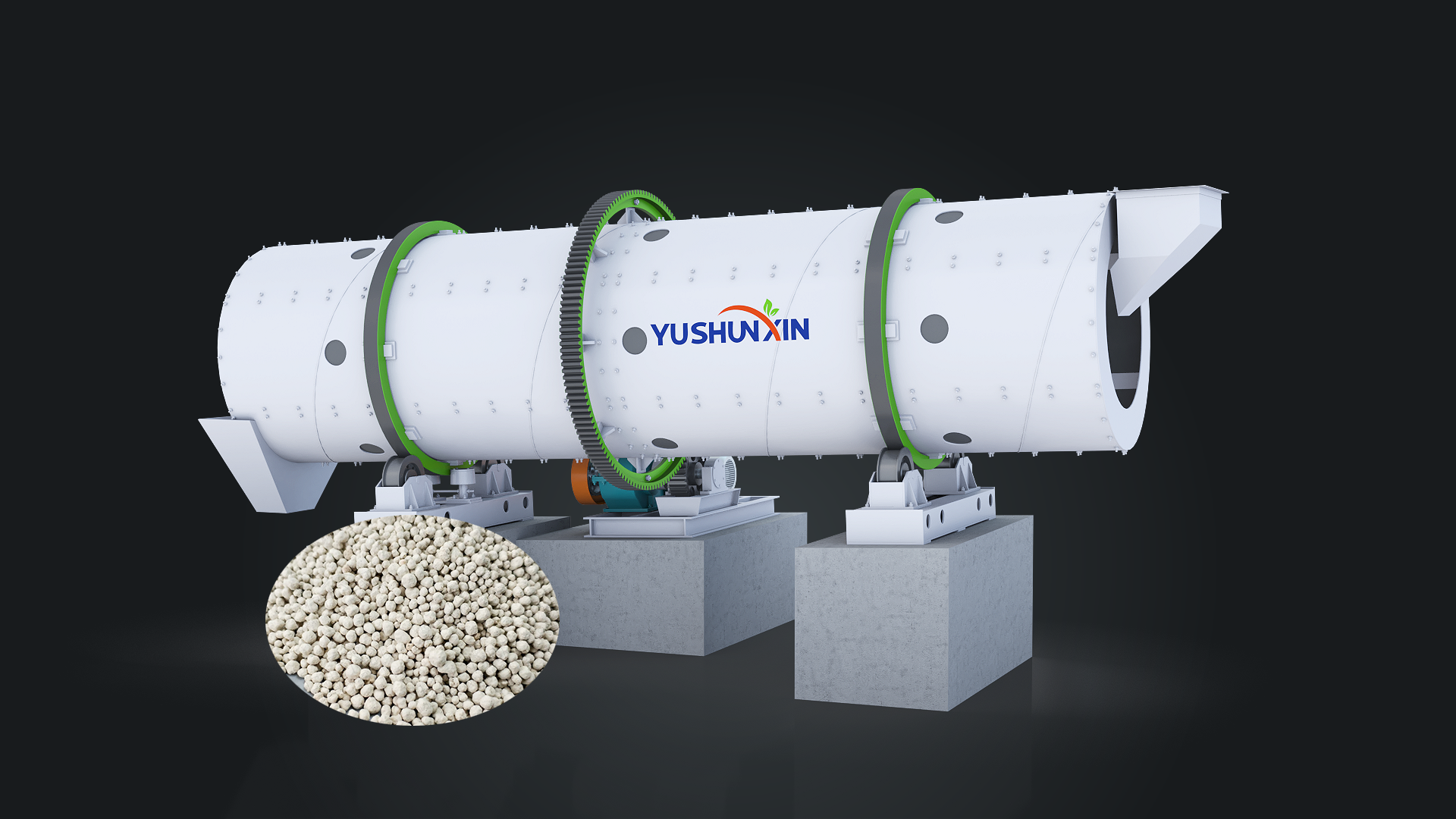
3. Drum Granulator – For Large-Scale Continuous Production

For industrial-scale biofertilizer granulation plants, the rotary drum granulator stands out for its capacity and stability. It works well for both organic and compound fertilizers, ensuring smooth particle formation through continuous rolling and coating.
Key benefits include:

High output with stable granule quality

Integration with hot air drying systems

Adaptability for NPK and microbial formulations

This type of biofertilizer pelletizing machine is commonly used in complete fertilizer production systems where automatic feeding, drying, and cooling are connected in one process.

Making the Right Choice

When choosing a granulation machine for biofertilizer production, consider your raw materials, moisture level, and output requirements. For example, dry powder lines perform best with roller extrusion systems, while organic compost mixtures benefit from pan or drum granulation.
A well-selected granulator not only improves product uniformity but also ensures higher efficiency and lower operating costs across your biofertilizer manufacturing process. If you want to buy a granulation machine, welcone to visit: https://www.biofertilizerproduction.com/