What is the cost of difference fertilizer making line buying

When considering the cost of a fertilizer production plant establishment, it will vary significantly depending on the type of fertilizer you plan to produce: powder, liquid, or granules. Each type of fertilizer manufacturing system comes with its own set of equipment, technology requirements, and associated costs. Below is a breakdown of the typical costs you might encounter when investing in these different fertilizer production lines.

Powder Fertilizer Production Line

Powder fertilizer production lines are generally the most straightforward and cost-effective to set up. The primary equipment includes a crusher, mixer, and packing machine. The budget for a basic powder fertilizer production line can range from $10,000 to $50,000 or more, depending on the production capacity and automation level.

– Crusher:Essential for breaking down raw materials into a fine powder, which costs around $1,000 to $5,000.
-Mixer:A mixer blends various raw materials to ensure a uniform product, ranging from $2,000 to $10,000.
– Packing Machine:Automated packing machines, essential for efficiency, can cost between $5,000 and $15,000.

Additional costs include raw materials, labor, and utilities. The simplicity of the process makes it a cost-effective fertilizer production design, but it might not offer the nutrient delivery control that other forms do.

Liquid Fertilizer Production Line

Liquid fertilizers are gaining popularity due to their ease of application and fast absorption by plants. Establishing a liquid fertilizer production line is more complex and expensive than powder fertilizers, typically ranging from $30,000 to $100,000 or more.

– Dissolving Tanks:Used to dissolve raw materials, these can cost from $5,000 to $20,000 depending on size and material (stainless steel).
– Mixing Equipment:High-shear mixers for uniform nutrient distribution can range from $10,000 to $30,000.
– Storage Tanks:For storing liquid fertilizers, costing between $5,000 and $15,000.
– Filling and Packing Systems:Automated systems to fill containers, costing $10,000 to $20,000.

Liquid fertilizer production also requires precise chemical formulation and quality control systems, which can add to the operational costs. The initial investment is higher, but the market demand for liquid fertilizers can justify this cost.

liquid biofertilizer production

Granule Fertilizer Production Line

Granule fertilizer production is complex and involves processes like granulation, drying, cooling, and coating. The equipment required is extensive, making it the most expensive option. So, the investment of a fertilizer granulation factory setup typically ranging from $50,000 to $500,000 or more.

– Granulators: Essential for forming granules, costing between $10,000 and $50,000.
– Drying Machines:Needed to remove moisture, these range from $10,000 to $30,000.
– Cooling Machines:To cool down granules, costing around $5,000 to $20,000.
– Coating Machines:These add protective layers to granules, costing $5,000 to $15,000.
– Screening Machines:For quality control and size consistency, costing $2,000 to $10,000.

Granule production lines also require conveyors, dust collectors, and control systems, adding to the cost. Despite the higher initial investment, granulated fertilizers are preferred for their slow-release properties and ease of application, offering good market potential.

Click here to learn more.

Conclusion

The cost of establishing a fertilizer production line varies widely based on the type of fertilizer being produced. Powder fertilizers are the most cost-effective to start, while liquid and granule fertilizers require higher initial investments but offer greater market opportunities. Consideration of market demand, budget, and production capacity is crucial when choosing the right production line. Each type of fertilizer production line has its unique advantages and challenges, and the decision should align with business goals and market strategy. If you want to get reference, you can visit https://fertilizerequipmentmanufacturer.com/fertilizer-manufacturing-plant-cost/

How to process zeolite to make granules

Zeolite is a naturally occurring mineral that is commonly used in various industries for its unique properties such as high adsorption capacity, ion exchange, and catalytic activity. In order to use zeolite in various applications, it is often processed into granules. Here is a step-by-step guide on how to process zeolite to make granules:

  1. Raw Material Selection

The first step in processing zeolite to make granules is to select the right raw material. Zeolite can be found in various forms such as powder, pellets, or chunks. The choice of raw material will depend on the desired size and shape of the final granules.

  1. Crushing and Grinding

Once the raw material has been selected, the next step is to crush and grind it into smaller particles. This can be done using various types of crushers and mills such as jaw crushers, hammer mills, or ball mills. The goal is to reduce the size of the zeolite particles to a uniform size that is suitable for granulation.

  1. Mixing and Binder Addition

After the zeolite has been crushed and ground, it is then mixed with a binder to help the particles stick together during the granulation process. The binder can be a liquid or a powder, and the amount used will depend on the desired properties of the final granules.

  1. Granulation

The next step is to granulate the zeolite-binder mixture. This can be done using various granulation methods such as extrusion, pelletizing, or agglomeration. The choice of granulation method will depend on the desired size and shape of the final granules.

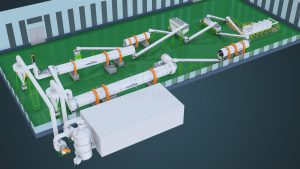
zeolite drum granulation line
  1. Drying and Sizing

After the zeolite has been granulated, it is then dried to remove any moisture that may have been added during the granulation process. This can be done using various drying methods such as oven drying, fluid bed drying, or rotary kiln drying. Once the granules are dry, they are then sized to ensure that they are all uniform in size.

  1. Packaging and Storage

The final step in processing zeolite to make granules is to package and store the granules. This can be done using various packaging materials such as bags, drums, or bulk containers. The granules should be stored in a dry, cool place to prevent any moisture from being reabsorbed.

In conclusion, processing zeolite to make granules involves selecting the right raw material, crushing and grinding, mixing and binder addition, granulation, drying and sizing, and packaging and storage. By following these steps, you can produce high-quality zeolite granules that can be used in various industries for their unique properties.

How Does Wet Granulation Technique Enhance the Quality of NPK Fertilizers?

In the realm of agriculture, NPK fertilizers hold the key to robust and fruitful harvests. The quality of these fertilizers plays a pivotal role in ensuring optimal growth and yield. Which one standout technique to enhance NPK fertilizer quality is wet granulation.

At its core, wet granulation involves the agglomeration of fine NPK particles with the addition of a liquid binder to form larger, denser granules. This process has transformed the fertilizer industry, with products such as those offered by Shunxin, a leading manufacturer of wet granulation machines. SX rotary drum and disc granulators are examples of equipment that utilize this technique to produce high-quality NPK fertilizers.

NPK Fertilizer Granulators

One of the primary benefits of wet granulation technique is the improved nutrient content uniformity. In traditional fertilizer blending processes, the particles of different nutrients often vary in size and density, leading to segregation during handling and application. However, through wet granulation, nutrients are uniformly distributed within each granule, ensuring that every application delivers a balanced nutrient supply to the crops. This uniform distribution is a hallmark of the granules produced by Shunxin’s drum granulation machine, which meticulously combines the raw materials in a rolling motion to achieve homogeneity.

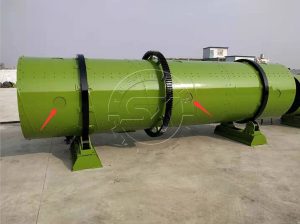
Rotary Drum Granulator

Another advantage of NPK fertilizer wet granulation process is the reduction of dust pollution. The fine dust particles that are prevalent in powdered fertilizers can cause respiratory issues for workers and lead to environmental pollution. With wet granulation, these fine particles are encapsulated within the granules, significantly reducing airborne dust. Shunxin’s pan pelletizer, with its state-of-the-art design, ensures that the granulation process is tightly controlled, thus minimizing dust emissions and making the handling of fertilizers much safer.

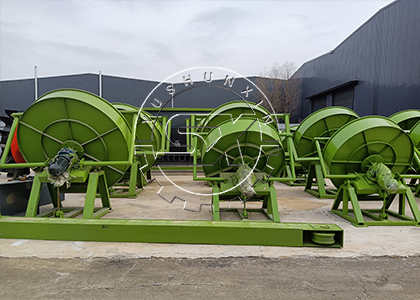
disc pelletizer models

The process of wet granulation also improves the physical properties of the NPK fertilizers. The resulting granules are harder and more resistant to breakage during transport, storage, and application. This durability is crucial in maintaining the integrity of the nutrient composition until it reaches the soil. Shunxin’s npk fertilizer granulation equipment are engineered to produce granules with optimal hardness and size, ensuring that the fertilizers remain effective from production to field application.

Furthermore, wet granulation is a versatile technique suitable for a variety of raw materials. Whether the source is synthetic or organic, the process can be adjusted to suit the specific properties of the input materials. NPK fertilizer wet granulation technology, is designed to handle a wide range of raw materials, making it an ideal choice for fertilizer manufacturers looking to diversify their product offerings.

NPK Fertilizer Manufacturing Process

In conclusion, the wet granulation technique is a game-changer in enhancing the quality of NPK fertilizers. It offers uniform nutrient distribution, reduces dust pollution, improves physical properties, and ensures better nutrient solubility. With companies like Shunxin leading the way with their innovative wet granulation machines, the agricultural businesses can look forward to not only more effective but also more environmentally sustainable fertilizer production. You can visit this website for more details: https://www.fertilizerproductequipment.com/npk-fertilizer-production-technology/


How to make bentonite pellets in disc pelletizer


Bentonite is a type of clay that has numerous uses in various industries, from drilling fluids in the oil industry to binder materials in the manufacturing of iron ore pellets. Pelletizing bentonite is an essential process to enhance its handling and application. A disc pelletizer is one of the tools used for this purpose, providing a method to convert bentonite powder into useful, uniformly-sized pellets. This comprehensive guide will walk you through the process of making bentonite pellets using a disc pelletizer.

Understanding Bentonite and Its Applications

The Unique Properties of Bentonite

Bentonite is known for its ability to swell and increase viscosity when mixed with water, which makes it a valuable material in many industries. Its absorbent and adhesive properties also make it suitable for use in environmental protection as a liner material for landfills.

Diverse Industrial Uses

In agriculture, bentonite is used as a soil conditioner. In the construction industry, it is utilized as a sealant. It is also a choice substance in the pharmaceutical field for its absorbent qualities and in the pet industry as a component of cat litter.

Preparing Bentonite for Pelletizing

Bentonite Powder Selection

For pelletizing, you must start with high-quality bentonite powder. Ensure that the powder is free from impurities and is of a consistent size. The moisture content of the powder should be controlled to optimize the pelletizing process.

Moisture Content Adjustment

Before the pelletizing process begins, adjust the moisture content of the bentonite powder, if necessary. The ideal moisture level is critical for pellet formation, as too much or too little moisture can lead to weak pellets that easily disintegrate.

The Pelletizing Process in a Disc Pelletizer

Setting Up the Disc Pelletizer

The disc pelletizer, also known as a pan granulator machine, is a circular, shallow, pan-like machine that has a slightly angled base. To prepare for pelletizing, ensure the disc is clean and set at the appropriate angle and rotational speed according to the manufacturer’s specifications.

The Feed

Introduce the bentonite powder into the disc pelletizer. The rotational movement of the disc causes the material to roll and gather, gradually forming small pellets. It’s crucial to feed the powder at a consistent rate to maintain an even distribution in the disc.

The Role of Binders and Additives

Enhancing Pellet Durability

Binders or additives are often added to the mix to enhance the durability and hardness of the pellets. For bentonite, additional binders might not be necessary due to its inherent binding properties, but in some cases, they may be used to meet specific industry standards.

Mixing Homogeneously

Any binders or additives should be mixed thoroughly with the bentonite powder before the pelletizing process to ensure uniform distribution within the pellets.

The Growth Phase of Bentonite Pellets

Nucleation and Growth

As the disc rotates, small particles stick together to form what is known as “nuclei” or “seeds.” These gradually grow in size as they pick up more material while rolling around in the disc. The process of layering and consolidation under the forces of rotation is known as coalescence.

Controlling Pellet Size

The size of the pellets can be controlled by adjusting the amount of material fed, the rotation speed of the disc, the angle of the pan, and the duration of the pelletizing process. It is important to balance these factors to achieve the desired pellet size.

disc pelletizer for pellets with water spray

Post-Pelletizing Treatments

Drying the Pellets

After forming, the pellets may require drying to remove any excess moisture. This can be done using a rotary dryer or by spreading the pellets out in a thin layer to air dry.

Screening and Separating

Once dry, the pellets are typically screened to separate and recycle fines or oversized pellets. The correctly sized pellets are collected and can be further processed or packaged for storage and transport.

Quality Control and Storage

Ensuring Consistent Quality

Throughout the pelletizing process, it is crucial to monitor pellet quality. Regular checks should be made for pellet size, shape, moisture content, and strength to ensure consistency and to meet any industry-specific requirements.

Proper Storage Techniques

Store the finished bentonite pellets in a dry, well-ventilated area to prevent moisture absorption and degradation. Packaging in air-tight bags or containers can also help maintain pellet quality during transportation and storage.

Conclusion: Bentonite Pellets Ready for Use

Using a disc pelletizer to form bentonite pellets is an efficient and effective way to prepare this versatile clay for a multitude of industrial and commercial uses. The process requires attention to detail, from selecting the right raw material and controlling moisture content to fine-tuning the pelletizer settings and performing quality control. By following these steps, you can produce high-quality bentonite pellets that are ready for a variety of applications, contributing to the smooth operation of diverse industrial processes.


How to make chicken manure pellets

Chicken manure pellets are an organic fertilizer that provide a rich source of nutrients for plant growth. They are an eco-friendly way to recycle waste from poultry farms and improve soil health. Making chicken manure granular fertilizer involves a series of steps from raw manure collection to the final pelleted product that is easy to store, transport, and use.

The Importance of Chicken Manure as Fertilizer

Nutrient-Rich Organic Matter

Chicken manure is loaded with essential nutrients such as nitrogen, phosphorus, and potassium, which are beneficial for soil fertility and plant growth. It also contains micronutrients that are crucial for the overall health of plants.

Benefits of Pelletizing Manure

Pelletizing chicken manure makes it more convenient to handle, reduces odor, minimizes pathogens, and facilitates a slow release of nutrients into the soil.

Collection and Preparation of Raw Manure

Gathering Manure

The first step in making chicken manure pellets is to collect the raw manure from poultry farms. This can be done manually or with the use of automated systems.

Drying the Manure

Moisture content in the manure should be reduced to make the pelleting process efficient. Sun drying is a natural method, while mechanical drying can be done using rotary drum dryers.

Composting the Manure

The Composting Process

Composting is a critical step that helps in the breakdown of organic matter and the reduction of pathogens. The manure is piled and regularly turned to maintain aeration and moisture content conducive to microbial activity.

Monitoring and Control

Temperature, moisture, and aeration are monitored and controlled to ensure the composting process is effective. This stage can take several weeks to a few months, depending on the method used.

Crushing and Mixing

Grinding the Composted Manure

Once the manure is fully composted, it is ground into a fine powder using a crusher or hammer mill. This increases the surface area, making the nutrients more accessible for release when applied to the soil.

Adding Additional Ingredients

To enhance the nutrient content or to achieve a desired nutrient balance, additional materials such as bone meal, blood meal, or other organic materials can be mixed with the composted manure.

The Pelletizing Process

Forming the Pellets

After mixing, the fine composted manure is fed into a pellet mill. The mill has a die and roller system that compresses the manure into dense, cylindrical pellets. And disc granulation equipment or drum granulation equipment can also produce chicken manure pellets.

Cutting and Cooling

Once the manure is extruded through the die, the elongated strands are cut into pellets of a specified size and then cooled to solidify and stabilize them.

Post-Pelletizing Processing

Screening and Quality Control

The pellets are screened to remove any dust or broken pellets, ensuring uniformity in size and quality. This step is crucial for the marketability of the final product.

Conditioning the Pellets

Optionally, the pellets can undergo further conditioning to improve their hardness and durability. This may involve additional moisture control or the application of a coating that reduces dust and improves nutrient retention.

Packaging and Storage

Bagging the Chicken Manure Pellets

The chicken manure pellets are then bagged in suitable packaging material that protects them from moisture and facilitates easy handling.

Storing for Optimal Preservation

The bagged pellets should be stored in a cool, dry place to prevent deterioration and preserve their efficacy as a fertilizer.

Application and Use in Agriculture

Dosage and Method of Application

When applying chicken manure pellets to the soil, it is crucial to follow recommended dosage guidelines and application methods to prevent over-fertilization and potential harm to plants.

Benefits to Soil and Crops

Regular use of chicken manure pellets can help improve soil structure, enhance water retention, and provide a slow and steady release of nutrients, leading to healthier plants and increased yields.

Conclusion

Making chicken manure pellets is a sustainable way to manage poultry waste and provide an organic fertilizer option for farmers and gardeners. The process involves several steps from raw manure collection to composting, pelletizing, and packaging. By converting chicken manure into a user-friendly pellet form, we can make the most of this valuable organic resource, closing the loop in agricultural nutrient cycles and contributing to a healthier environment.

What equipment can produce alfalfa pellets

Producing high-quality alfalfa pellets requires specialized equipment designed to efficiently process alfalfa hay into a condensed, easily transportable form. Alfalfa pellets are a popular choice for livestock feed due to their nutritional value and ease of handling. In this discussion, we will explore the key equipment involved in the production of alfalfa pellets.

1. Harvesting Equipment:

The first step in alfalfa pellet production is the harvesting of alfalfa hay. Modern equipment such as swathers and mower-conditioners are used to cut and condition the alfalfa, ensuring an optimal moisture content for the subsequent pelletizing process. Efficient harvesting is crucial to obtaining high-quality alfalfa for pellet production.

2. Drying Systems:

Once harvested, alfalfa must undergo a drying process to reduce its moisture content. Various drying systems, including rotary drum dryers and fluidized bed dryers, are employed to achieve the desired moisture level. Proper drying is essential to prevent mold formation and ensure the pellets have the right consistency.

3. Pellet Mills:

The heart of the alfalfa pellet production process lies in the pellet mill. Pellet mills come in various types, including flat die and ring die pellet mills. These machines compress the dried alfalfa material into small, cylindrical pellets through a combination of pressure and heat. The choice between flat die and ring die pellet mills depends on factors such as production capacity and cost considerations.

4. Hammer Mills:

Before the alfalfa undergoes pelletization, it may pass through a hammer mill. This equipment is used to reduce the size of the alfalfa particles, making them more conducive to the pelletizing process. Hammer mills play a crucial role in achieving the optimal size and consistency of the raw material.

5. Cooling Systems:

After the pellets are formed, they need to be cooled to room temperature to ensure durability and stability. Cooling systems, such as pellet coolers, are employed to remove excess heat generated during the pelletizing process. Proper cooling enhances the quality of the alfalfa pellets and prevents them from breaking during handling and transportation.

6. Pellet Screening Equipment:

To ensure uniform pellet size and quality, pellet screening equipment is utilized. Vibrating screens and pellet sieving machines separate pellets based on size, removing any fines or oversized particles. This step is crucial in maintaining product consistency and meeting quality standards.

7. Packaging Machinery:

The final step in alfalfa pellet production involves packaging the pellets for distribution. Packaging machinery, such as bagging machines, is employed to efficiently pack the pellets into bags or other containers. This ensures convenient handling and transportation for end-users, whether they are farmers, feed manufacturers, or retailers.

Conclusion:

In conclusion, producing high-quality alfalfa pellets involves a series of carefully orchestrated steps, each requiring specialized equipment. From harvesting and drying to pelletizing and packaging, the efficiency and precision of the equipment used significantly impact the final product’s quality. Choosing the right combination of equipment tailored to the specific needs of the operation is essential for successful alfalfa pellet production.

How Many Types of Granulators for you Can Make Fertilizer?

Fertilizer plays a vital role in modern agriculture, ensuring that crops receive the essential nutrients they need for optimal growth. However, raw fertilizers are often in a form that is not easily absorbed by plants. To address this issue, fertilizer granulation processes are employed to convert raw materials into granules, making them easier to handle, transport, and apply to crops. There are various types of granulators available for fertilizer production, each with its own advantages and applications. In this article, we will explore how many types of granulators you can use to make fertilizer, highlighting the key characteristics of each.

  1. Rotary Drum Granulator

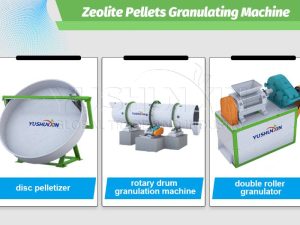
The drum pelletizer machine is one of the most commonly used granulation methods in fertilizer production. It consists of a large rotating drum that tumbles the raw materials, promoting agglomeration and granule formation. This type of granulator is suitable for a wide range of raw materials, including urea, ammonium sulfate, and phosphates. It produces spherical granules with consistent size and is known for its high production capacity.

rotary drum granulation machine
  1. Disc Granulator

Disc granulators, also known as pan granulators, utilize a rotating disc to agglomerate and shape the raw materials into granules. These granulators are versatile and can handle various fertilizer formulations, including organic and inorganic materials. They are especially well-suited for producing round, uniform granules ideal for slow-release and controlled-release fertilizers.

dic pelletizer from SX
  1. Double Roller Press Granulator

The double roller press granulator, as the name suggests, uses two counter-rotating rollers to compact and shape the fertilizer materials into granules. It is particularly effective for producing compound fertilizers, where multiple nutrients are combined into a single granule. This type of granulator is valued for its ability to control the size and hardness of the granules, making it suitable for customized fertilizer formulations.

double roller granualtor for granular fertilizer
  1. Flat Die Extrusion Granulator

Flat die extrusion granulators work by forcing the raw materials through a flat die with specially designed holes. This process results in cylindrical or strip-shaped granules. These granulators are often used for organic fertilizer production, as they can handle materials with high fiber content. They are also known for their low energy consumption and ease of operation.

flat die granulation from SX
  1. New Type Organic Fertilizer Granulator

New type organic fertilizer granulators are designed specifically for organic fertilizer production. They utilize a wet granulation process that involves mixing the organic materials with a binder solution to form granules. These granulators can produce high-quality organic fertilizer granules with improved nutrient content and enhanced soil benefits. They are also capable of handling a wide range of organic materials, including crop residues and animal manure.

new type stirring machine to make organic fertilizer
  1. Stirring Tooth Granulator

Stirring tooth granulators are particularly suitable for the production of compound fertilizers with high nitrogen content. They feature a unique stirring tooth design that helps mix and granulate the materials effectively. These granulators can produce granules with a high nitrogen content, making them suitable for crops with high nitrogen requirements, such as corn and wheat.

rotary drum churning pelletizer production line

Conclusion

Fertilizer granulation is a crucial step in the fertilizer production process, as it transforms raw materials into a more convenient and effective form for agricultural use. The choice of granulator depends on the specific requirements of the fertilizer formulation, the raw materials available, and the desired granule characteristics. Whether you opt for a rotary drum granulator, disc granulator, double roller press granulator, flat die extrusion granulator, new type organic fertilizer granulator, or stirring tooth granulator, each type has its unique advantages and applications. Understanding the different types of granulators and their capabilities is essential for optimizing fertilizer production and meeting the nutritional needs of crops worldwide.

Tips for Poultry Manure Fertilizer Making

Poultry manure is a valuable organic resource that can be transformed into nutrient-rich fertilizer for improving soil fertility and promoting plant growth. The process of converting poultry manure into fertilizer requires careful attention and proper techniques to ensure its effectiveness and minimize environmental impacts. Here are some essential tips for poultry manure fertilizer making:

1. Proper Collection and Storage of Manure:

Effective poultry manure fertilizer production begins with proper collection and storage of the manure. It’s crucial to have well-designed poultry housing and waste management systems to prevent contamination and maintain the quality of the manure. Regular cleaning of the poultry facilities and proper segregation of manure from bedding materials contribute to a higher-quality end product.

2. Composting for Pathogen Reduction:

Composting is an essential step in poultry manure fertilizer production as it helps reduce pathogens, weed seeds, and odors. Combine the manure with carbon-rich materials like straw, leaves, or wood chips to create a balanced carbon-to-nitrogen ratio. Turn the compost regularly to ensure proper aeration and decomposition. The composting process generates heat that helps eliminate harmful microorganisms.

3. Monitoring Temperature and Moisture:

During composting, monitoring temperature and moisture levels is crucial. The ideal temperature range for composting poultry manure is between 130°F and 150°F (54°C to 65°C). Use a compost thermometer to track the temperature and adjust the moisture content to around 40-60%. Proper moisture and temperature control accelerate the breakdown of organic matter and facilitate the development of nutrient-rich compost.

4. Ensuring Nutrient Balance:

To create a balanced poultry manure fertilizer, it’s essential to consider the nutrient composition. Poultry manure is rich in nitrogen, phosphorus, and potassium, but its nutrient content can vary based on factors such as bird diet and manure age. Conduct regular soil tests to determine the nutrient needs of your crops and adjust the manure application rates accordingly to avoid overloading the soil with certain nutrients.

5. Compost Curing and Maturation:

After the active composting phase, allow the poultry manure compost to cure and mature. This process further stabilizes the compost and reduces the risk of nutrient loss when applied to the soil. Curing usually takes a few weeks to several months, depending on local climate conditions. Turn the compost periodically during this phase to promote even maturation.

6. Granulation for Easy Application:

Granulating the composted poultry manure can make it easier to handle and apply. Granulation involves forming the compost into small, uniform pellets or granules. This not only enhances the nutrient distribution but also improves the convenience of application using machinery such as spreaders. The granules release nutrients slowly, promoting consistent plant growth over time. For this, you can choose SX disc pelletizer and rotary drum pelletizer machine.

7. Testing Fertilizer Quality:

Before applying the poultry manure fertilizer to your crops, it’s advisable to test its quality. Analyze the nutrient content of the fertilizer to ensure it meets the specific requirements of your plants. You can send samples to a reputable agricultural laboratory for comprehensive nutrient analysis. Adjust the application rates based on the lab results to achieve optimal plant nutrition.

8. Application Techniques:

When applying poultry manure fertilizer, adopt appropriate techniques to minimize nutrient runoff and maximize uptake by plants. Incorporate the fertilizer into the soil during planting or use top-dressing methods for established crops. Avoid direct contact with plant foliage to prevent burning and nutrient imbalances. Click here to learn more

9. Environmental Considerations:

While poultry manure fertilizer can greatly enhance soil fertility, its application should be carried out with environmental responsibility. Avoid over-application to prevent nutrient leaching into water bodies, which can lead to water pollution. Adhere to local regulations and guidelines for proper manure management to protect ecosystems and water quality.

10. Continuous Learning and Improvement:

Poultry manure fertilizer production is a dynamic process that can benefit from ongoing learning and improvement. Stay updated with the latest research and best practices in organic farming and nutrient management. Experiment with different composting techniques, application rates, and crop rotations to optimize the use of poultry manure as a valuable resource for sustainable agriculture.

In conclusion, poultry manure fertilizer making is a multi-step process that involves careful handling, composting, nutrient balancing, and responsible application. By following these tips, farmers and gardeners can effectively harness the potential of poultry manure to enhance soil health, increase crop yields, and contribute to a more sustainable agricultural system. If you need poultry manure composting, you can visit https://www.fertilizerproductionproject.com/poultry-waste-composting/.

How to Adopt Wet Granulation Process to Make Fertilizer?

Fertilizers play a pivotal role in enhancing agricultural productivity and ensuring food security. Among the various manufacturing processes, wet granulation stands out as an effective method to produce high-quality fertilizers with improved properties. This article delves into the intricacies of adopting the wet granulation process to manufacture fertilizers, outlining the steps, benefits, and considerations involved.

Introduction to Wet Granulation Process

Wet granulation is a widely employed technique in the pharmaceutical, chemical, and agricultural industries to convert fine powders into granules. In the context of fertilizer production, wet granulation involves the agglomeration of individual fertilizer components, such as nitrogen (N), phosphorus (P), and potassium (K), along with micronutrients and additives, into uniform granules. This process imparts several advantages to the final product, including improved flowability, reduced dustiness, and enhanced nutrient release characteristics.

Step-by-Step Guide to Wet Granulation for Fertilizer Production

  1. Material Selection: Begin by carefully selecting the raw materials for your fertilizer formulation. Consider factors such as nutrient content, solubility, and compatibility. It’s essential to strike the right balance to ensure optimal granulation and subsequent plant uptake.
  2. Mixing: Thoroughly mix the selected materials to create a homogenous blend. This step is critical to ensure uniform nutrient distribution throughout the final granules.
  3. Granulation Solution: Prepare a granulation solution by dissolving a binder, often a water-soluble polymer, in water. This solution will act as the adhesive that binds the powder particles together.
  4. Granulation Process: Introduce the granulation solution into the mixer containing the powdered fertilizer materials. Gradually add the solution while agitating the mixture. The binder will form bridges between particles, leading to granule formation. Hence, you can use rotary drum granulator equipment or disc pelletizer machine.
  5. Wet Screening: After granulation, the moist mass needs to be screened to obtain granules of the desired size range. Oversized or undersized granules can be recycled or adjusted during subsequent processing.
  6. Drying: The wet granules must undergo a drying process to reduce their moisture content to a suitable level, usually around 10%. This step is crucial to prevent caking during storage and transportation.
  7. Sizing and Sieving: Granules may undergo additional sizing and sieving to ensure uniformity in particle size, further improving their flowability and application properties.
  8. Coating (Optional): In some cases, a protective or controlled-release coating may be applied to the granules. This can enhance nutrient release patterns, increase shelf life, and minimize nutrient losses due to volatilization or leaching.
  9. Quality Control: Rigorous quality control measures should be implemented throughout the process to monitor granule size, nutrient content, and physical properties.
  10. Packaging: Once the granules meet the desired specifications, they can be packaged in appropriate containers for distribution and use.
Rotary Drum Pelletizer
disc pelletizer for organic fertilizer

Benefits and Considerations

The wet granulation process offers several benefits for fertilizer production:

  • Enhanced Nutrient Release: Granules produced through wet granulation tend to release nutrients in a controlled manner, optimizing their availability to plants.
  • Improved Handling and Application: Granules possess better flowability, reducing dust generation during handling and ensuring more uniform application in the field.
  • Customization: The process allows for flexibility in formulation and nutrient composition, catering to specific crop and soil requirements.
  • Environmental Considerations: Wet granulation can minimize nutrient losses, leading to a more environmentally sustainable fertilizer production process.

However, certain considerations should be taken into account:

  • Equipment and Infrastructure: Adopting wet granulation requires specialized equipment such as mixers, granulators, dryers, and sieves.
  • Binder Selection: The choice of binder and its compatibility with the fertilizer components is crucial for successful granulation.
  • Energy Consumption: Drying is an energy-intensive step in wet granulation, and optimizing energy usage is important.

Conclusion

The wet granulation process offers a valuable avenue for fertilizer manufacturers to produce high-quality, effective, and environmentally friendly products. By following the step-by-step guide and considering the benefits and challenges, fertilizer producers can adopt wet granulation to enhance their production processes and contribute to sustainable agriculture.

how to compost pig manure

Composting pig manure is an effective way to transform a waste product into a valuable resource. Pig manure is high in nitrogen, phosphorus, and potassium, making it an excellent source of nutrients for plants. However, it can also be a source of pollution if not managed properly. In this article, we will discuss the steps for composting pig manure to create a nutrient-rich soil amendment for your garden.

Aniaml Manure for Organic Fertilizer Production

Step 1: Collecting Pig Manure

The first step in composting pig manure is to collect it. Pig manure can be collected using a shovel or a manure scraper. It is important to collect only the manure and not the bedding material, as the bedding material will slow down the composting process. Pig manure can be collected in a pile or a bin. If collecting in a pile, it is recommended to turn the pile regularly to ensure proper aeration and decomposition.

Step 2: Preparing the Composting Site

The composting site should be located in a well-drained area and away from water sources, such as streams or ponds. The site should be sunny, as the heat from the sun will help to accelerate the composting process. The composting site should be level and have good air circulation. The site should be prepared by removing any grass or vegetation, and a layer of gravel or wood chips should be added to the bottom to aid in drainage.

Step 3: Building the Compost Pile

The compost pile should be built in layers, starting with a layer of dry, carbon-rich material such as straw or leaves. This layer should be about 6 inches thick. Next, add a layer of pig manure, about 2 to 3 inches thick. Repeat this layering process until the pile is about 3 to 4 feet tall. The top of the pile should be covered with a layer of straw or leaves to help retain moisture.

Step 4: Maintaining the Compost Pile

The compost pile should be kept moist but not wet. If the pile is too wet, it may become anaerobic, which will slow down the composting process and create an unpleasant odor. The pile should be turned regularly to ensure proper aeration and decomposition. The pile should be turned every 3 to 5 days, or when the internal temperature of the pile drops below 100°F. The internal temperature of the pile can be measured using a compost thermometer.

Step 5: Harvesting the Compost

The compost pile will be ready to harvest when it has decomposed into a dark, crumbly, soil-like material. This process can take anywhere from 6 to 12 months, depending on the size of the pile and the environmental conditions. To harvest the compost, the pile should be turned onto a tarp or into a wheelbarrow. Any large pieces of material should be removed, and the compost should be screened to remove any remaining debris.

Windrow Compost Turner

In conclusion, composting pig manure is an effective way to transform a waste product into a valuable resource. By following these simple steps, you can create a nutrient-rich soil amendment for your garden while reducing waste and preventing pollution. Remember to always wear gloves and wash your hands thoroughly after handling pig manure. Happy composting!

Of course, you can check this page for more details about the design and structure of the pig manure machine!

How to Compost Pig Manure

Choose Double Roller Granulator for Making Fertilizer Pellets

Double roller granulator is a popular choice for making fertilizer pellets due to its high efficiency, durability, and versatility. Click here to get more information. Here are some of the reasons why you should choose double roller granulator for making fertilizer pellets:

  1. High Efficiency:

Double roller granulator is designed to produce high-quality fertilizer pellets efficiently. It uses a unique pressing technology to compress the raw materials into granules, which results in a high yield and a low waste ratio.

  1. Durability:

Double roller granulator is made of high-quality materials that are resistant to wear and tear, which means that it can withstand the demands of continuous operation.

  1. Versatility:

Double roller granulator is capable of producing different types of fertilizer pellets, including organic fertilizer, inorganic fertilizer, and compound fertilizer. This makes it a versatile option for farmers and fertilizer manufacturers.

  1. Low Maintenance:

Double roller granulator for fertilizer requires minimal maintenance, which reduces the overall cost of production. Its simple design and few moving parts mean that it is easy to operate and repair.

  1. Environmentally Friendly:

Double roller granulator is an environmentally friendly option for making fertilizer pellets. It reduces the amount of waste generated during the fertilizer manufacturing process and helps to conserve natural resources.

Overall, double roller granulator is an excellent choice for making fertilizer pellets due to its high efficiency, durability, versatility, low maintenance, and environmental friendliness.


A double roller granulator is a machine that uses a unique pressing technology to produce fertilizer pellets. Here are the steps involved in the process of making pellets using a double roller granulator:

  1. Raw Material Preparation:

The first step is to prepare the raw materials for granulation. The raw materials can be in the form of powder, granules or other forms. The raw materials need to be selected and mixed in appropriate proportion to ensure the quality of the pellets.

  1. Feeding:

The prepared raw materials are then fed into the feeding hopper of the double roller granulator.

  1. Granulating:

The feeding system pushes the raw materials into the compacting chamber of double roller granulator https://www.granulatorforfertilizer.com/double-roller-granulator/ , where two rollers compress the raw materials into small, dense granules. The rollers are made of high-quality materials and are designed to exert a high pressure on the raw materials.

  1. Cutting:

As the rollers rotate, the granules are cut into the desired size by a knife that is fixed on the side of the compacting chamber.

  1. Screening:

The granules are then screened to remove any oversize or undersize particles, ensuring that only the desired size pellets are collected.

  1. Packaging:

The finished pellets are then packaged for storage or transportation.

The double roller granulator uses a dry granulation process, which means that no water or binder is added during the process. This makes it a cost-effective and environmentally friendly option for producing high-quality fertilizer pellets.

How to Make Fertilizer Pellets by Disc Granulation Machine?

Disc granulation machine is an efficient equipment for making fertilizer pellets. Here are the steps to make fertilizer pellets by disc granulation machine, and you can click here to get more information:

  1. Prepare the raw materials:

Collect the required raw materials of granulator for fertilizer, such as nitrogen-rich materials like urea, ammonium nitrate, and poultry manure, phosphorus-rich materials like superphosphate, and potassium-rich materials like potassium chloride.

  1. Mix the raw materials:

Mix the raw materials in the right proportion to achieve the desired NPK ratio. The mixture should be homogeneous and without lumps.

  1. Add the binder:

Add a binder such as water or clay to the mixture to improve the pelletization process. The binder helps to hold the particles together and improves the strength of the pellets.

  1. Feed the mixture into the disc granulation machine:

The disc granulation machine https://www.granulatorforfertilizer.com/disc-pelletizer-for-sale/ has a rotating disc where the mixture is fed. The disc rotates and the mixture is evenly distributed on the disc.

  1. Spray the liquid:

Spray a liquid binder onto the mixture as the SX disc pelletizer for sale rotates. The liquid binds the particles together, forming small pellets.

  1. Adjust the disc inclination angle:

Adjust the inclination angle of the disc to control the size of the pellets. A higher inclination angle produces smaller pellets, while a lower inclination angle produces larger pellets.

  1. Collect and dry the pellets:

The pellets are discharged from the disc and collected. The pellets are then dried in a rotary dryer to remove excess moisture and improve their strength.

  1. Sieve the pellets:

Sieve the pellets to remove any oversized or undersized pellets. The final product is a uniform size of fertilizer pellets.

  1. Package and store:

Package the fertilizer pellets in bags and store them in a cool, dry place.


By following these steps, you can make fertilizer pellets efficiently by disc pelletizer for sale.
Besides, there are several benefits of using a disc granulator to make fertilizer pellets:
  1. Efficient and uniform pelletization:

Disc granulators have a rotating disc that uniformly distributes the raw materials, resulting in even-sized and shaped pellets. This makes the fertilizer more efficient and easier to apply, as the nutrients are evenly distributed in each pellet.

  1. Versatility:

Disc granulators can process a wide range of raw materials, including organic materials, inorganic materials, and waste products, making it a versatile tool for making different types of fertilizer.

  1. Low cost:

Disc granulators are relatively inexpensive compared to other types of granulators, making them a cost-effective option for small and medium-sized fertilizer manufacturers.

  1. Easy maintenance:

Disc granulators are simple to operate and maintain, and require minimal downtime for maintenance.


Overall, large scale disc granulators for sale offer a cost-effective and efficient way to make high-quality fertilizer pellets, with a range of benefits for both the manufacturer and the environment.

Double roller granulator for sale

You will need a good double roller granulator in order to ensure that you produce the right amount of compound fertilizer. The best double roller granulator for sale can actively help speed up the process and ensure that your business only gets the best results and work quality. There will be some trial and error that can arise, but if you manage it right the benefits can indeed be second to none. What really matters is how you are implementing these solutions, since a granulator like this can speed up the production process.

Roller Extrusion Granulation Production Line For Compound Fertilizer Production

Why should you buy the double roller granulator for sale?

The double roller granulator doesn’t need a drying process, it also just has a few simple steps to follow. You also save time and money, there are also no gas emissions or waste water. It also has a very compact structure, it’s easy to maintain and the materials used here are really durable. So the double roller press granulator will indeed last for a very long time.

In addition, it can be used for a variety of industries, aside from just making fertilizer. Which is what makes the double roller granulator such a versatile tool, as it brings you all kinds of amazing features and it will surely convey a great return on investment if you manage this accordingly. But do not worry, ShunXin Fertilizer Plant Design Project can help you.

Double Roller Press Granulator in SX Fertilizer Production Plant Business Plan

Is the double roller granulator expensive?

The advantage you get from buying a double roller granulator is that it can help speed up the production process. That means you will save money, which makes investing in the double roller granulator a very good idea. Of course, prices can vary, but overall you are indeed getting a tremendous experience and quality for what you are paying. We believe that a granulator like this is always worth the money, especially for a business like this.

So, if you have a fertilizer business you need a dry equipment double roller granulator. This is the type of product that speeds up the production process, it helps save time and money, and it really is very durable and dependable. Plus, being able to speed up the production process helps quite a lot, and it certainly adds the character and value that you need. Don’t hesitate and buy the double roller granulator for sale, it can help your business immensely, while offering a very good result and quality no matter the situation. Welcome to consult us!https://organicfertilizerproductionline.com/double-roller-granulator/

Learning The Working Process Of A Dry Granulation Machine

Dry granulation machine implements a granulation technique that never requires the addition of water or binder when granulating. In addition, you don’t have to dry the finished pellets by using the drying machine. Generally speaking, this technique makes use of the crystal water available in the raw materials, which shapes them by strong extrusion.

So, the dry granulation equipment combines compressing, crushing, and granulating. And to some extent, this equipment makes up for the deficiency that comes with the wet granulation method. This is in terms of the requirements of raw materials and the granulating process.

What Entails the Dry Granulation Process?

Typically, the dry granulation machine implements the dry granulation process to create fertilizer granules. It’s also applicable to creating pellets without using liquid solutions. This is mainly because the granules might be sensitive to the heat or moisture. So, it shapes the granules by simply pressing on the materials.

It’s also worth noting that you could use a double roller press machine to create fertilizers through dry granulation. Usually, the counter-rotating rollers offer a strong extrusion force that helps in pressing materials into relatively large tablets. Inside the machine, it consists of a unique structure that plays a vital role in crushing these tablets and making them into pellets.

Dry granulation machine

What Are the Dry Granulation Steps?

In general, we can divide the entire granulation process into three steps. These include the preparation of materials, feeding into the equipment uniformly, and granulation. Let’s take a look.

– Preparation of materials. When it comes to dry granulation, the raw materials should contain crystal water, or perhaps the moisture content is approximately 5%. For granulating, you’d instead use the 80 mesh to 300 mesh materials. When it’s too crude, the finished pellets might be uneven. On the other hand, for the fine powder, it is quite challenging to granulate. As a result, you must prepare appropriate raw materials before starting dry granulation.

– Feeding uniformly. When you are feeding materials into your dry type granulation machines, continue feeding uniformly. This is very important to the entire process. The roller sheets are usually easy-to-damage parts. That means that uniform feeding might prolong the service life of those roller sheets. What’s more, they will also play a significant role in improving the granulation rate.

– Granulation. In this stage, the counter-rotating roller sheets will basically press the materials you fed into large tablets by making use of strong extrusion force. After that, the inner structure of your machine will crush those tablets and granulate. Lastly, the finished pellets will be discharged from the machine’s outlets.

You should know that the dry granulation process has no wastewater or gas emission. That means you won’t be causing any harm to the environment when using this piece of equipment. Are you concerned about the high prices of dry granulation facilities? Or perhaps you are looking for a professional manufacturer of fertilizer equipment? You can undoubtedly get a supply which meets your needs, whether for the profession or costs.

Where To Find A Reliable Fertilizer Granulator Machine Supplier?

Setting up an organic fertilizer production line requires a solid business plan and top-notch equipment. It also requires a steady supply of animal manure, but that shouldn’t be a problem on your farm. The choice of the right equipment is also an easy task, provided that you know what you want to achieve in terms of yield and productivity. The biggest challenge is to find a reliable supplier to buy your machine from. This article shows you where to look for such industrial equipment manufacturers and how to pick the most reliable one.

To start with, you can use your favorite search engine to seek for fertilizer granulator machines. The biggest manufacturers of this type of equipment have compelling websites where they showcase their best equipment and the technical specifications of each type of machine. By taking a look at some of these web pages, you’ll make yourself an idea about the biggest players on the market and about their fertilizer granulator equipment. While you are at it, make sure you search for client testimonials and reviews, because they can help you rule out low quality equipment and unreliable suppliers. Also, it helps to check out the work experience and the quality assurance certifications of all these manufacturers.

New Type Organic Fertilizer Granulation Machine
Poultry manure fertilizer granules

Search engines can provide you with enough options. However, not all equipment manufacturers invest in developing and promoting websites. Some of them choose to advertise their products in business and trade directories. These web portals can be another excellent starting point for your research. Alibaba, for instance, is the largest online directory of China businesses. Their members want to reach out to clients in the U.S. and in many other areas of the globe. One of the best things about such directories is that they can speed up your research quite a lot, as they offer you multiple options at the same time. Besides, all manufacturer pages on these directories feature client ratings and reviews. By picking companies with high seller rates and with positive reviews, you increase your chances to find a reliable fertilizer granulator machine supplier.

Client references can be another great method to check how reliable a certain company is. If needed, you can ask these manufacturers to provide you with the contact details of some of their other clients. Contact them to ask them about their experience with that supplier. Remember that quality and price are important, but they aren’t everything that matters. The quality of the customer service department can also make a huge difference. If your machine stops working and you need someone to help you sort out the problem, you won’t be too happy to wait for weeks until you’re going to find a solution. The best suppliers are the ones that offer additional services that cater to the real needs of their customers. Maintenance, repairs, and customer service are among the most important things to look for when choosing your supplier. Your choice will have a direct influence on the profitability of your fertilizer making business.

During the Pan Granulation Process, What Things Should Be Noticed?

There are several different methods of making fertilizer. The job of fertilizer is to replace the chemicals that growing plants leech out of the soil. The key ingredients of a fertilizer, therefore, are things that are essential to the healthy growth of plants – such as nitrogen, calcium, sulfur, and magnesium.

Pan Pelletizer
Pan Pelletizer

Fertilizer Manufacturing and Pan Granulation

The way that fertilizer is made has evolved a lot over the years. The pan granulation process was introduced in the 1970s by Norsk Hydro as a way to produce large amounts of coarse grade ammonium nitrate-based fertilizer. This type of fertilizer is used for forest fertilization.

The process uses water-free melt, is inexpensive, and makes fertilizer that is easy to transport and store. The process requires hot nitrogenous melt, and cooled solids which are fed into a rotating pan.

The rotation of the pan will help to form the fertilizer into a rolling, tumbling particles which form a crescent-shaped bed. The cooled solid particles should enter the pan at a point where there is not a lot of existing material so that they can be covered by the melt. Warmer particles will tumble over the cooler particles to cover them, and as the material moves through and exits the pan it will stabilize at a temperature that is below the melting point of the material.

The objective is to gradually build up the size of the particles by rotating the solids so that they pick up melt, which cools onto them.

When to Use Pan Granulation?

Pan granulation technology was originally intended to use to convert dry pulverant and other material, into bigger granules that are easier to work with. When the process is performed properly, it should be seen that it produces strong particles that are of uniform size and a similar shape.

Temperature and Concentration

It is difficult to produce large pellets with pan granulation, but for smaller pellets, it is a good solution. Many common methods of pan granulation rely on the water content of the solution being about 5-8 percent by weight. This ensures that at the correct temperature a certain amount of water will evaporate rapidly, and the layer that is added to the process solidifies on the granules almost immediately. Note that if the water content is insufficient, then the rolling particles on the bed will become a sticky mass which is difficult to handle, separate, and transport. The water content is important to allow for the heat removal caused by evaporation since this is what keeps the granules in an optimum state.

The maximum concentration limit for the solution is 95 percent by weight, and this works well for melts of ammonium nitrate and urea, that is sprayed onto appropriately sized, fast-moving solids.

The size of the rotating drum, and the pressure with which the solution is sprayed onto the solids will also impact upon the outcome. The pan manufacturer will provide instructions for the appropriate speed, pressure and temperature depending on the type of fertilizer to be produced.