What Are the Challenges in Processing Powdered Poultry Waste into Carbon Fertilizer Pellets?

Processing chicken manure into carbon-based fertilizer pellets creates a valuable fertilizer product, but every stage of the chicken dung carbon fertilizer production line brings specific technical challenges. When poultry farmers, organic fertilizer producers, or waste treatment companies start to handle powdery bird manure and carbon materials, they often face problems with moisture, odor, uniform granulation, and stable pellet quality. A clear understanding of raw materials, powder preparation, and granulation equipment helps a producer control risk and improve efficiency in carbon fertilizer manufacturing.


What Raw Materials Create Stable Carbon-Based Fertilizer Pellets from Chicken Manure?

A carbon-based fertilizer production project usually starts from mixed raw materials, not only fresh chicken manure. A producer of carbon fertilizer pellets often uses chicken dung or mixed bird manure as the main nitrogen source, and combines this with rich carbon materials to prepare a balanced powdered blend. Typical raw materials for chicken manure carbon fertilizer production include poultry dung, bedding materials, and various carbon additives.

Many plants choose semi-dry chicken manure, broiler litter, or layer manure as the core ingredient. This bird dung often contains rice husk, wood shavings, or chopped straw, so the initial chicken manure mixture already carries some structural fiber. For carbon-based fertilizer production, additional carbon sources such as biochar powder, carbonized rice husk, carbonized sawdust, lignite powder, or humic acid powder often enter the formula. When a producer plans to produce a char-based fertilizer granule, the mixture of powdered chicken manure and fine biochar powder becomes especially important for carbon content and nutrient holding capacity.

The challenge appears when the carbon fertilizer producer tries to maintain consistent composition and particle fineness across batches. Different chicken farms provide bird manure with different moisture content, ash content, and inorganic impurities. In practice, the carbon fertilizer production manager needs strict raw material classification and blending. A stable formula of chicken dung, fermented compost, carbon powder, and minor additives improves the later pelletizing performance. Without such control, the final carbon fertilizer pellets may show cracks, dust problems, or nutrient separation during storage and transportation.

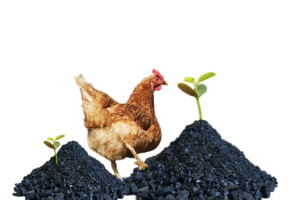
biochar and chicken dung


How Does Powder Preparation of Chicken Manure Affect Carbon Fertilizer Granulation?

The chicken manure processing procedure for carbon-based fertilizer often turns wet poultry waste into a dry, powdery, and odor‑reduced material before granulation. This preparation stage usually includes composting or fermentation, drying, and crushing. Each step influences the behavior of powdered chicken manure during granulating and pelletizing. When a producer ignores these details, the carbon fertilizer pellet making line suffers from blockage, uneven particles, and equipment wear.

In many cases, chicken manure first goes through aerobic composting, and a compost machine helps control temperature and aeration. This composting process reduces pathogens and odor in bird dung, and it changes the physical structure of the material. After fermentation, a drying machine reduces moisture so that the chicken manure material reaches a suitable level for powder production, usually within a moderate moisture range. Excessive moisture content in powdery chicken manure often causes sticky problems in a carbon fertilizer granulator, while too‑dry powder leads to dust and low pellet strength.

A crushing machine, for example a carbon fertilizer grinder machine for sale, plays an essential role in powder preparation. This grinder or crusher turns lumpy composted chicken manure and carbonized materials into fine powder. However, this grinding process must avoid over‑pulverization. Very fine chicken manure powder and biochar powder sometimes cause poor granulation because the powder flows badly and bridges inside the pelletizing machine. Many production plants use screening equipment after crushing to produce a controlled powder size for carbon-based fertilizer production. When powdery poultry manure, biochar powder, and other additives reach uniform fineness, the later carbon fertilizer granule forming step becomes more stable and reliable.


Why Does Granulation of Powdered Chicken Manure into Carbon Fertilizer Pellets Create Operational Difficulties?

Granulation and pelletizing transform loose powdery chicken manure and carbon powder into dense, easy‑to‑handle pellets. This carbon fertilizer pellet making stage often becomes the core technical challenge in the entire production process. A producer needs to control moisture, binder use, rotation speed, and feeding rate, while the machinery, such as granulators and pelletizers, must match the characteristics of poultry waste and carbon materials.

Disc granulators and drum granulators often handle powdery mixtures with suitable moisture and some plasticity. The rotating disc or drum allows chicken manure powder and carbon powder to gradually form granules through continuous rolling and layering. However, if the chicken dung powder has irregular moisture distribution or contains hard impurities, the granulation efficiency drops. These conditions increase the return rate of fine powder and oversize particles, and the carbon fertilizer production line consumes more energy. Some producers choose a new type organic fertilizer granulator for chicken manure and biochar mixtures because this machine design can handle higher organic content and improves pellet strength.

For more controlled particle size, some carbon fertilizer plants use a double roller extrusion granulator. This type of granulator compresses powdery chicken manure material and carbon powder into compact granules through mechanical extrusion. The process requires a stable powder feeding system and good powder flow performance. If the powdered bird manure clumps or absorbs moisture in the hopper, material feeding becomes unstable and the pellets show density variations. A flat die granulator or pelletizer also appears in some small and medium pellet making lines for chicken manure carbon fertilizer, especially when producers need cylindrical pellets or ball‑like granules.

Downstream equipment further influences the quality of chicken manure carbon-based fertilizer particles. A drying machine stabilizes pellet moisture and reduces caking during storage. A cooling machine sometimes assists in keeping carbon fertilizer granules in good shape. Finally, a packing machine completes the carbon fertilizer pellet production by loading uniform particles into bags. Any error in these stages, such as high outlet moisture or mechanical damage during conveying, leads to dust, broken pellets, and loss of value in the chicken manure carbon fertilizer product.

biofertilizer granulators.

Conclusion

In conclusion, the processing of powdered poultry waste into carbon-based fertilizer pellets requires integrated control from raw material selection, powder preparation, and granulation, to drying and packing. Suitable mixtures of chicken manure, bird dung compost, and carbon materials, such as biochar powder or carbonized husk, support a consistent powder for granulating. Proper crushing, screening, and moisture adjustment provide a stable feed for disc granulators, drum granulators, double roller extrusion granulators, or other pelletizing machines. When a producer pays attention to these challenges and uses reliable carbonization equipment, fertilizer grinding machinery, granulators, drying equipment, and packaging systems, the chicken manure carbon fertilizer production line operates more efficiently and safely.

A professional fertilizer equipment manufacturer – Yushunxin – offers complete sets of poultry manure carbon fertilizer machines and customized technical solutions for enterprises that plan to develop high‑quality chicken manure carbon-based fertilizer pellet production projects. You can visit: https://www.charbasedfertilizermachine.com/product/chicken-dung-and-biochar-as-fertilizer/

How Does Biochar Production Enhance the Utilization of Poultry Manure?

Biochar production provides an effective method to transform chicken manure into high-value carbon-based fertilizer. Many poultry farms face challenges in dealing with large quantities of bird dung, and traditional disposal methods often waste nutrients. Through controlled carbonization and efficient processing, chicken manure changes into powdered biochar and further granulated products that offer greater stability, easier handling, and improved soil benefits. The entire procedure involves several machines and equipment, and each step contributes to the full utilization of poultry manure resources.


What Raw Materials Support Carbon-Based Fertilizer Production from Chicken Manure?

Different kinds of poultry waste, especially chicken manure, serve as valuable raw materials for carbon-based fertilizer production. Chicken dung contains nitrogen, phosphorus, and potassium, which become more concentrated and stable after biochar preparation. In addition to bird manure, other agricultural by-products such as rice husks, sawdust, straw, and corn stalks can mix with poultry manure to adjust the carbon-to-nitrogen ratio. When chicken dung combines with these powdery biomass materials, the carbonization process produces biochar powder with enhanced porosity and strong adsorption ability. This powdered form later supports granulation procedures, where the powder transforms into uniform granules or pellets. The proper selection and preparation of raw materials ensure continuous fertilizer production and stable quality for long-term application.

Organic Fertilizer Raw Materials


How Does the Chicken Manure Processing Procedure Work in Biochar Production?

The chicken manure processing procedure for carbon-based fertilizer production includes several technical stages. First, compost machines or fermentation units treat fresh poultry dung to remove excessive moisture and stabilize harmful microorganisms. Next, carbonization equipment such as a biochar furnace converts semi-dried chicken manure into carbon-rich powder. After carbonization, a crushing machine or carbon fertilizer grinder reduces larger chunks into fine powdery particles. The fine powder prepares the material for the following granulation step.

During granulation, different granulator models play a key role. For example, a disc granulator can gradually granulate powdered chicken manure biochar into round granules, while a flat die granulator or a double roller extrusion granulator presses powder into uniform pellets. A drum granulator or a new type organic fertilizer granulator also supports pelletizing for large-scale production. Each machine enables the transformation of biochar powder into stable granules, which resist moisture, reduce odor, and simplify packing or transportation. Finally, a drying machine decreases the water content of the granules, and a packing machine completes the preparation for market distribution. The entire procedure connects chicken manure treatment, biochar production, and granulation in a continuous system.


Why Does Granulation Improve the Utilization of Poultry Manure Biochar?

Granulation of carbon-based fertilizer from chicken manure offers multiple advantages for practical utilization. Powdered biochar alone often creates dust problems, storage losses, and difficulties in application. When pelletizing or ball making transforms powdery chicken dung biochar into firm granules or pellets, the product becomes easier to handle and spread evenly in fields. Granule formation also improves nutrient release, since the compact particle structure slows dissolution and maintains long-term soil enrichment.

Furthermore, consistent pellet size produced by efficient granulators enhances packaging efficiency and transport safety. Uniform granules reduce segregation of nutrient particles and increase the market value of finished fertilizer. Different pelletizers and granulating machines allow flexibility in production lines, so operators can adjust output according to customer demand. Therefore, the granulation procedure not only improves the physical quality of poultry manure biochar but also supports resource utilization and commercial competitiveness.


Conclusion

Biochar production transforms raw poultry dung into stable and valuable carbon-based fertilizer. The procedure starts from careful raw material selection, continues through carbonization and powder preparation, and reaches its full potential through granulation and packaging. Each stage of the process requires suitable equipment, including compost machines, carbonization furnaces, crushing machines, granulators, drying machines, and packing machinery.

By combining these technologies, poultry manure becomes a reliable source of biochar powder and carbon-based granules, enhancing utilization efficiency and reducing waste. Professional equipment selection determines product quality, operational stability, and market competitiveness. A professional fertilizer equipment manufacturer—Yushunxin—offers advanced solutions for chicken manure biochar preparation and granulation, helping enterprises achieve efficient and sustainable production of carbon-based fertilizers. You can visit: https://www.charbasedfertilizermachine.com/product/chicken-dung-and-biochar-as-fertilizer/

Transforming Chicken Manure into Biochar Pellets: The Role of Pellet Making Machinery

Chicken manure is a valuable resource rich in nutrients necessary for plant growth. Transforming this bird manure into biochar pellets creates carbon-based fertilizers that enhance soil fertility and contribute to sustainable agriculture. Pellet making machinery plays a crucial role in this transformation process. This article explores how these machines convert chicken manure into biochar particles, suitable raw materials for production, and the machinery involved in the procedure.

What Raw Materials are Suitable for Carbon-Based Fertilizer Production from Chicken Manure?

In addition to chicken manure, various raw materials are suitable for producing carbon-based fertilizers. Bird dung from other poultry, cow manure, pig manure, and organic waste like straw and sawdust are excellent options. Powdered materials such as powdered charcoal and powdery biomass residues can be combined with chicken manure. These materials are rich in carbon and nutrients, making them ideal for carbonization and pelletizing. Utilizing a mix of these raw materials enhances the efficiency of the pellet making process and the quality of the final biochar pellets.

biochar and chicken dung

How Does Pellet Making Machinery Transform Chicken Manure into Biochar Pellets?

The transformation of chicken manure into biochar pellets involves several procedures using specialized equipment. Initially, compost machines facilitate the decomposition of chicken manure, reducing moisture content and eliminating pathogens. After composting, carbonization equipment like a carbonization furnace heats the composted manure in a low-oxygen environment, producing biochar. The resulting biochar is then processed using a crushing machine or carbon fertilizer grinder machine for sale, turning it into fine powder. Pellet making machinery, such as a disc granulator or flat die granulator for char-based fertilizer, then granulates the powdered biochar. These granulators shape the material into uniform granules or pellets, completing the pelletizing process and producing biochar particles ready for use as carbon-based fertilizer.

What Features Do Pellet Making Machines Offer for Efficient Biochar Granulation?

Pellet making machines are equipped with features that enhance the efficiency and quality of biochar granulation. Granulators like the double roller extrusion granulator and drum granulator offer continuous production capabilities and can handle various raw materials. These machines provide adjustable pellet sizes, allowing producers to create granules or particles tailored to specific agricultural needs. The new type organic fertilizer granulator utilizes advanced technology for higher granulating rates and better pellet quality. Additionally, pelletizers are designed for easy operation, maintenance, and integration into existing fertilizer production lines. Their efficient pelletizing process ensures consistent shape and size of the biochar pellets, improving their application as carbon-based fertilizer.

Conclusion

Transforming chicken manure into biochar pellets through pellet making machinery benefits both the environment and agricultural production. By utilizing suitable raw materials and advanced equipment like compost machines, carbonization furnaces, crushing machines, and various granulators, producers can efficiently manufacture high-quality carbon-based fertilizers. For those seeking professional equipment for biochar pellet production, Yushunxin offers a range of specialized machinery designed to meet diverse production needs, supporting sustainable agriculture and efficient resource utilization. You can visit: https://www.charbasedfertilizermachine.com/product/chicken-dung-and-biochar-as-fertilizer/

Transforming Chicken Manure into Carbon-Based Fertilizer Pellets: The Role of Granulation Machinery

Transforming chicken manure into carbon-based fertilizer pellets significantly enhances soil health and promotes sustainable agriculture. Granulation machinery plays a crucial role in converting chicken dung and carbon-rich materials into granulated fertilizers that are easy to manage and apply. By utilizing specialized equipment, producers can efficiently process chicken manure into valuable fertilizer granules that improve soil fertility and structure.

What Raw Materials Can Be Used for Carbon-Based Fertilizer Production from Chicken Manure?

Chicken manure, or bird dung, serves as a primary raw material rich in essential nutrients like nitrogen, phosphorus, and potassium. Combining it with carbon-rich substances such as straw powder, sawdust, or biochar creates a balanced carbon-to-nitrogen ratio. The powdery form of these materials allows for thorough mixing and preparation before the granulation process. Utilizing such raw materials results in high-quality carbon-based fertilizer pellets that enhance soil health and support sustainable farming practices.

How Does Granulation Machinery Convert Chicken Manure into Fertilizer Pellets?

Granulation machinery, including disc granulators, drum granulators, and flat die pelletizers, transforms the prepared mixture of chicken manure and carbon materials into granules or pellets. The granulating equipment shapes the powdered materials into uniform particles through pelletizing processes. By adjusting the granulator settings, producers can control the pellet size and hardness. This process not only improves the ease of fertilizer application but also enhances nutrient availability in the soil, leading to better crop yields.

What Equipment is Essential in the Carbon-Based Fertilizer Production Process?

A complete carbon-based fertilizer production line may include carbonization equipment, crushing machines, granulators, drying machines, and packing machines. The carbonization furnace converts organic waste into carbon-rich materials. The crushing machine, such as a carbon fertilizer grinder, reduces raw materials into fine powder, facilitating efficient granulation. Granulators like the double roller extrusion granulator or the new type organic fertilizer granulator form the powder into pellets. The drying machine reduces moisture content, and the packing machine prepares the final product for distribution and use.

biofertilizer granulators.

Conclusion

Processing chicken manure into granulated carbon-based fertilizers using specialized machinery enhances soil health and promotes sustainable agricultural practices. By employing the appropriate production equipment, producers can efficiently convert organic waste into valuable fertilizer pellets. Partnering with professional fertilizer equipment manufacturers ensures access to high-quality machinery and technical support, optimizing the production process and contributing to sustainable farming.

As a professional fertilizer equipment manufacturer, Yushunxin offers comprehensive solutions and reliable machinery for carbon-based fertilizer production. You can visit: https://www.charbasedfertilizermachine.com/product/chicken-dung-and-biochar-as-fertilizer/

Essential Equipment for Producing Chicken Dung and Biochar Fertilizer

Producing high-quality carbon-based fertilizers from chicken dung and biochar requires a series of specialized equipment. This blog explores the key machinery involved in the production process, focusing on the specific needs of carbon-based fertilizer manufacturing. By understanding the equipment necessary for this production line, manufacturers can optimize their operations to produce effective and sustainable fertilizers.

What Raw Materials Are Ideal for Carbon-Based Fertilizer Production?

Carbon-based fertilizers primarily utilize organic materials like chicken dung and biochar. Chicken dung is a nutrient-rich waste product that, when properly processed, serves as an excellent base for organic fertilizers. Biochar, produced through the carbonization of organic matter, acts as a powerful soil amendment due to its ability to retain nutrients and improve soil structure.

These materials need careful processing to be transformed into uniform granules or pellets suitable for agricultural use. Granulation is a critical step in this transformation, ensuring that the fertilizer is easy to handle, store, and apply. The combination of chicken dung with biochar enhances the fertilizer’s nutrient profile while also providing the benefits of carbon sequestration, making it a sustainable choice for modern agriculture.

biochar and chicken dung

What Machinery Is Essential for Chicken Dung and Biochar Fertilizer Production?

Producing carbon-based fertilizers from chicken dung and biochar requires a range of specialized machinery. Each piece of equipment plays a vital role in converting raw materials into high-quality granules or pellets. Key machines include carbonization equipment, crushing machines, granulators, and drying machines.

Carbonization equipment, such as a carbonization furnace, is used to convert organic waste into biochar. This process involves heating the organic material in an oxygen-limited environment, transforming it into a stable form of carbon that can be used as a fertilizer component. The furnace must operate at precise temperatures to ensure the biochar retains its beneficial properties.

Once biochar is produced, it needs to be mixed with chicken dung and other additives. A crushing machine is typically employed at this stage to break down any large particles, ensuring a consistent and uniform mixture. This step is crucial for achieving even granulation, as it prepares the raw materials for the next stage in the production process.

Granulation machinery, such as a disc granulator or rotary drum granulator, is then used to form the mixture into granules. These granulators work by rotating the material, causing it to form into spherical granules. The granulation process not only shapes the fertilizer but also increases its density, improving storage and application properties.

How Does the Choice of Equipment Impact Fertilizer Quality?

The production of carbon-based fertilizer from chicken manure is directly influenced by the efficiency and precision of the machinery used in its production. For instance, the drying machine plays a critical role in reducing the moisture content of the granules, which is essential for preventing clumping and ensuring long-term storage stability. Efficient drying also enhances the durability of the granules, making them more resistant to breaking during handling and transportation.

Furthermore, the integration of a high-performance packing machine at the end of the production line ensures that the final product is securely packaged, protecting it from environmental factors such as moisture and contamination. This step is essential for maintaining the fertilizer’s quality until it reaches the end-user.

Why Trust Yushunxin Equipment for Carbon-Based Fertilizer Production?

Manufacturers looking to invest in high-quality equipment for producing carbon-based fertilizers can rely on Yushunxin, a professional fertilizer equipment manufacturer. Yushunxin’s machines are designed to meet the specific demands of carbon-based fertilizer production, offering efficiency, reliability, and superior performance. With advanced features and robust construction, Yushunxin’s equipment ensures that producers can achieve consistent results while optimizing their production processes.

In conclusion, producing chicken dung and biochar fertilizer involves a carefully coordinated process that requires specialized equipment. From carbonization and crushing to granulation and drying, each step is crucial for transforming raw materials into effective, high-quality carbon-based fertilizers. By selecting the right machinery, producers can enhance the efficiency of their operations and produce fertilizers that meet the needs of modern agriculture. You can visit: https://www.charbasedfertilizermachine.com/product/chicken-dung-and-biochar-as-fertilizer/