Оборудование для переработки куриного помета за 20 000 долларов — поддержка экологичности и доходности птицефабрик

В современном животноводстве важность оборудования для переработки куриного помета становится все более очевидной. С ужесточением экологических требований и быстрым развитием органического сельского хозяйства эффективная и экологичная переработка помета птицефабрик становится ключевой задачей для предприятий. Сегодня мы подробно расскажем о комплекте оборудования для переработки куриного помета стоимостью около 20 000 долларов США и проанализируем его применение в реальном производстве.
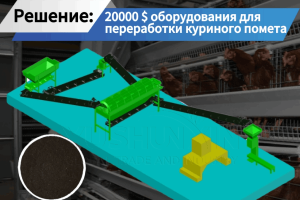
20000$-Оборудования-для-переработки-куриного-помета

1. Введение в оборудование для переработки куриного помета

Данный комплект оборудования состоит из автоматической системы подачи, машины для разделения твердых и жидких фракций, ферментера и системы управления. Компактная конструкция оборудования занимает небольшую площадь, что подходит для средних и малых птицефабрик. Полная автоматизация снижает затраты на рабочую силу, значительно повышает производительность и помогает фермерам безопасно, экономно и эффективно использовать куриный навоз в качестве ресурса.

2. Основные функции оборудования

1) Разделение твердых и жидких фракций: высокоэффективная машина отделяет большую часть влаги из куриного помета, облегчая дальнейшую обработку.
2) Быстрое компостирование: герметичный ферментер с интеллектуальным контролем температуры позволяет разложить и обеззаразить куриный помет в течение 24 часов, превращая его в сырье для органических удобрений.
3) Обезвреживание: оборудование эффективно уничтожает вредоносные бактерии и яйца гельминтов, соответствуя государственным стандартам на органические удобрения.
4) Использование в качестве ресурса: полученное органическое удобрение можно непосредственно использовать на полях или продавать органическим хозяйствам и компаниям по озеленению, увеличивая доход фермеров.

3. Преимущества инвестирования

1) Соответствие экологическим нормам
Использование данного оборудования обеспечивает полное соответствие переработки куриного помета экологическим стандартам, предотвращает загрязнение окружающей среды и возможные штрафы, соответствует тенденции зеленого животноводства.

2) Дополнительный доход
Обработанный куриный помет превращается в высокоценное органическое удобрение, решая проблему накопления отходов и открывая новые источники прибыли.

3) Простота эксплуатации
Полностью автоматизированная система управления значительно снижает издержки на рабочую силу — один человек может обслуживать всё оборудование.

4) Прочность и надежность
Оборудование изготовлено из коррозионно-стойких материалов, таких как нержавеющая сталь, отличается долгим сроком службы и легкостью обслуживания, что обеспечивает высокую окупаемость инвестиций.

4. Широкая область применения

Этот комплект оборудования подходит для средних и малых птицефабрик с объемом производства от 10 000 до 100 000 кур в год, а также может быть индивидуально расширен по запросу клиента. Подходит как для собственного использования, так и для кооперативов и семейных ферм — без труда обеспечивает эффективную переработку куриного помета.

5. Прогнозируемая окупаемость инвестиций

Для средней птицефабрики ежегодный объем куриного помета составляет около 2 000 тонн, что полностью покрывается производительностью оборудования. Продажа обработанного органического удобрения по рыночной цене позволяет окупить оборудование в течение одного года, оставляя широкие перспективы для дальнейшей прибыли.

Переработка помета стала необходимым этапом для развития современного животноводства высокого качества. Для фермеров, стремящихся совмещать экологичность и выгоду, инвестиции в комплект оборудования для переработки куриного помета стоимостью около 20 000 долларов США — идеальный выбор для перехода к зеленому производству и увеличения дохода. Если вас заинтересовало данное оборудование, свяжитесь с нами для получения дополнительной информации и выгодных предложений! Более подробную информацию можно найти на сайте:https://www.liniyaudobreniy.com/polnyy-komplekt-oborudovaniya-dlya-pererabotki-kurinogo-pometa-za-20-000-dollarov-ssha/

How to setup a composted chicken manure pellets production line

Introduction to Composted Chicken Manure Pelletizing

Composting chicken manure is an excellent way to convert waste into a valuable organic fertilizer. Composted chicken manure pellets are easy to handle, store, and apply, making them a preferred choice for farmers and gardeners. To set up a production line for these pellets, it’s essential to understand the process and the equipment needed.

Assessing Raw Material Availability

Before setting up a production line, you must ensure a consistent supply of chicken manure. Assess the quantity available and its quality, as the manure should be well-composted before pelletizing to kill pathogens and reduce moisture content.

Planning the Production Line Layout

Draft a layout plan for the production line, taking into account the space required for each piece of equipment, material flow, storage, and logistics. Ensure there’s enough room for workers to operate safely and efficiently.

Selection of Equipment

Composting Equipment

Composting is the first critical step. Depending on the scale, you can use windrow compost turners or in-vessel composters to speed up the composting process and improve the quality of the compost.

Crushing and Screening

After composting, the material needs to be crushed to a uniform size. A crusher or hammer mill can achieve this. Following crushing, a screening process is required to separate fine particles from larger, unprocessed chunks.

Pelletizing Equipment

Select a suitable pelletizer for your production volume. Flat die mills and ring die pellet mills are commonly used for chicken manure pelletizing. The choice depends on the desired pellet size and production capacity.

Drying and Cooling

Pellets must be dried to reduce their moisture content to a suitable level for storage. A rotary dryer machine can be used for this purpose. After drying, pellets need to be cooled with a cooler before packaging to prevent moisture from reentering the pellets.

Packaging System

A packaging machine is essential for bagging the pellets in various sizes, depending on market requirements. This system may include scales, a conveyor, and a sealing machine.

Installation and Commissioning

Once all equipment is selected and the layout is finalized, the next step is to install the machinery. After installation, commission the equipment, which involves running the machines and making necessary adjustments to ensure everything operates as intended.

Training and Safety

Train your staff on the correct usage and maintenance of each machine. Invest in safety equipment and establish safety protocols to prevent accidents and ensure compliance with regulations.

Quality Control and Assurance

Develop a quality control system to monitor the pelletizing process and final product quality. This may involve regular testing for nutrient content, pellet density, and moisture levels.

Marketing and Sales Strategy

Develop a marketing plan to sell your composted chicken manure pellets. Identify your target market, which could be local farmers, garden centers, or organic growers. Establish pricing and distribution channels to reach your customers effectively.

Conclusion

Setting up a composted chicken manure pellet production line requires careful planning and attention to detail. By following these steps and ensuring you have the right equipment and processes in place, you can convert chicken manure into a sustainable and valuable product that benefits both your business and the environment.

How to make chicken manure pellets

Chicken manure pellets are an organic fertilizer that provide a rich source of nutrients for plant growth. They are an eco-friendly way to recycle waste from poultry farms and improve soil health. Making chicken manure granular fertilizer involves a series of steps from raw manure collection to the final pelleted product that is easy to store, transport, and use.

The Importance of Chicken Manure as Fertilizer

Nutrient-Rich Organic Matter

Chicken manure is loaded with essential nutrients such as nitrogen, phosphorus, and potassium, which are beneficial for soil fertility and plant growth. It also contains micronutrients that are crucial for the overall health of plants.

Benefits of Pelletizing Manure

Pelletizing chicken manure makes it more convenient to handle, reduces odor, minimizes pathogens, and facilitates a slow release of nutrients into the soil.

Collection and Preparation of Raw Manure

Gathering Manure

The first step in making chicken manure pellets is to collect the raw manure from poultry farms. This can be done manually or with the use of automated systems.

Drying the Manure

Moisture content in the manure should be reduced to make the pelleting process efficient. Sun drying is a natural method, while mechanical drying can be done using rotary drum dryers.

Composting the Manure

The Composting Process

Composting is a critical step that helps in the breakdown of organic matter and the reduction of pathogens. The manure is piled and regularly turned to maintain aeration and moisture content conducive to microbial activity.

Monitoring and Control

Temperature, moisture, and aeration are monitored and controlled to ensure the composting process is effective. This stage can take several weeks to a few months, depending on the method used.

Crushing and Mixing

Grinding the Composted Manure

Once the manure is fully composted, it is ground into a fine powder using a crusher or hammer mill. This increases the surface area, making the nutrients more accessible for release when applied to the soil.

Adding Additional Ingredients

To enhance the nutrient content or to achieve a desired nutrient balance, additional materials such as bone meal, blood meal, or other organic materials can be mixed with the composted manure.

The Pelletizing Process

Forming the Pellets

After mixing, the fine composted manure is fed into a pellet mill. The mill has a die and roller system that compresses the manure into dense, cylindrical pellets. And disc granulation equipment or drum granulation equipment can also produce chicken manure pellets.

Cutting and Cooling

Once the manure is extruded through the die, the elongated strands are cut into pellets of a specified size and then cooled to solidify and stabilize them.

Post-Pelletizing Processing

Screening and Quality Control

The pellets are screened to remove any dust or broken pellets, ensuring uniformity in size and quality. This step is crucial for the marketability of the final product.

Conditioning the Pellets

Optionally, the pellets can undergo further conditioning to improve their hardness and durability. This may involve additional moisture control or the application of a coating that reduces dust and improves nutrient retention.

Packaging and Storage

Bagging the Chicken Manure Pellets

The chicken manure pellets are then bagged in suitable packaging material that protects them from moisture and facilitates easy handling.

Storing for Optimal Preservation

The bagged pellets should be stored in a cool, dry place to prevent deterioration and preserve their efficacy as a fertilizer.

Application and Use in Agriculture

Dosage and Method of Application

When applying chicken manure pellets to the soil, it is crucial to follow recommended dosage guidelines and application methods to prevent over-fertilization and potential harm to plants.

Benefits to Soil and Crops

Regular use of chicken manure pellets can help improve soil structure, enhance water retention, and provide a slow and steady release of nutrients, leading to healthier plants and increased yields.

Conclusion

Making chicken manure pellets is a sustainable way to manage poultry waste and provide an organic fertilizer option for farmers and gardeners. The process involves several steps from raw manure collection to composting, pelletizing, and packaging. By converting chicken manure into a user-friendly pellet form, we can make the most of this valuable organic resource, closing the loop in agricultural nutrient cycles and contributing to a healthier environment.

How to Dispose of Chicken Poop in a Friendly Environmently Way

Keeping backyard chickens is an increasingly popular and rewarding hobby. Not only do they provide fresh eggs, but they also offer a connection to nature and a sense of self-sufficiency. However, along with the joys of chicken ownership comes the responsibility of managing their waste in an environmentally friendly manner. Chicken poop, or manure, can be a valuable resource for your garden, but it must be handled properly to avoid negative environmental impacts.

Subtitle 2: Why Chicken Poop Is Valuable

Chicken manure is rich in essential nutrients, including nitrogen, phosphorus, and potassium, making it a valuable resource for gardeners. These nutrients enhance soil fertility and promote healthy plant growth. However, if not managed correctly, chicken poop can lead to water pollution, odors, and nutrient imbalances in the soil.

Subtitle 3: Composting Chicken Manure

Composting chicken manure is one of the most eco-friendly ways to manage it. Composting transforms the waste into a nutrient-rich, humus-like material that can be safely applied to your garden or used as a soil conditioner. Here’s how to compost chicken manure:

  1. Collect manure regularly: Place a collection bin beneath the roosting area to gather fresh droppings. This makes it easier to manage and speeds up decomposition.
  2. Combine with carbon-rich materials: Mix chicken manure with straw, leaves, or other carbon-rich materials to balance the carbon-to-nitrogen ratio. This helps prevent odors and creates a more balanced compost pile.
  3. Turn the pile: Regularly turning the compost pile aerates it, allowing beneficial microorganisms to break down the waste more efficiently.
  4. Allow for decomposition: Let the compost pile sit for several months to ensure that harmful pathogens are killed during the process.
  5. Use the finished compost: Once the compost is dark, crumbly, and odor-free, you can use it in your garden as a natural fertilizer or soil conditioner.

For this, if you want to have a more friendly environment to dispose of chicken waste, in-vessel compost turner is the best choice for you.

Subtitle 4: Avoiding Runoff and Pollution

Improperly managed chicken manure can contribute to water pollution. Rainwater can wash the nutrients from manure into nearby water bodies, causing problems like algal blooms. To prevent this:

  1. Keep chickens away from water bodies: Position your coop and run away from streams, ponds, or any other water sources to reduce the risk of runoff.
  2. Use a manure containment system: Implement a system to catch and manage the liquid runoff from your compost pile. This liquid, known as “compost tea,” can be diluted and used as a liquid fertilizer for your garden.
  3. Be mindful of application: When using composted chicken manure in your garden, follow recommended application rates to prevent nutrient imbalances in the soil. Excess nutrients can leach into groundwater or nearby water bodies.

Subtitle 5: Alternative Uses for Chicken Manure

In addition to composting, consider these alternative ways to utilize chicken manure in an eco-friendly manner:

  1. Vermicomposting: Use red worms to break down chicken manure. The resulting vermicompost is highly concentrated and rich in nutrients, making it an excellent addition to potting mixes or for top-dressing plants.
  2. Biochar incorporation: Mix chicken manure with biochar, a stable form of carbon, to create a slow-release fertilizer that improves soil structure and retains moisture.
  3. Fermentation: Fermenting chicken manure with beneficial microorganisms can reduce its odor and enhance nutrient availability.

Subtitle 6: Conclusion

Properly managing chicken poop in an environmentally friendly way is essential for maintaining a healthy garden, preventing pollution, and reducing your environmental footprint. By composting, avoiding runoff, and exploring alternative uses, you can turn chicken manure from a waste product into a valuable resource for your sustainable gardening endeavors. Responsible management of chicken waste not only benefits your garden but also contributes to a cleaner and healthier environment.

how to compost pig manure

Composting pig manure is an effective way to transform a waste product into a valuable resource. Pig manure is high in nitrogen, phosphorus, and potassium, making it an excellent source of nutrients for plants. However, it can also be a source of pollution if not managed properly. In this article, we will discuss the steps for composting pig manure to create a nutrient-rich soil amendment for your garden.

Aniaml Manure for Organic Fertilizer Production

Step 1: Collecting Pig Manure

The first step in composting pig manure is to collect it. Pig manure can be collected using a shovel or a manure scraper. It is important to collect only the manure and not the bedding material, as the bedding material will slow down the composting process. Pig manure can be collected in a pile or a bin. If collecting in a pile, it is recommended to turn the pile regularly to ensure proper aeration and decomposition.

Step 2: Preparing the Composting Site

The composting site should be located in a well-drained area and away from water sources, such as streams or ponds. The site should be sunny, as the heat from the sun will help to accelerate the composting process. The composting site should be level and have good air circulation. The site should be prepared by removing any grass or vegetation, and a layer of gravel or wood chips should be added to the bottom to aid in drainage.

Step 3: Building the Compost Pile

The compost pile should be built in layers, starting with a layer of dry, carbon-rich material such as straw or leaves. This layer should be about 6 inches thick. Next, add a layer of pig manure, about 2 to 3 inches thick. Repeat this layering process until the pile is about 3 to 4 feet tall. The top of the pile should be covered with a layer of straw or leaves to help retain moisture.

Step 4: Maintaining the Compost Pile

The compost pile should be kept moist but not wet. If the pile is too wet, it may become anaerobic, which will slow down the composting process and create an unpleasant odor. The pile should be turned regularly to ensure proper aeration and decomposition. The pile should be turned every 3 to 5 days, or when the internal temperature of the pile drops below 100°F. The internal temperature of the pile can be measured using a compost thermometer.

Step 5: Harvesting the Compost

The compost pile will be ready to harvest when it has decomposed into a dark, crumbly, soil-like material. This process can take anywhere from 6 to 12 months, depending on the size of the pile and the environmental conditions. To harvest the compost, the pile should be turned onto a tarp or into a wheelbarrow. Any large pieces of material should be removed, and the compost should be screened to remove any remaining debris.

Windrow Compost Turner

In conclusion, composting pig manure is an effective way to transform a waste product into a valuable resource. By following these simple steps, you can create a nutrient-rich soil amendment for your garden while reducing waste and preventing pollution. Remember to always wear gloves and wash your hands thoroughly after handling pig manure. Happy composting!

Of course, you can check this page for more details about the design and structure of the pig manure machine!

How to Compost Pig Manure

How To Compost Chicken Manure Fast

Using a Chicken Manure Composting System is the best way to compost chicken manure fast and with great results. The truth is that composting chicken manure is not as complicated and as challenging as you expect. However, it depends on the method you use. Traditional systems still work, but the Chicken Manure Composting System is a modern, more dependable solution, especially when it comes to a farm or commercial use in general.

Chicken manure compost machine

Hot composting

The fastest way to compost chicken manure is via hot composting. The idea here is to heat up chicken manure up to 130 degrees Fahrenheit and then keep that temperature for 15 days. This speeds up the composting process, and also pathogens usually die at high temperatures. You can make a hot bed for growth during the winter, and it’s also possible to use water pipes via a hot composting pile so you can heat the water. Hot composting is great, but it’s still not the best option. For this SX,  can provide you with professional hot composting machine for chicken manure

Cold composting

Here you can use a cold composting bin or heap. The downside is that the process is slowed down, due to the cold temperature. You can end up composting like this for a year. The deep litter bed requires you to add new material at the top as the old material breaks down. It can work very well, but again, it takes time and it’s definitely not a fast method.

Chicken manure composting details

Use a Chicken Manure Composting System

The Chicken Manure Composting System is by far the most efficient because it’s all automated. The system has a manual and you can learn how to program and adapt everything from the start. Then once you know how it all works, you add materials to the Chicken Manure Composting System and set it up. You will know when everything is done, and usually this is the fastest way to compost chicken manure. All you have to do is to find the ideal composting system and use it right away. Click here to learn more about chicken manure system

We highly recommend using a chicken manure composting system because it’s efficient and it will help you save a lot of time. Yes, it does take some trial and error, but it’s also the best and most reliable. Automating the process is highly important, and this system has the potential to process lots of chicken manure, while also making the composting process pretty much hands-free. You have to try it, since it conveys great efficiency. If you need it, check https://fertilizerequipmentmanufacturer.com/chicken-manure-composting-system/for professional equipment.