Learning The Working Process Of A Dry Granulation Machine

Dry granulation machine implements a granulation technique that never requires the addition of water or binder when granulating. In addition, you don’t have to dry the finished pellets by using the drying machine. Generally speaking, this technique makes use of the crystal water available in the raw materials, which shapes them by strong extrusion.

So, the dry granulation equipment combines compressing, crushing, and granulating. And to some extent, this equipment makes up for the deficiency that comes with the wet granulation method. This is in terms of the requirements of raw materials and the granulating process.

What Entails the Dry Granulation Process?

Typically, the dry granulation machine implements the dry granulation process to create fertilizer granules. It’s also applicable to creating pellets without using liquid solutions. This is mainly because the granules might be sensitive to the heat or moisture. So, it shapes the granules by simply pressing on the materials.

It’s also worth noting that you could use a double roller press machine to create fertilizers through dry granulation. Usually, the counter-rotating rollers offer a strong extrusion force that helps in pressing materials into relatively large tablets. Inside the machine, it consists of a unique structure that plays a vital role in crushing these tablets and making them into pellets.

Dry granulation machine

What Are the Dry Granulation Steps?

In general, we can divide the entire granulation process into three steps. These include the preparation of materials, feeding into the equipment uniformly, and granulation. Let’s take a look.

– Preparation of materials. When it comes to dry granulation, the raw materials should contain crystal water, or perhaps the moisture content is approximately 5%. For granulating, you’d instead use the 80 mesh to 300 mesh materials. When it’s too crude, the finished pellets might be uneven. On the other hand, for the fine powder, it is quite challenging to granulate. As a result, you must prepare appropriate raw materials before starting dry granulation.

– Feeding uniformly. When you are feeding materials into your dry type granulation machines, continue feeding uniformly. This is very important to the entire process. The roller sheets are usually easy-to-damage parts. That means that uniform feeding might prolong the service life of those roller sheets. What’s more, they will also play a significant role in improving the granulation rate.

– Granulation. In this stage, the counter-rotating roller sheets will basically press the materials you fed into large tablets by making use of strong extrusion force. After that, the inner structure of your machine will crush those tablets and granulate. Lastly, the finished pellets will be discharged from the machine’s outlets.

You should know that the dry granulation process has no wastewater or gas emission. That means you won’t be causing any harm to the environment when using this piece of equipment. Are you concerned about the high prices of dry granulation facilities? Or perhaps you are looking for a professional manufacturer of fertilizer equipment? You can undoubtedly get a supply which meets your needs, whether for the profession or costs.
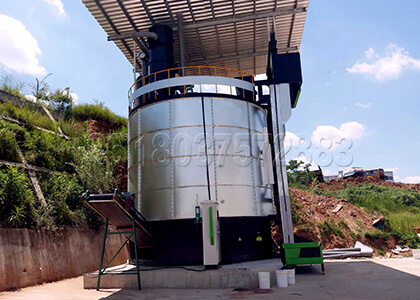
Compost Machines Make Industrial Scale Composting A Viable Business

Backyard composting has been popular for a long time however with the growing awareness of the benefits of using organic fertilizers, industrial scale composting has emerged being a profitable home business opportunity inside the recent times. These industrial composting facilities are capable of processing huge volumes of waste material and convert them into useful organic manure. Numerous strategies for industrial composting have been in use today for example the in-vessel processing, windrow processing and aerated static pile composting. All these methods require usage of industrial machines in order to accelerate and streamline the entire process of composting. What follows is a short guide about the industrial composting process and machines employed in these processes.

Before you start the process of composting, the waste material has to be pre-treated in order to achieve the desired moisture content as well as required carbon nitrogen ratio. Experts recommend achieving a moisture content close to 50 to 60% before the waste material is able to be processed for composting. As an illustration, for those who have entry to huge levels of fresh cow dung, it is suggested to include some ready organic manure with low moisture content in order to lower the entire moisture content from the mixture.

If you use the windrow composting process, the organic material must be arranged in piles in open-air or perhaps in a specially prepared composting site. The material will need to be turned constantly and it is recommended to make use of industrial scale compost fertilizer machines say for example a hydraulic windrow turner or perhaps a compost turner. The windrow must be around 1.5 to 2 m in width and up to 1.2 m in height. The length doesn’t really matter and you will spread it across dependant upon the option of space. In a nutshell, the duration of windrow is dependent upon the actual size of the chosen compost site. With this method, no tank is required but you do need large space for this particular process.

Another method is aerobic composting. In cases like this, you will want forklifts and also huge tanks as a way to perform the composting process. The optimal tanks possess a height as much as 1.3 m plus a width of about 6 m with length including 50 to 100 m. There are various varieties of turners available in the market in order to execute the composting process. These machines are extremely valuable in industrial scale composting since these accelerate the composting process and let you produce organic manure at the faster rate.

Several of the main forms of compost turners include self-propelled type, tow behind type, forklift type and groove type. Every one of these different types get their own advantages and should be employed in various conditions. As an illustration, a completely hydraulic compost turner features a huge capacity and is perfect for a large-scale composting facility.

Overall, industrial scale composting has emerged like a viable and profitable income opportunity, especially with the aid of industrial machines specifically designed for big scale composting. Also, it is eco-friendly and able to diverting huge numbers of organic materials from landfills or waste disposal facilities. Industrial scale composting not simply helps in converting waste material into high-quality organic manure but it also produces jobs and keeps the surroundings clean.

Why Has Making Vermicomposting Fertilizer Become So Popular?

During the 1960s there was a move towards the use of agrochemicals in order to boost agricultural output. Although this did have the desired effect it has become apparent that this boost to production came at a cost to the environment – and to human health. Agrochemicals killed soil organisms and reduced the ability of many crops to resist disease and the actions of pests. There have also been several studies indicating that these chemicals adversely affect human health. Runoff from pesticides has also been implicated in increasing mutations of species in riverine systems – and a massive die-off of species such as amphibians. It was clear that an alternative had to be found.

The quest for an organic alternative to agrochemicals has also become more urgent due to the fact that many agricultural operations are looking to capitalize on the increasing demand for organic produce. Research suggests that in the U.S. alone between 90,000 to 100,000 farmers have switched over to organic farming.

It was during the search for alternatives to man-made chemicals that the effectiveness of making earthworm excreta fertilizers as a method of improving the health of the soil and improving nutrient loads was discovered. This led to an increased interest in ‘Vermicompost’. Adding to the attraction of vermiculture (the use of earthworms) is the fact that these can convert organic manure waste into a highly effective fertilizer. Waste management is becoming an increasingly challenging sector – and the use of earthworms provides an alternative to other, less environmentally friendly methods of dealing with organic waste.

Industrial vermicomposting equipment

Another advantage of using earthworm casts (the excreta of the worms) is that it is a faster process than simple composting. The organic material that passes through the digestive system of the earthworm undergoes a transformation. Although the process is not fully understood the result is excreta that is rich in beneficial microbes and nutrients, as well as plant growth regulators – and appears to have pest repellant properties as well. You can make vermicomposting fertilizers for high quality fertilizer producing.

Studies have shown that the worm castings are far richer than even widely available potting soil – containing around 5 times more nutrients. Chemical analysis reveals just how powerful this material can be when compared to potting soil (used as a yardstick). The castings contain up to 5 times more available usable nitrogen, 7 times more potash and one and a half times as much calcium. It also appears that the phosphorus is converted into the worms gut into a form that plants can use. This is especially important. The more available Phosphorus that is delivered, the more robust the plant growth. In addition, vermicompost alters the nature of the soil, increasing its ability to retain water. Vermicompost also contains a wealth micronutrients such as Sodium (Na), Zinc (Zn), Calcium (Ca), Sulphur (S), Iron (Fe), and Magnesium. Besides, it is also available for you to utilizing some other organic manure for fertilizer making.

In short, vermiculture shows exceptional promise as an organic fertilizer that contributes to exceptional plant growth, enables agricultural crops to resist disease and pests – and above all is kinder to the environment (and human beings) than man-made agrochemicals.