How Much Does It Cost to Build an NPK Fertilizer Production Plant?

The NPK fertilizer production plant cost is one of the most important concerns for fertilizer manufacturers, project investors, and fertilizer equipment buyers who plan to enter the compound fertilizer industry. A complete NPK fertilizer production plant requires different types of fertilizer production equipment, raw material preparation systems, granulation machinery, drying systems, and packaging solutions. Therefore, the total investment depends on production capacity, fertilizer manufacturing process design, automation level, and selected fertilizer machinery.

When a company plans an NPK fertilizer production project, the investment budget should include not only the fertilizer production line price but also factory layout, raw material handling, installation requirements, and future expansion possibilities. A suitable fertilizer production solution helps investors control the initial cost while maintaining stable fertilizer manufacturing performance.

A professional fertilizer equipment manufacturer can provide customized production plant design according to different production goals, raw materials, and market requirements.

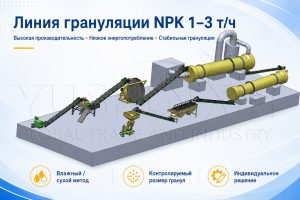
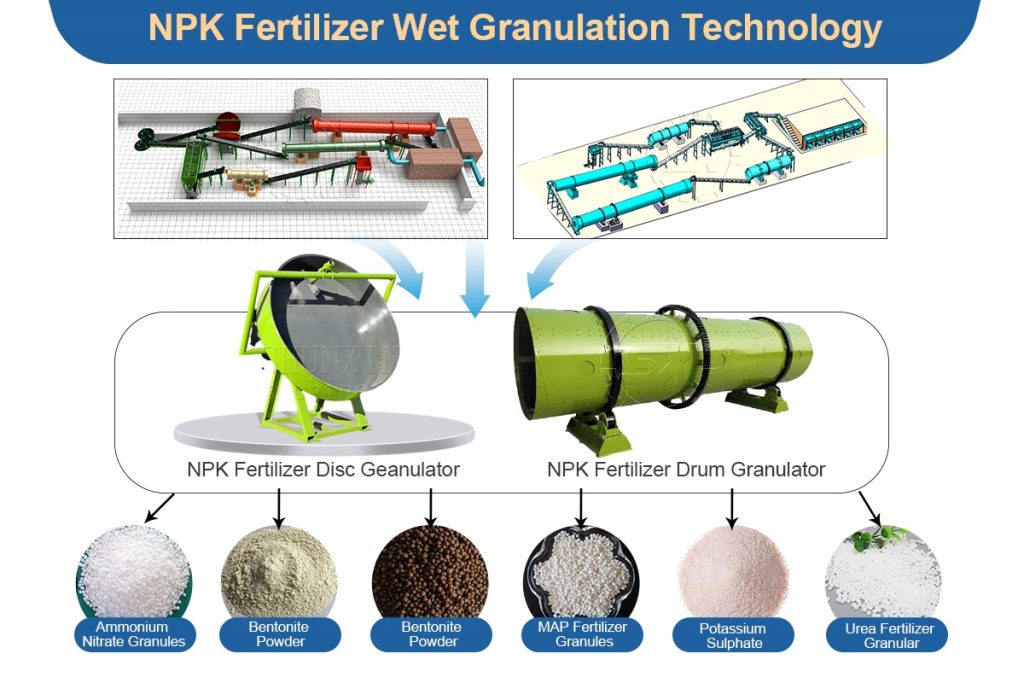
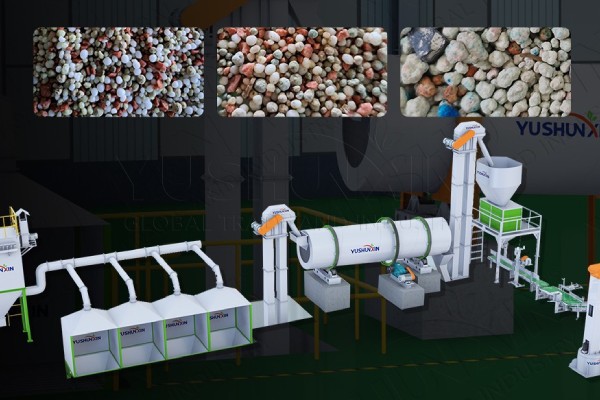
NPK Mixtures Wet Granulation Technology


What Factors Affect NPK Fertilizer Production Plant Cost?

The NPK fertilizer plant cost depends on several important factors. The first factor is the production capacity. A small scale NPK fertilizer production plant usually requires a lower investment, while a large industrial fertilizer manufacturing plant needs more equipment and a larger factory area.

The second factor is the fertilizer production process design. Different NPK fertilizer manufacturing procedures require different machines. A typical compound fertilizer production process may include:

  • Raw material crushing and preparation
  • Automatic batching system
  • Mixing equipment
  • Granulation machine
  • Drying and cooling system
  • Screening equipment
  • Coating and packaging system

The third factor is the raw material type. NPK fertilizer producers may use materials such as urea, ammonium phosphate, potassium chloride, potassium sulfate, and other compound fertilizer ingredients. Different materials influence the selection of fertilizer production machinery and the final equipment quotation.


What Equipment Is Needed for an NPK Fertilizer Production Plant?

A complete NPK fertilizer production plant requires multiple machines that work together as a fertilizer manufacturing system.

The raw material preparation stage usually uses crushers and screening machines to ensure suitable particle size. The mixing procedure uses fertilizer mixers to achieve uniform ingredient distribution.

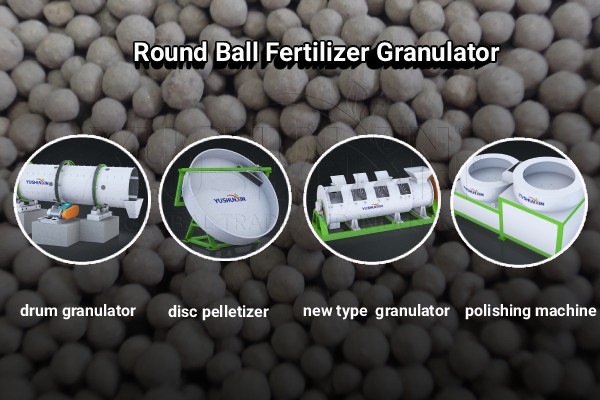
The granulation stage plays an important role in fertilizer production quality. Different fertilizer manufacturers may select different granulation technologies according to their products. For example, rotary drum granulators, disc granulators, or extrusion granulators can be selected based on production requirements.

The drying and cooling system helps control fertilizer moisture content after granulation. The screening machine separates qualified fertilizer granules from oversized or undersized materials. Finally, the packaging system prepares finished NPK fertilizer products for storage and transportation.

A complete fertilizer production equipment system allows manufacturers to produce stable fertilizer granules for agricultural markets.


How Can Investors Calculate Fertilizer Factory Investment Budget?

The fertilizer factory investment budget should consider both equipment purchasing cost and long-term operation requirements.

The equipment price or fertilizer production line quotation usually changes according to:

  • Production capacity
  • Machine configuration
  • Automation requirements
  • Raw material characteristics
  • Factory space
  • Local installation conditions

For example, a fertilizer producer who requires a compact production system may choose a cost-effective fertilizer production line with necessary machines only. A large fertilizer manufacturer may select an automatic fertilizer manufacturing system with higher production efficiency.

The investment calculation should also include maintenance costs, spare parts, energy consumption, and future production expansion. A reasonable fertilizer plant design helps reduce unnecessary expenses during operation.


What Raw Materials Can Be Used for NPK Fertilizer Manufacturing?

Different NPK fertilizer manufacturers select different raw materials according to market demand.

Common raw materials for NPK fertilizer production include:

  • Urea
  • Ammonium sulfate
  • Monoammonium phosphate (MAP)
  • Diammonium phosphate (DAP)
  • Potassium chloride
  • Potassium sulfate

The fertilizer production technology should match the characteristics of these materials. Powder materials require suitable mixing and granulation preparation, while different moisture levels influence the fertilizer manufacturing process.

A professional fertilizer production system considers material characteristics before equipment selection, which helps improve granule quality and production stability.


How to Choose a Cost-Effective NPK Fertilizer Production Solution?

Selecting a fertilizer production plant requires more than comparing the lowest equipment price. A suitable fertilizer manufacturing solution should balance investment cost, production capacity, product quality, and future development.

A fertilizer manufacturer should evaluate:

  • Whether the fertilizer production machine matches the required output
  • Whether the production procedure fits local raw materials
  • Whether the fertilizer equipment supplier can provide technical support
  • Whether the fertilizer production line allows future expansion

The right fertilizer production design helps companies build a stable fertilizer manufacturing business with controlled investment.

Conclusion

The NPK fertilizer production plant cost depends on production capacity, fertilizer manufacturing process design, equipment selection, and project requirements. A complete fertilizer production system should combine suitable fertilizer machinery, reasonable investment planning, and reliable technical support.

For fertilizer producers, farm-related fertilizer businesses, and project investors, choosing the right fertilizer production equipment helps create a practical and sustainable compound fertilizer manufacturing project.

A professional fertilizer equipment manufacturer – Yushunxin provides fertilizer production solutions according to different project requirements.

For detailed information about NPK fertilizer plant cost and solutions, please visit: https://www.fertilizerproductequipment.com/npk-fetilizer-plant-cost/

What Is the Cost of Setting Up a Fertilizer Granulation Plant

When you start planning a fertilizer project, the equipment price is often the first number you want to know. However, the total investment usually depends on more than one machine. Your raw materials, production capacity, fertilizer formula, workshop conditions and automation level all influence the final configuration.

Instead of looking at a single price, you can first understand which parts of the project affect the overall cost.

What Determines the Initial Equipment Investment?

The first factor is your production target. A small project supplying local farms may need a simpler setup, while a commercial fertilizer business with stable market demand may require a larger production route.

The core equipment selection also changes the investment range. For example, a fertilizer granulator machine may use different granulation methods depending on your material characteristics and product requirements. Different designs influence capacity, energy consumption and supporting equipment.

Raw materials are another important point. Organic waste, compost and chemical fertilizer materials behave differently during processing, so the equipment arrangement needs to match the material flow.

How Does Your Fertilizer Type Affect the Project Cost?

Your final fertilizer product often decides the processing route. If you are handling manure, compost or agricultural waste, an organic fertilizer granulation plant may include crushing, mixing, granulation, drying, cooling, screening and packaging sections.

For NPK or blended fertilizer production, the process can involve different feeding, mixing and granulation requirements. A compound fertilizer granulation plant can be designed around your formula, moisture content and expected output.

The more customized your fertilizer product becomes, the more attention needs to be given to process matching rather than only equipment quantity.

fertilizer pellet machine


Which Factors Increase or Reduce Operating Costs?

After installation, daily operation becomes another part of your project calculation. Energy use, labor requirements, maintenance access and spare parts availability can influence long-term expenses.

For larger projects, an industrial fertilizer granulation plant may include more automation to create a smoother production flow. Features such as automatic feeding, centralized control and integrated packaging can reduce manual handling during operation.

Your local conditions also matter. Available power supply, workshop space and material storage methods may change the final design.

How Can You Plan a More Suitable Fertilizer Granulation Project?

Before requesting a quotation, you can prepare several basic details: your raw material type, daily production target, fertilizer formula, available site area and expected packing method.

A professional fertilizer granulator supplier can then review these conditions and suggest a configuration closer to your actual needs.

The goal is not simply to choose the cheapest equipment. A well-matched granulation plant gives you a clearer production route and helps avoid unnecessary investment in unused functions.

If you want to learn more about equipment selection, process design and complete solutions, Click here for more details.

You can also review the complete fertilizer granulation solutions here: https://www.shunxin.eu/fertilizer-granulation-plant/

На что обратить внимание инвестору перед покупкой линии органических удобрений из куриного помёта

Покупка линии органических удобрений из куриного помёта с расчётом комплектации должна начинаться не с перечня машин, а с проверки сырья, планового продукта и ограничений площадки. Для птицефабрики это инвестиционный проект, где ошибка в исходных данных быстро превращается в лишние капитальные затраты, узкие места по производительности или нестабильное качество удобрения.

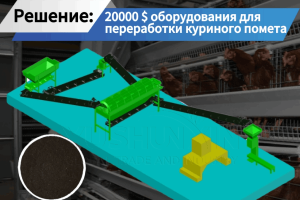
20000$-Оборудования-для-переработки-куриного-помета

Сначала определите, какой продукт действительно нужен рынку

Инвестору важно заранее решить, будет предприятие выпускать зрелый компост, порошковое удобрение или гранулы. Порошковая схема обычно короче: после компостирования материал измельчают, просеивают и упаковывают. Для гранулированного продукта дополнительно требуются дозирование, смешивание, грануляция, сушка, охлаждение, повторное просеивание и возврат некондиционной фракции. Поэтому одинаковый объём помёта ещё не означает одинаковую стоимость проекта.

Выбор должен опираться на требования покупателя к размеру частиц, влажности, упаковке и составу. Если готовый продукт планируется использовать только на собственных полях, сложная товарная доработка может быть избыточной. Если удобрение будет продаваться через дилеров и перевозиться на большие расстояния, гранулы и автоматическая фасовка могут быть оправданы, но это необходимо подтвердить расчётом логистики и цены реализации.

Проверьте сырьё в разные сезоны

Поставщику нужны не усреднённые слова «куриный помёт», а реальные данные: суточный и годовой объём, влажность, доля подстилки, наличие песка, камней и посторонних включений, периодичность поступления и способ хранения. Желательно передать несколько анализов, полученных в разные сезоны. Эти показатели влияют на необходимость сепарации, подбор смесителя, размеры компостной зоны, тип дробилки и тепловую нагрузку сушилки.

Если влажность сырья меняется, производительность всей линии нельзя оценивать только по массе на входе. Следует отдельно зафиксировать массу влажного сырья, ожидаемую массу после компостирования и плановый выпуск готового продукта. Именно по этому балансу подбирают комплект оборудования для выпуска гранулированного удобрения из птичьего помёта, а не по максимальной цифре в каталоге.

Компостирование — отдельный производственный участок

Свежий помёт нельзя просто подать в гранулятор. Сначала организуют подготовку смеси, аэробное компостирование и контроль зрелости материала. Для оценки технологической схемы полезно понимать основы аэробного компостирования: процесс зависит от аэрации, влажности, структуры смеси и регулярности перемешивания.

Инвестору следует сравнить буртовую площадку, желобную систему и закрытый ферментационный реактор. На выбор влияют климат, доступная площадь, требования к запахам, уровень автоматизации и режим работы. При подготовке технического задания стоит отдельно запросить варианты оборудования для управляемого компостирования сырья, чтобы сопоставить не только цену машины, но и строительные работы, подъездные пути, навес, вентиляцию и трудозатраты.

Проверьте согласованность производительности всех узлов

Типичная ошибка — купить гранулятор нужной номинальной мощности, не проверив дробление, дозирование, сушку, охлаждение, просеивание и упаковку. Производительность должна быть согласована по реальному материалу. Нужен резерв для возвратной фракции, плановых остановок и колебаний влажности. Буферные бункеры между критическими операциями помогают уменьшить влияние кратковременных сбоев, но их объём также должен быть рассчитан.

Попросите поставщика представить технологическую схему с потоками материала, перечень основного и вспомогательного оборудования, установленную мощность, требования к воде и топливу, точки аспирации, предполагаемое количество операторов и список быстроизнашиваемых деталей. Если какие-либо параметры не подтверждены испытаниями сырья, их следует обозначить как «требуют подтверждения», а не превращать в гарантированное обещание.

Считайте полную стоимость проекта

Цена оборудования — только одна часть бюджета. В расчёт входят фундамент и металлоконструкции, электроснабжение, теплогенератор, аспирация, склад сырья и готового продукта, лаборатория, монтаж, пусконаладка, обучение, запасные части, упаковочные материалы и оборотный капитал. Отдельно оцениваются расходы на персонал, топливо, электроэнергию, ремонт и утилизацию некондиции.

Полезно запросить не одну, а две или три конфигурации: минимальную для запуска, базовую для плановой загрузки и расширяемую. Сравнивать их нужно по одинаковым исходным данным и одинаковой границе поставки. Чтобы перейти от общего списка к инженерному предложению, можно посмотреть вариант для вашего проекта и передать поставщику результаты анализа сырья, план выпуска, форму продукта, размеры площадки, доступные энергоресурсы и требования к автоматизации.

Что должно быть в запросе инвестора

Хороший запрос включает источник и объём помёта, влажность и примеси, число рабочих дней в году, желаемую часовую и годовую производительность, целевую форму удобрения, диапазон размера гранул, тип упаковки, схему размещения и климатические условия. Дополнительно укажите местные требования по воздуху, стокам и обращению с отходами. Нормы и разрешительные процедуры должны быть подтверждены местными специалистами.

Перед подписанием договора сопоставьте комплектность поставки с планом участка, проверьте интерфейсы между машинами и зафиксируйте критерии приёмки. Сроки, окончательная цена и достижимая производительность определяются после подтверждения сырья и инженерных условий.

https://www.sxmashina.com/liniya-po-proizvodstvu-organicheskikh-udobreniy-iz-kurinogo-pometa/

How Much Does a Complete 500 kg/h Leafy Salad Processing Line Cost for a Ready-to-Eat Salad Factory?

For a ready-to-eat salad manufacturer, the cost of a complete 500 kg/h leafy salad processing line cannot be determined by capacity alone. The final investment depends on the vegetables being processed, the required washing stages, moisture-control targets, packaging method, workshop layout, automation level, and local utility conditions. A realistic quotation should therefore describe the complete process rather than list one washing machine and call it a production line.

What Should a Complete 500 kg/h Salad Line Include?

A ready-to-eat salad factory normally needs to control the product from raw vegetable reception to final packing. A practical production flow may include:

  1. Raw vegetable receiving and temporary storage
  2. Manual inspection, trimming, and root removal
  3. Leaf separation or size reduction
  4. Adjustable cutting
  5. Vortex washing and impurity separation
  6. Secondary rinsing
  7. Vibrating draining
  8. Centrifugal dehydration
  9. Optional surface air drying
  10. Weighing, bagging, sealing, and date coding

The exact configuration depends on whether the factory processes whole lettuce leaves, shredded cabbage, spinach, celery, herbs, or mixed salad vegetables. These materials are all classified broadly as leaf vegetables used as salad greens, but their structures and handling requirements are different.

Whole leaves may need gentler conveying and washing. Cut lettuce and shredded cabbage require better control of floating fragments and surface water. Spinach can carry sand between folded leaves and may need soaking or multiple washing stages. Therefore, the raw material mix directly affects equipment selection and cost.

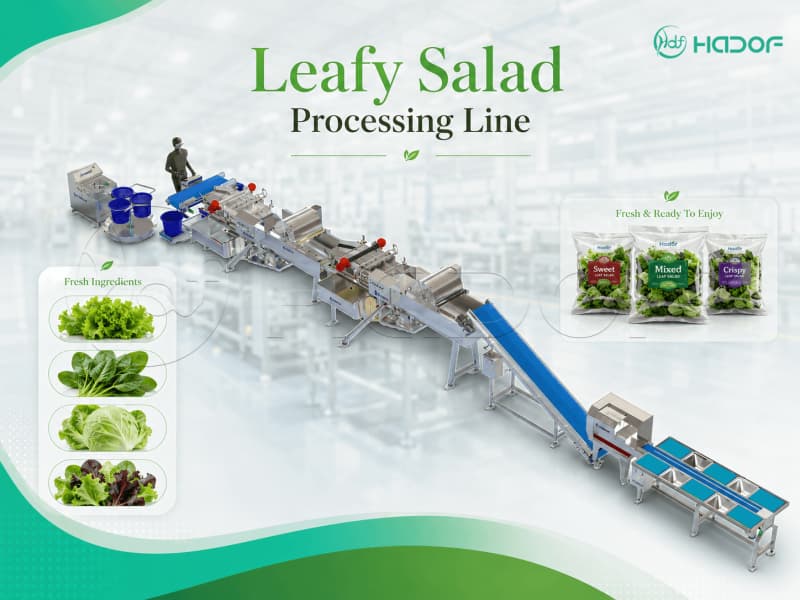
Leafy Salad Processing Line

Which Equipment Has the Greatest Influence on the Price?

Sorting and Cutting Equipment

A basic project may use a manual stainless-steel sorting table, while a larger factory may require a longer inspection conveyor with multiple workstations. Cutting costs also change according to the required cut size, feeding width, blade configuration, variable-speed control, and the number of products processed on the same machine.

A factory producing several salad recipes should consider the time required for blade replacement, cleaning, and product changeovers. A lower initial machine price may not represent a lower operating cost if frequent product changes create long stoppages.

Washing and Water Management

The washing section is usually a major part of the investment. A single washing stage may be suitable for relatively clean raw material, but vegetables with more sand, soil, insects, or floating impurities may require soaking, two-stage washing, overflow separation, filtration, and a final clean-water rinse.

The choice between vortex and bubble washing should be based on leaf size and condition. Vortex flow is commonly considered for cut and delicate leafy vegetables, while large whole leaves may need a gentler bubble-washing stage. Buyers can study the principles of industrial leafy green washing and dewatering technology before deciding how many washing modules their factory needs.

Water circulation tanks, removable filters, pumps, spray pipes, and sediment-discharge structures add to the purchase price. However, they may also make water management and daily cleaning more practical. The supplier should clearly distinguish recirculated washing water from the clean water used for the final rinse.

Dewatering and Surface Drying

Washing is only half of the process. Excess water can affect package appearance, product handling, weighing accuracy, and downstream operations.

A vibrating drainer removes free water after washing and can provide a final spray rinse. A centrifugal dehydrator then removes more moisture from the leaves. Its operating time and speed should be adjustable for different vegetables. An air dryer may be added when the product specification requires further surface-water removal before packing.

Not every factory needs every drying module. A central kitchen supplying vegetables for same-day cooking may accept a simpler configuration. A retail ready-to-eat salad factory may place greater importance on controlled dewatering and packaging preparation.

How Does the Packaging Method Change the Investment?

Manual bagging and sealing require less initial equipment investment, but they depend more heavily on labor and operator consistency. Automatic weighing and packaging can support continuous production, but the suitable system depends on bag size, target weight, number of salad recipes, packaging film, sealing method, labeling, and required production speed.

Before requesting a quotation, decide whether the project needs:

  • Manual weighing and bag sealing
  • Semi-automatic weighing
  • Automatic weighing and pillow-bag packaging
  • Modified-atmosphere packaging integration
  • Metal detection, check weighing, or date coding

Optional inspection and packaging equipment should be quoted separately so that buyers can distinguish essential machines from later expansion modules.

Why Does Factory Layout Affect the Cost?

Two production lines with the same nominal capacity may have different conveyor lengths and connection requirements. A straight layout is simple, but an L-shaped or U-shaped arrangement may fit the available workshop better. Drainage direction, floor slope, cleaning access, raw and finished product routes, and packaging-room separation should be reviewed before manufacturing begins.

Buyers should provide a workshop drawing showing:

  • Available length, width, and ceiling height
  • Doors, columns, walls, and restricted areas
  • Water inlet and drainage positions
  • Electrical supply and voltage
  • Raw material entrance
  • Packaging and finished-product exits
  • Operator passages and sanitation areas

Without this information, a supplier can only prepare a preliminary estimate.

What Information Is Needed for an Accurate Quotation?

When requesting an automatic leafy salad processing line quotation for food factories, provide more than the phrase “500 kg/h salad line.” A useful inquiry should include:

  • Names and photographs of the vegetables
  • Whole-leaf or cut-product requirements
  • Required cutting sizes
  • Dirt and sand conditions
  • Incoming and finished-product capacity
  • Number of washing stages expected
  • Final surface-moisture requirements
  • Manual or automatic packaging preference
  • Daily operating hours and production shifts
  • Workshop dimensions and preferred layout
  • Local voltage, frequency, and phase
  • Water-supply and drainage conditions
  • Destination country and delivery location

This information helps the supplier prepare a configuration list, utility schedule, layout proposal, and conditional price range.

How Should Buyers Compare Different Quotations?

Do not compare only the total price. First, check whether each quotation contains the same process stages. One supplier may quote only cutting, washing, and draining, while another includes sorting, centrifugal dehydration, conveyors, air drying, and packaging.

Buyers should compare:

  • Equipment included and excluded
  • Food-contact material
  • Effective processing width
  • Adjustable operating parameters
  • Water filtration and circulation design
  • Cleaning and maintenance access
  • Spare parts supplied
  • Installation responsibilities
  • Operator training scope
  • Delivery conditions
  • Warranty terms
  • Utility and workshop requirements

Food factories, central kitchens, supermarket suppliers, chain catering companies, and project investors can also review Hadof food processing equipment engineering support when evaluating whether the supplier can connect individual machines into a complete processing workflow.

Is a Modular Line Better for a New Salad Factory?

A modular configuration can reduce the initial investment when production demand is still developing. The factory may begin with sorting, cutting, washing, vibrating draining, centrifugal dehydration, and manual packing. It can later add another washing stage, an air dryer, automatic weighing, or packaging equipment.

However, future expansion should be considered in the first layout. Reserve sufficient space, electrical capacity, drainage access, and conveyor connection points. Otherwise, adding equipment later may require expensive workshop changes.

Final Purchasing Recommendation

The right 500 kg/h salad line price is the cost of a configuration that matches the raw material, final product, hygiene plan, packaging format, and available factory—not simply the cheapest equipment list.

Before making a purchasing decision, ask for a detailed process flow, equipment list, workshop layout, utility requirements, quotation scope, and excluded items. This approach gives food processors a clearer investment basis and reduces the risk of discovering missing production stages after installation. You can visit: https://www.hadofps.com/solutions/leafy-salad-processing-line/

How Much Does an Organic Fertilizer Production Plant Cost in 2026

When you discuss a new organic fertilizer project, the first question is usually the investment. In 2026, an equipment-only budget may start around USD 30,000–100,000 for a basic powder line, while a commercial granulation line can range from about USD 100,000 to USD 550,000 or more. Your final budget depends on capacity, raw material condition, product form, automation, environmental systems, and the supplier’s delivery scope.

Start With Your Product and Capacity

Before comparing prices, you can define whether you plan to sell powder or granules. A powder line normally uses compost crushing, screening, blending, and packing equipment. A granule line adds granulation, drying, cooling, coating, and return-material handling, so its investment is usually higher.

Capacity also changes the number and size of machines. A 1–3 t/h farm project may use a compact arrangement, while a 10–20 t/h factory often needs larger storage, continuous feeding, multiple packaging positions, and more workshop space. A practical organic fertilizer production line design and layout helps you compare equipment cost together with land use, material flow, maintenance access, and future expansion.

What Does a Turnkey Price Include?

When you receive a turnkey organic fertilizer plant price, you can check the quotation boundary carefully. Some offers cover only the main machines. Others may include conveyors, platforms, electrical cabinets, dust collection, installation guidance, commissioning, and operator training.

Civil construction, power connection, boilers, laboratories, forklifts, warehouses, and local permits may remain outside the equipment quotation. Asking for a clear inclusion and exclusion list makes different supplier proposals easier to compare.

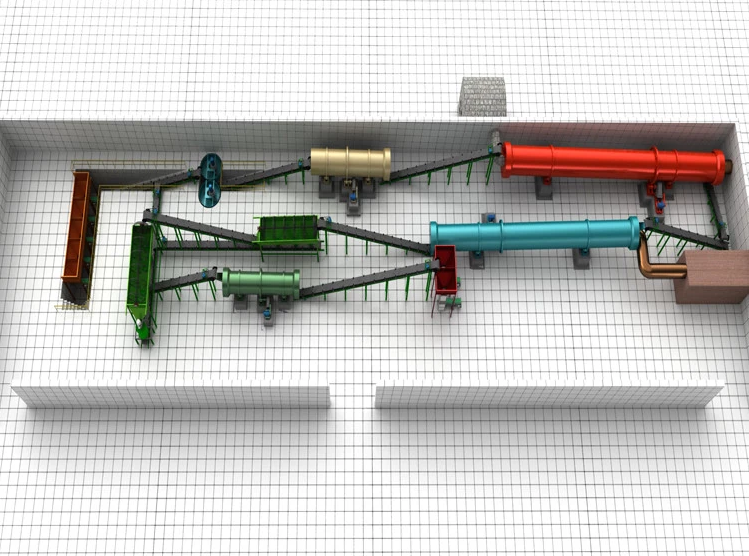
organic fertilizer granulation line

How Automation Changes the Budget

Automation can reduce manual feeding, weighing errors, and repeated handling, although it adds instruments, control cabinets, sensors, and programming. The PLC controlled organic fertilizer production line cost depends on how many sections you want to monitor and connect.

You may begin with automatic batching and packing, then reserve interfaces for palletizing, production records, and remote monitoring. This approach gives you room to expand without paying for every function at the first stage. click here for more details.

Include Environmental and Operating Costs

Your budget can also cover odor treatment, ventilation, wastewater handling, and organic fertilizer plant dust emission control. These systems influence workshop conditions, local approval, equipment cleanliness, and long-term operation.

It is also useful to estimate electricity, fuel, labor, wearing parts, packaging materials, and maintenance. A lower purchase price may not produce the lowest cost per tonne if the line consumes more energy or creates frequent stoppages.

Prepare Information Before Requesting a Price

When considering how to get an organic fertilizer plant quotation, you can provide your raw material, moisture level, hourly capacity, annual operating days, target product, package size, available land, power supply, and preferred automation level.

With this information, your supplier can prepare a more relevant process plan, equipment list, layout, utility estimate, and project budget. You can then compare solutions based on total project scope rather than one headline price for your planned market. If you are interested in organic fertilizer plant cost, you can visit: https://www.shunxin.eu/organic-fertilizer-production-plant-cost/

How to Build an Efficient Food Production Line with an Industrial Freeze Dryer?

Food manufacturers increasingly choose freeze-drying technology to produce premium fruit snacks, vegetables, meat products, seafood, herbs, instant ingredients, and pet treats. Compared with conventional hot-air drying, freeze drying removes moisture under low-temperature and vacuum conditions. This process helps food maintain its original color, flavor, shape, texture, and nutritional value.

A suitable industrial freeze dryer machine allows you to control temperature, vacuum pressure, and drying time according to your raw material. However, the freeze dryer alone does not determine the efficiency of the entire project. You also need to consider washing, cutting, pre-freezing, material handling, and packaging equipment when you design a complete production line.


What Products Can an Industrial Freeze Dryer Process?

An industrial freeze dryer can handle many types of high-value food and agricultural materials.

Fruit processors commonly use freeze dryers for strawberries, mangoes, bananas, apples, blueberries, pineapples, and peaches. Vegetable factories can process corn, peas, carrots, onions, garlic, spinach, mushrooms, and other products. Manufacturers often add these freeze-dried vegetables to instant soups, meal kits, seasonings, and noodle products.

Meat and seafood processors can produce freeze-dried shrimp, fish, beef, chicken, and liver products. Pet food manufacturers can also develop freeze-dried dog treats, cat treats, meat cubes, and nutritional snacks.

Herbal processors can use the equipment for medicinal herbs, roots, plant materials, and certain agricultural ingredients. This flexibility allows a factory to develop several product categories with one freeze-drying system.

Each raw material requires a suitable drying curve. Operators need to adjust freezing temperature, heating temperature, vacuum pressure, and drying time according to the moisture content, thickness, sugar content, and internal structure of the product.


How Does the Freeze-Drying Process Work?

The freeze-drying process usually includes freezing, primary drying, and secondary drying.

During the freezing stage, the refrigeration system lowers the product temperature until the water inside the material forms ice. Proper freezing helps the product maintain its shape and internal structure.

During primary drying, the vacuum system reduces the pressure inside the chamber. The frozen water changes directly from ice into vapor under the controlled vacuum environment. The condenser collects the vapor, while the heating system supplies the energy required for sublimation.

During secondary drying, the system removes the remaining bound moisture from the product. After the cycle finishes, operators can unload, inspect, and package the finished material.
The final moisture level depends on the raw material, storage requirements, packaging method, and target market. A reliable freeze dryer gives operators accurate control over each stage of the drying cycle.


Start the Production Line with Proper Cleaning

Raw material preparation directly affects the quality of the finished freeze-dried product. Dust, soil, leaves, sand, and surface residues can reduce product quality and increase sorting work.

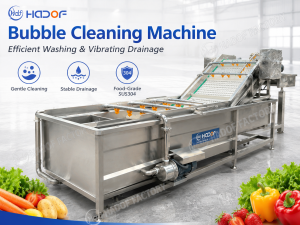
A bubble cleaning machine uses circulating water and air bubbles to clean fruits, vegetables, seafood, and herbs. The gentle washing action helps protect delicate products from excessive impact.

Bubble Cleaning Machine

Operators can adjust the water flow, bubble intensity, and cleaning time according to the raw material. A production line may also include sorting platforms, peeling machines, cutting machines, blanching machines, and dewatering equipment.

Uniform product size improves drying consistency. Pieces with similar thickness usually contain similar amounts of moisture and require similar drying times.


Choose a Suitable Pre-Freezing Method

Pre-freezing plays an important role in an industrial freeze-drying project.

Small factories may place loaded trays directly into a freeze dryer with an integrated freezing function. Larger factories often use a separate freezing system to prepare several batches in advance.

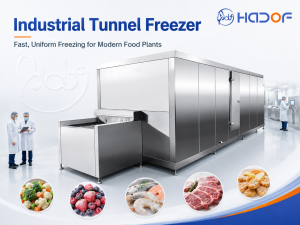
An industrial tunnel freezer supports continuous freezing for fruits, vegetables, meat, seafood, and prepared foods. The conveyor carries materials through controlled low-temperature airflow. Operators can adjust the conveyor speed and freezing conditions for different products.

Industrial Tunnel Freezer

A separate tunnel freezer can improve production flow when a factory handles large batches. The system can prepare the next batch while the freeze dryer completes the current drying cycle.

Your raw material, daily capacity, workshop layout, and production schedule should determine whether the project needs a separate pre-freezing system.


Match the Freeze Dryer to Your Production Capacity

Every freeze-drying project has different production requirements. The appropriate equipment configuration depends on your raw material, target output, workshop area, processing flow, and packaging needs.

Hadof can design a customized freeze-drying production line for your factory. The solution can include raw material preparation, washing, cutting, pre-freezing, freeze drying, conveying, and packaging equipment to create a smoother and more efficient production process.


Protect the Final Product with Suitable Packaging

Freeze-dried food absorbs moisture quickly after the drying cycle. The packaging section should therefore operate close to the freeze dryer and reduce the product’s exposure to humid air.

A suitable food packing machine can complete feeding, weighing, bag forming, filling, sealing, cutting, and finished-product output.

Loose freeze-dried fruit, vegetable pieces, candy, and pet treats often work with vertical packaging systems and multi-head weighers. Powder products may require screw dosing equipment, while regularly shaped products may suit pillow-packing machines.

The packaging material should provide good moisture resistance, oxygen resistance, and sealing performance. Suitable packaging helps extend shelf life and protect the texture of the freeze-dried product.


Plan the Complete Freeze-Drying Production Line

A complete freeze-drying line may include raw material sorting, washing, peeling, cutting, blanching, dewatering, pre-freezing, vacuum freeze drying, inspection, weighing, and packaging.

Each machine should match the processing capacity of the next section. An unsuitable capacity arrangement may cause material accumulation, long waiting times, excessive labor requirements, or unused equipment capacity.

You should also consider the workshop layout. A practical layout can reduce material movement, improve cleaning efficiency, and create a smoother production process.

The Hadof  factory introduces industrial freeze dryers, quick-freezing systems, washing equipment, cutting machines, conveyors, packaging equipment, and complete freeze-drying production lines.

When requesting a production proposal, provide the raw material, batch weight, required output, final product size, packaging method, available workshop dimensions, voltage, and utility conditions. Clear project information helps the supplier recommend suitable equipment and arrange a practical production process.


Contact Hadof for a Customized Freeze-Drying Solution

If you need customized freeze-drying production line equipment, contact Hadof for a solution based on your raw material, production capacity, workshop layout, processing requirements, and packaging method.

The Hadof team can help you select the appropriate industrial freeze dryer machine and combine it with washing, cutting, pre-freezing, conveying, and packaging equipment.

You can learn more about Hadof’s freeze-drying solutions at: https://www.freezehadof.com/

Как модернизировать действующую линию NPK до 20 т/ч без полной замены оборудования

Грамотная модернизация действующей линии NPK до производительности 20 т/ч начинается с технического аудита. Предприятию не всегда требуется полностью демонтировать существующую линию. Часть машин можно сохранить, если их состояние и фактическая пропускная способность соответствуют новому производственному плану.

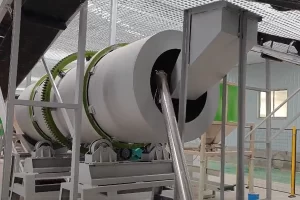
промышленный-роторный-барабанный-гранулятор-модель-SXZGZ-3210

Найдите реальное ограничение линии

Низкую производительность не всегда вызывает гранулятор. Ограничением может быть дозирование сырья, смешивание, транспортировка, сушка, просеивание или упаковка. Например, установка более крупного барабанного гранулятора не увеличит выпуск, если сушилка не сможет обработать дополнительный поток влажных гранул.

Аудит должен включать замеры часовой загрузки каждого узла, энергопотребления, времени простоев и доли возвратного материала. Также необходимо проверить состояние корпусов, приводов, редукторов, подшипников и систем управления.

Какие машины можно сохранить

Существующие бункеры, конвейеры, дробилки или упаковочные машины можно продолжать использовать, если они имеют достаточный запас производительности. Иногда модернизация требует замены только приводов, лент, дозаторов или отдельных компонентов системы управления.

Однако сохранение старого оборудования имеет смысл только после проверки его совместимости с новой схемой. Разная высота выгрузки, ширина конвейеров или скорость подачи могут нарушить непрерывность процесса.

Роль барабанного гранулятора

При производстве сложных NPK-удобрений барабанный гранулятор обеспечивает непрерывное укрупнение частиц во вращающемся корпусе. Для стабильной работы важны равномерная подача смеси, правильное увлажнение и согласованный возврат мелкой фракции.

Проект увеличения выпуска NPK без полной замены линии может предусматривать установку более производительного гранулятора и обновление только перегруженных участков. При этом сушильный барабан, охладитель и грохот необходимо пересчитать под новый материальный баланс.

Производство-барабанных-грануляторов

Как снизить риски модернизации

Предприятию следует подготовить текущую схему линии, модели оборудования, фактические показатели производства и рецептуры удобрений. Поставщику также нужны данные о влажности сырья, размере гранул, возвратной фракции и доступной электрической мощности.

Новая линия гранулирования NPK производительностью 10–20 т/ч может служить ориентиром при согласовании производительности основных участков. Однако окончательная компоновка модернизируемого предприятия должна учитывать уже установленные машины и размеры цеха.

Реконструкцию удобно выполнять поэтапно. Сначала предприятие устраняет главный производственный узел, затем проверяет работу всей системы под нагрузкой. После этого можно модернизировать следующий ограничивающий участок.

Правильно рассчитанные барабанный гранулятор и обновление узлов линии на 20 т/ч позволяют использовать пригодную часть существующего оборудования и направить инвестиции на реальные ограничения производства.

Для получения более подробной информации, пожалуйста, посетите: https://www.npkliniya.com/solutions/povyste-proizvoditelnost-vashey-linii-npk-s-barabannym-granulyatorom-20-t-ch/

Cómo Diseñar una Planta de Mezcla de Fertilizantes BB para Fórmulas NPK Variables

Una planta de fertilizantes BB permite fabricar distintas fórmulas NPK sin instalar un sistema completo de granulación. El proceso utiliza fertilizantes granulados ya preparados y realiza la dosificación, mezcla y envasado según la receta requerida. Por ello, esta solución resulta adecuada para distribuidores, fabricantes regionales y proyectos que necesitan responder rápidamente a cambios de mercado.

Sin embargo, una línea BB fiable no depende solamente de una mezcladora. La compatibilidad entre materias primas, la precisión de pesaje, la capacidad de almacenamiento y la protección contra la segregación determinan la calidad final de cada saco.

Verifique la compatibilidad de las materias primas granuladas

Una planta de mezcla de fertilizantes BB para fórmulas NPK granuladas debe trabajar con materiales de tamaño y densidad similares. La urea, el DAP, el MOP, el SOP y otros fertilizantes granulados pueden mezclarse de forma uniforme cuando sus características físicas son compatibles.

La urea, por ejemplo, aporta una alta concentración de nitrógeno. No obstante, su humedad, resistencia mecánica y tendencia al apelmazamiento deben mantenerse bajo control. Un material demasiado húmedo puede bloquear las tolvas. Un granulado frágil puede generar polvo durante el transporte.

Antes de definir una fórmula, conviene revisar el tamaño de partícula, la fluidez, la humedad y la proporción de cada componente. Estas verificaciones reducen el riesgo de separación de materiales después de la mezcla.

Ajuste la capacidad al mercado y a sus fórmulas

Una línea de mezcla de fertilizantes BB de 5–10 TPH suele ser adecuada para distribuidores locales y plantas con cambios frecuentes de fórmula. Esta configuración puede incluir tolvas de almacenamiento, alimentadores, sistema de pesaje, mezcladora BB, transportadores y una báscula de envasado.

Cuando el proyecto requiere mayor producción, un sistema de mezcla BB con tambor rotativo de 20–40 TPH puede aportar un ritmo de operación más continuo. En este caso, también debe aumentar la capacidad de las tolvas, el número de alimentadores y la velocidad de envasado.

La capacidad real de la planta no debe calcularse únicamente según la mezcladora. La dosificación, la transferencia de materiales y el empaquetado deben mantener el mismo ritmo. Si una etapa es más lenta, limitará toda la producción.

planta de mezcla de fertilizantes BB

Priorice una dosificación precisa antes de mezclar

Un equipo automático de dosificación, mezcla y envasado para fertilizante BB permite controlar cada materia prima antes de que entre en la mezcladora. Esta precisión resulta esencial porque la mezcladora distribuye los materiales, pero no puede corregir una receta mal dosificada.

Cada tolva debe corresponder a una materia prima o a un componente utilizado con frecuencia. Los proyectos con muchas fórmulas comerciales necesitan más compartimentos y un sistema de control independiente para cada material.

La segregación también merece atención. Los gránulos con diferente densidad o tamaño pueden separarse durante el transporte, especialmente cuando existen caídas altas o demasiados puntos de transferencia. Una disposición compacta reduce estos riesgos y mantiene la mezcla más uniforme antes del envasado.

Compare la mezcla BB con otras rutas NPK

Un diseño rentable de planta de fertilizantes a granel resulta especialmente atractivo cuando las materias primas ya tienen forma granular. La línea evita etapas como trituración, granulación húmeda, secado y enfriamiento. Por tanto, puede requerir una menor inversión inicial y menos espacio de producción.

No obstante, la mezcla BB no sustituye a la granulación cuando el proyecto parte de polvos químicos o necesita fabricar nuevos gránulos NPK. En ese caso, debe revisar los procesos NPK con materias primas en polvo y gránulos terminados antes de elegir la ruta de producción.

La mejor solución depende de sus materias primas, número de fórmulas, volumen de ventas y nivel de automatización esperado. Para comparar una configuración adaptada a su proyecto, conozca la configuración completa.

https://es.fertilizerbusinessplan.com/productos/planta-de-mezcla-de-fertilizantes-bb/