What Is the Cost Difference Between Pelletizing and Granulating in NPK Fertilizer Production?

In modern NPK fertilizer manufacturing, production technology and machinery selection directly affect total fertilizer plant cost. A fertilizer producer who plans a compound fertilizer production line must carefully analyze the cost difference between pelletizing and granulating processes. Both methods transform powder materials into uniform particles, yet they require different equipment configurations, energy inputs, and maintenance budgets. The comparison between pelletizing and granulating becomes a key factor in determining the final NPK fertilizer production plant cost and long-term economic efficiency.

A complete NPK fertilizer production line often includes raw material crushing, batching, mixing, granule-forming, drying, cooling, screening, and packaging sections. Each stage influences the material flow and investment scale. Therefore, understanding the specific requirements of pelletizing or granulation machinery helps optimize plant design and reduces unnecessary fertilizer factory cost during setup and operation.


Raw Materials and Their Role in Compound Fertilizer Granule or Pellet Production

Raw material characteristics determine process selection and production efficiency. Common raw materials for compound or NPK fertilizer production include urea, ammonium sulfate, ammonium chloride, potassium chloride, ammonium nitrate, monoammonium phosphate (MAP), diammonium phosphate (DAP), and various micronutrient powders. These sources provide balanced nitrogen, phosphorus, and potassium components necessary for NPK compound fertilizer manufacturing.

Different materials show different moisture contents, solubility, and hardness. For example, urea and potassium chloride dissolve easily and suit granulating procedures based on drum granulators or rotary wet granulation equipment, while MAP and DAP perform better in dry granulation lines with double roller extrusion granulators. When the raw materials contain more crystal particles or harder substances, a crushing machine and precise batching machine become necessary to maintain consistent granule formation. The compatibility between raw material properties and production machinery determines not only granule quality but also the compound fertilizer manufacturing plant cost related to energy consumption and equipment wear.

NPK Mixtures Wet Granulation Technology


Pelletizing vs. Granulating: Which Process Brings Higher NPK Fertilizer Plant Setup Cost?

Pelletizing and granulating show distinct differences in mechanical design and investment scale. A pelletizing line usually employs a pelletizer or pellet making machine that compresses powder material into dense pellets. This procedure often requires higher energy input and stronger mechanical pressure. It produces pellets with smooth surface and high bulk density, suitable for long-distance transport. However, the stronger compression and drying process increase the fertilizer plant cost, mainly due to higher energy use and equipment abrasion.

Granulation, on the other hand, forms granules by agglomeration and rolling. Disc granulators, drum granulators, or double roller extrusion granulators are typical choices in NPK fertilizer granulation production lines. Granulating equipment consumes less energy than pelletizing because it relies on rolling or extrusion instead of high compression force. Consequently, granulating lines usually show lower NPK fertilizer production plant setup cost and reduced maintenance expenses. Nevertheless, pelletizing offers better particle strength and more uniform shape, which can improve product image for high-end compound fertilizer markets. The selection depends on expected output, product type, and target market.


Additional Machines That Affect Compound Fertilizer Manufacturing Cost

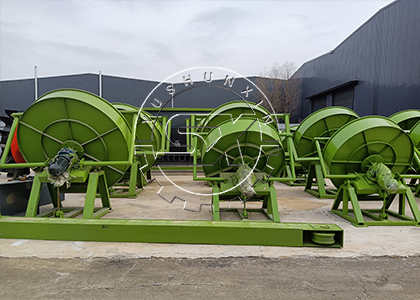
Besides granulators or pelletizers, several auxiliary machines influence total fertilizer factory cost. A rotary drying machine and cooling machine help stabilize granule moisture and prevent caking. A screening machine separates qualified granules from oversized or undersized particles, ensuring uniform product quality. The packing machine, designed for automatic weighing and sealing, improves packaging efficiency and reduces labor cost. Each additional piece of equipment increases initial NPK fertilizer plant setup cost but enhances production stability and long-term output capacity.

Integrating these machines properly helps a fertilizer producer achieve balanced investment and sustainable operation. The overall fertilizer manufacturing procedure becomes more energy-efficient, lowering per-ton production cost over time. Therefore, a project designer must calculate not only equipment purchase price but also long-term operation expense to achieve optimal fertilizer plant cost performance.


Conclusion

In summary, the cost difference between pelletizing and granulating depends on material properties, target product quality, and equipment configuration. Pelletizing requires higher compression equipment and energy, leading to a larger fertilizer production plant cost. Granulating, in contrast, provides a more economical setup with lower operation cost, suitable for many compound fertilizer manufacturers seeking balanced investment and efficiency.

A professional fertilizer equipment manufacturer such as Yushunxin supplies complete NPK fertilizer production lines, including disc granulators, double roller extrusion granulators, rotary drum granulators, rotary dryers, and screening machines. Reliable machinery support enables stable granulation or pelletizing performance and helps fertilizer producers reduce overall NPK fertilizer plant cost while maintaining consistent product quality. You can visit: https://www.fertilizerproductequipment.com/npk-fetilizer-plant-cost/
How to Choosing the Right NPK Fertilizer Processing Equipment for Your Plant

Selecting the appropriate NPK fertilizer equipment is pivotal for any production facility aiming to optimize efficiency, product quality, and profitability. NPK fertilizers, comprising nitrogen (N), phosphorus (P), and potassium (K), are essential nutrients for plant growth, widely employed in the agricultural sector to enhance yield and soil fertility.

Understanding NPK Fertilizer Production

The production of NPK fertilizers involves a series of complex procedures, including the precise mixing, granulation, and coating of raw materials. An in-depth understanding of these processes is necessary to choose the right equipment. The NPK ratios can vary based on crop requirements, making customization a key aspect of production.

Essential Equipment for NPK Fertilizer Production

In general, there are the following NPK fertilizer processing equipment commonly used.

1. Batch and Continuous Mixers: These machines are crucial for thoroughly blending the raw materials. Efficient mixing ensures that each granule contains the correct proportion of nutrients. High-speed blenders and horizontal mixers are commonly used in NPK fertilizer production facilities.

2. Granulation Machines: Granulation is a core process that turns powdered raw materials into uniform granules. Rotary drum granulators and disc pelletizers are prevalent in the industry due to their ability to produce NPK granules with good strength and nutrient homogeneity.

3. Rotary Dryers: Post-granulation, the granules require drying to reduce moisture content, preventing caking during storage. Rotary drum dryers are favored for their efficiency and capacity, essential for large-scale NPK fertilizer production.

4. Cooling Systems: Proper cooling of the granules is necessary to stabilize them and facilitate easier handling. Counter-flow coolers and rotary coolers are effective in maintaining the quality of the NPK fertilizers.

5. Screening and Coating Equipment: Screening machines ensure that the granules are of uniform size, which is vital for even nutrient application. Coating units may apply anti-caking agents or additional nutrients to enhance the fertilizer’s performance.

Learn more.

Critical Factors in Equipment Selection

Production Capacity and Flexibility: The equipment should be capable of handling the desired production volume while allowing for future expansion. The ability to adjust NPK ratios is also a critical feature for meeting market demands.

Energy Efficiency and Environmental Impact: Choose machinery that minimizes energy consumption and reduces emissions, aligning with sustainability goals.

Reliability and Maintenance Needs: High-quality, durable equipment reduces downtime and maintenance costs, crucial for consistent NPK fertilizer production.

Technology and Automation: Advanced NPK fertilizer equipment often features automation and digital monitoring systems, enhancing precision and efficiency in the manufacturing process.

Expert Consultation and Custom Solutions

Engaging with NPK fertilizer equipment manufacturers and industry experts can provide valuable insights into the latest technological advancements and trends. They can offer tailored solutions that meet your specific production requirements, ensuring a strategic investment in your operational capabilities. Here, you can visit https://fertilizerequipmentmanufacturer.com/npk-fertilizer-making-machine/

In conclusion, choosing the right NPK fertilizer processing equipment involves a comprehensive understanding of production needs, careful assessment of equipment capabilities, and a future-oriented approach to scalability and technological integration. With the appropriate machinery, your NPK fertilizer plant can achieve peak operational efficiency, superior product quality, and enhanced profitability.

Choosing the Right Fertilizer Granulator for NPK Production

When it comes to manufacturing NPK compound fertilizer, the granulation process is a crucial step that can significantly affect the quality and efficiency of your final product. Selecting the correct compound NPK fertilizer granulator machine is paramount for ensuring optimal outcomes. Here’s a concise guide to help you navigate the process of choosing the perfect granulator for your NPK fertilizer production plants.

Assess Your Production Requirements

Before diving into purchasing a granulator, you need to evaluate your production needs. Consider the scale of your operation, the specific type of NPK fertilizer you aim to produce, and the available budget. Knowing the desired output capacity and the physical properties of the NPK formulation is essential, as different granulators can handle different volumes and material characteristics.

Understand the Different Types of Granulators

Several types of granulators are available, each with its strengths and specialties:

– Rotary Drum Granulators: Ideal for large-scale npk granule production, these machines are great for making high-density granules and can handle a high throughput, but they require a significant investment.

– Disc Granulators (Pan Granulators): Suitable for small to medium production scales, disc granulators are cost-effective and provide good control over particle size, though they may produce more dust compared to other types.

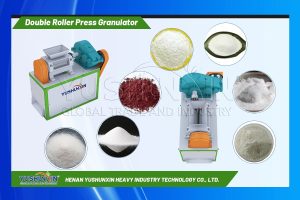
– Double Roller Press Granulators: These are excellent for making granular compound fertilizers with no drying process required. They offer a high granulation rate and low energy consumption but may not be the best for very fine materials.

Click here to learn more.

Consider Material Compatibility

The characteristics of the raw materials used in your NPK formulation can influence the efficiency of the granulation process. Ensure that the granulator you select can handle the specific texture, moisture content, and binding properties of your materials.

Evaluate Operational Costs

Look beyond the initial purchase price of npk machines and consider the total operational costs, including energy consumption, maintenance, and potential downtime. A cheaper machine that requires frequent repairs or consumes more energy may not be as cost-effective in the long run.

Check Manufacturer and After-Sales Service

Choose a reputable manufacturer with a track record of quality and reliability. Good after-sales service is crucial for troubleshooting, obtaining spare parts, and ensuring that your granulator runs smoothly over its lifetime. Here, you can choose YUSHUNXIN fertilizer equipment manufacturer.

Request a Trial Run

If possible, request a trial run with your materials to see the granulator in action. This step can provide insights into the machine’s performance and the quality of the final granules.

Conclusion

Selecting a suitable fertilizer granulator for NPK production is not a decision to be taken lightly. By understanding your production needs, researching the different types of granulators, considering material compatibility, evaluating operational costs, checking manufacturer credentials, and conducting a trial run, you can make an informed decision that will contribute to the success and efficiency of your fertilizer production line. You can visit https://fertilizerequipmentmanufacturer.com/compound-fertilizer-granulator/ for reference

How to make 30t/h npk fertilizer granules?

In the realm of granulation technology, where efficiency and precision are paramount, one exemplary innovation stands out—the 30 t/h roller press granulation production line. Far beyond a mere conveyor of raw materials, this production line acts as a metamorphosis catalyst, seamlessly converting powder into uniform granules at an impressive pace.

Key Features of the Production Line

Central to this groundbreaking technology is the double roller extrusion granulator, colloquially known as the “press.” This critical component ensures not only high efficiency but also impeccable granulation quality. Its innovative design propels the compact and dry granulation process forward, rendering it adaptable to a diverse array of materials and production requirements.

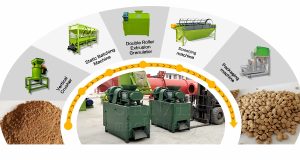
Equipment Selection of Simple NPK Fertilizer Extrusion Granulation Line

Diverse Raw Material Adaptability

The versatility of the roller press granulation production line shines through its ability to accommodate a wide spectrum of raw materials. Consider the following examples:

1. Agricultural Waste: Crop straws, corn stalks, and bagasse find a new lease on life as high-quality organic fertilizer through the adept utilization of the roller press granulator.

2. Chemical Powders: From ammonium chloride to ammonium phosphate and urea, chemical powders undergo a metamorphosis into uniform, robust granules, thereby enhancing efficiency in storage and transportation.

3. Industrial Waste: Coal gangue, fly ash, and slag, once deemed as industrial by-products, are transformed into valuable commodities, simultaneously mitigating waste and bolstering product utility.

Learn more about 30t/h granulation process.

NPK Materials for Double Roller Extruder

The Powder Granulation Process: Step by Step

1. Raymond Mill System: The journey begins with the meticulous preparation of the powder. Whether mineral or chemical in nature, the powder undergoes precision milling via the raymond mill system, guaranteeing a consistent and top-tier powder output.

2. Double Shaft Mixer: The mixed powder encounters the double shaft mixer, where an assortment of additives can be seamlessly integrated to augment the granules’ properties. The mixer ensures the homogeneous distribution of these additives throughout the powder.

3. Disc Feeders: Regulating the material flow into the double roller extrusion granulator, the disc feeders play a pivotal role. Here, under immense pressure, the powder undergoes compression and morphs into granules, thanks to the collaborative efforts of multiple rollers.

4. Rotary Screener: Post-granulation, the granules undergo scrutiny via the rotary screener, which meticulously segregates oversized or undersized particles, allowing only the epitome of granules to progress to the subsequent phase.

5. Coating Machine (Optional): For those desiring an additional layer of refinement, the granules can undergo coating via the coating machine. This optional step confers benefits such as enhanced flowability, aesthetic enhancement, or moisture protection.

6. Double Bucket Granules Packing Scale: The culmination of the process sees the granules meticulously packed and weighed utilizing the double bucket granules packing scale, ensuring precision and consistency in packaging.

Conclusion

The advent of the 30 t/h granulation production line heralds a new era in granulation technology, characterized by unparalleled efficiency and quality. With its advanced features, notably the double roller extrusion granulator, this production line caters to a myriad of industries, seamlessly transforming raw materials into marketable granular products. Backed by Yushunxin’s commitment to innovation and reliability, the roller press granulation production line emerges as a veritable game-changer in the industry.

For further insights, visit: https://www.extruder-granulator.com/30-t-h-roller-press-granulation-production-line

How to Select the Ideal Equipment for Your 10 t/h Production Needs?

Selecting the right equipment is crucial for enhancing efficiency and productivity in any production line. This is particularly true for businesses aiming to meet specific production targets such as 10 tons per hour (t/h). When it comes to meeting the demands of a 10 t/h powder granulation production requirement, it is crucial to choose the right equipment that can ensure efficiency and effectiveness.

Section 1: Understanding the Granulation Process

To embark on selecting the ideal equipment, it is essential to first understand the granulation process. Granulation involves the transformation of raw materials into desired granules. It promotes uniformity, improves handling, and enhances the overall efficiency of the production line. By using Yushunxin’s efficient double roller extrusion granulator, the press, compact, and dry granulation methods can be seamlessly applied.

Equipment Selection of Simple NPK Fertilizer Extrusion Granulation Line

Section 2: Key Features of Yushunxin’s Double Roller Extrusion Granulation Production Line

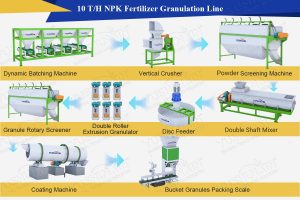
2.1 Loader Type Feeder and Crain Crusher

The first step in any granulation process is the efficient feeding and crushing of raw materials. Yushunxin’s dry granulation production line (10 t/h) excels in this aspect, featuring a state-of-the-art loader type feeder and crain crusher. These equipment ensure a steady material flow and guarantee the timely and effective crushing of the raw materials, resulting in high-quality granules.

2.2 Horizontal Mixer

To achieve a homogeneous mixture and ensure consistent quality throughout the manufacturing process, Yushunxin’s production line incorporates a powerful horizontal mixer. This equipment offers exceptional mixing capabilities, allowing for uniform dispersion of ingredients and minimizing production variations.

10 TPH NPK Fertilizer Granulation Line

2.3 Double Roller Extrusion Granulator

At the heart of Yushunxin’s production line, the double roller extrusion granulator takes center stage. This innovative equipment is designed to efficiently compress and shape the granules, resulting in desired size, density, and shape characteristics. Its robust design ensures long-lasting performance, minimizing downtime and maximizing productivity.

2.4 Rotary Screening Machine

Once the granules are formed, a rotary screening machine is employed to separate oversized and undersized particles, ensuring only the desired granules move forward to the next stage. This crucial equipment promotes product uniformity and guarantees the high-quality output of the production line.

2.5 Automatic Packaging Scale and Belt Conveyors

Completing the granulation process, Yushunxin’s production line integrates an automatic packaging scale and a network of belt conveyors. These equipment streamline the packaging and transportation process, ensuring efficient storage and delivery of the final product.

Click here for more details.

Section 3: Raw Materials and Applications

To provide a comprehensive perspective, it is essential to shed light on the raw materials examples during the granulation process. Yushunxin’s production line effectively handles various materials, including but not limited to organic fertilizers, inorganic fertilizers, and compound fertilizers. It efficiently converts these materials into high-quality granules that cater to the specific needs of agricultural and industrial applications.

NPK Materials for Double Roller Extruder

Conclusion

In conclusion, selecting the right equipment for your 10 t/h production needs is paramount to achieving optimum productivity. Yushunxin’s double roller extrusion granulation production line, with its exceptional features and advantages, offers a reliable solution to meet and exceed your granulation requirements. By leveraging the loader type feeder, crain crusher, horizontal mixer, double roller extrusion granulator, rotary screening machine, automatic packaging scale, and belt conveyors, you can elevate your production capabilities and ensure consistent quality. You can visit: https://www.extruder-granulator.com/10-t-h-npk-fertilizer-granulation-line/

How to Make High-quality NPK Fertilizer with Double Roller Granulator?

Nutrient-rich fertilizers are fundamental for enhancing soil fertility and boosting plant growth. Among these, NPK fertilizers, which comprise nitrogen (N), phosphorus (P), and potassium (K), are widely sought after by the agricultural sector. The manufacturing of high-quality NPK fertilizer can be significantly optimized by employing a sophisticated granulation methodology, notably the double roller extrusion granulation technique.

Understanding Double Roller Extrusion Granulation

Double roller granulation is an innovative dry granulation process which utilizes two counter-rotating rollers to form granular compounds without the necessity of a liquid binder. The process involves feeding powdered raw materials directly into the roller compact area where the material is compressed into flat sheets and then milled into the desired particle size.

Advantages of Utilizing Roller Compaction for Fertilizer Production

The roller compaction method offers multiple benefits for fertilizer production. It generates granules with consistent shapes and sizes, which is crucial for even nutrient distribution when applied to the soil. Moreover, this method is environmentally friendly since it does not require water or additional binders, thereby reducing the potential for water pollution from runoff. The compacting process also results in minimal dust generation, which enhances the working conditions for operators and reduces product loss.

Equipment Selection of Simple NPK Fertilizer Extrusion Granulation Line

Selecting Suitable Raw Materials for NPK Fertilizer Production

A diverse range of raw materials can be used in this granulation process, including ammonium sulfate, ammonium nitrate, urea, and other nitrogenous compounds; rock phosphate, superphosphate, and other phosphatic materials; and potash salts for potassium. The flexibility in raw material selection allows manufacturers to customize their NPK formulations to meet specific crop needs.

Application Areas Beyond Agricultural Production

While the primary use of NPK fertilizer is in agricultural production, the granules produced by the double roller granulator have broader applications. These include use in horticulture, landscaping, and regeneration projects where soil amendment is required for vegetation establishment.

NPK Materials for Double Roller Extruder

Identifying Targeted Customers for NPK Fertilizers

The clientele for NPK fertilizers is vast and varied. It includes agricultural businesses aiming to maximize crop yields, gardening enthusiasts seeking to improve plant health, and environmental agencies working on land rehabilitation.

Transitioning to Yushunxin’s Fertilizer Production Equipment

For manufacturers seeking to optimize their fertilizer production line, Yushunxin offers advanced equipment that stands out in the market. The company’s double roller extrusion granulator exemplifies efficiency and quality. With its robust design, consistent performance, and low maintenance requirements, this equipment can significantly enhance productivity.

Features of Yushunxin’s Double Roller Extrusion Granulator

Yushunxin’s granulator is engineered to facilitate ease of operation and maintenance, ensuring a smooth production flow. The equipment operates with a high granulation rate, producing granules with strong structural integrity that are less susceptible to breakage. The precision engineering of the roller and die design ensures uniform granule size, which is critical for the efficacy of the NPK fertilizer.

In summary, the double roller granulation process is an indispensable technique for the production of high-quality NPK fertilizer. The process’s efficiency, coupled with the environmental benefits and the versatility in application, make it an attractive choice for fertilizer producers worldwide. Yushunxin’s double roller extrusion granulator, with its superior features, stands as a prime solution for industry operators seeking to enhance their production capabilities and deliver premium-grade fertilizers to their targeted customers.

NPK fertilizer production line


Introduction to NPK Fertilizer Production

NPK fertilizer is a blend of nitrogen (N), phosphorus (P), and potassium (K) that is essential for plant growth. The production of NPK fertilizer is a complex process that involves several steps to ensure that the final product is of high quality and suitable for enhancing soil fertility.

The Raw Material Preparation

The first step in the NPK fertilizer production line is preparing the raw materials. This involves procuring the necessary nitrogen, phosphorus, and potassium sources. Often, these materials come in various forms like ammonia for nitrogen, rock phosphate for phosphorus, and potash for potassium. These materials are carefully measured and mixed in specified proportions to achieve the desired N-P-K ratio for the intended fertilizer formulation.

Granulation Process

Once the raw materials are blended, the mixture is moved to the granulation process. Granulation is crucial as it converts the fine powdered materials into larger, easy-to-handle and -apply granules. There are several granulation methods, such as drum granulation machinery, disc granulation, or extrusion granulator machine, each with its advantages and suitability for different kinds of raw materials.

Drying and Cooling Systems

After granulation, the next step is the drying process. The granules are passed through a dryer to reduce their moisture content, thus ensuring their stability and preventing caking. Post drying, the granules are often cooled to room temperature using a cooler. Cooling is necessary to help the granules retain their shape and increase their shelf life.

Quality Control and Enhancement

Quality control is paramount in NPK fertilizer production. The granules are sieved to separate the correctly sized particles from the oversized or undersized ones. The latter may be crushed and recycled back to the granulation process. Coating agents might be applied to the granules to prevent dust, reduce caking, and enhance their appearance.

Packaging and Storage

The final step in the production line is packaging the NPK fertilizer into bags or bulk containers for transportation and sale. Proper storage is vital to maintain the quality of the fertilizer. The product should be kept in a cool, dry place away from direct sunlight and moisture.

Innovation and Environmental Considerations

Modern NPK fertilizer production lines are increasingly incorporating technological innovations for process optimization and to reduce environmental impact. This includes the use of advanced control systems for precise raw material input and waste reduction strategies to minimize the production line’s ecological footprint.

Conclusion

The production of NPK fertilizers is a critical component of modern agriculture, providing the necessary nutrients for crop growth and soil health. A well-designed NPK fertilizer production line ensures the efficient transformation of raw materials into high-quality fertilizers that meet the specific needs of plants and farmers alike. If you want to produce other compound fertilizer, we can also provide you with different solitions.


How Does Wet Granulation Technique Enhance the Quality of NPK Fertilizers?

In the realm of agriculture, NPK fertilizers hold the key to robust and fruitful harvests. The quality of these fertilizers plays a pivotal role in ensuring optimal growth and yield. Which one standout technique to enhance NPK fertilizer quality is wet granulation.

At its core, wet granulation involves the agglomeration of fine NPK particles with the addition of a liquid binder to form larger, denser granules. This process has transformed the fertilizer industry, with products such as those offered by Shunxin, a leading manufacturer of wet granulation machines. SX rotary drum and disc granulators are examples of equipment that utilize this technique to produce high-quality NPK fertilizers.

NPK Fertilizer Granulators

One of the primary benefits of wet granulation technique is the improved nutrient content uniformity. In traditional fertilizer blending processes, the particles of different nutrients often vary in size and density, leading to segregation during handling and application. However, through wet granulation, nutrients are uniformly distributed within each granule, ensuring that every application delivers a balanced nutrient supply to the crops. This uniform distribution is a hallmark of the granules produced by Shunxin’s drum granulation machine, which meticulously combines the raw materials in a rolling motion to achieve homogeneity.

Rotary Drum Granulator

Another advantage of NPK fertilizer wet granulation process is the reduction of dust pollution. The fine dust particles that are prevalent in powdered fertilizers can cause respiratory issues for workers and lead to environmental pollution. With wet granulation, these fine particles are encapsulated within the granules, significantly reducing airborne dust. Shunxin’s pan pelletizer, with its state-of-the-art design, ensures that the granulation process is tightly controlled, thus minimizing dust emissions and making the handling of fertilizers much safer.

disc pelletizer models

The process of wet granulation also improves the physical properties of the NPK fertilizers. The resulting granules are harder and more resistant to breakage during transport, storage, and application. This durability is crucial in maintaining the integrity of the nutrient composition until it reaches the soil. Shunxin’s npk fertilizer granulation equipment are engineered to produce granules with optimal hardness and size, ensuring that the fertilizers remain effective from production to field application.

Furthermore, wet granulation is a versatile technique suitable for a variety of raw materials. Whether the source is synthetic or organic, the process can be adjusted to suit the specific properties of the input materials. NPK fertilizer wet granulation technology, is designed to handle a wide range of raw materials, making it an ideal choice for fertilizer manufacturers looking to diversify their product offerings.

NPK Fertilizer Manufacturing Process

In conclusion, the wet granulation technique is a game-changer in enhancing the quality of NPK fertilizers. It offers uniform nutrient distribution, reduces dust pollution, improves physical properties, and ensures better nutrient solubility. With companies like Shunxin leading the way with their innovative wet granulation machines, the agricultural businesses can look forward to not only more effective but also more environmentally sustainable fertilizer production. You can visit this website for more details: https://www.fertilizerproductequipment.com/npk-fertilizer-production-technology/