how to compost pig manure

Composting pig manure is an effective way to transform a waste product into a valuable resource. Pig manure is high in nitrogen, phosphorus, and potassium, making it an excellent source of nutrients for plants. However, it can also be a source of pollution if not managed properly. In this article, we will discuss the steps for composting pig manure to create a nutrient-rich soil amendment for your garden.

Aniaml Manure for Organic Fertilizer Production

Step 1: Collecting Pig Manure

The first step in composting pig manure is to collect it. Pig manure can be collected using a shovel or a manure scraper. It is important to collect only the manure and not the bedding material, as the bedding material will slow down the composting process. Pig manure can be collected in a pile or a bin. If collecting in a pile, it is recommended to turn the pile regularly to ensure proper aeration and decomposition.

Step 2: Preparing the Composting Site

The composting site should be located in a well-drained area and away from water sources, such as streams or ponds. The site should be sunny, as the heat from the sun will help to accelerate the composting process. The composting site should be level and have good air circulation. The site should be prepared by removing any grass or vegetation, and a layer of gravel or wood chips should be added to the bottom to aid in drainage.

Step 3: Building the Compost Pile

The compost pile should be built in layers, starting with a layer of dry, carbon-rich material such as straw or leaves. This layer should be about 6 inches thick. Next, add a layer of pig manure, about 2 to 3 inches thick. Repeat this layering process until the pile is about 3 to 4 feet tall. The top of the pile should be covered with a layer of straw or leaves to help retain moisture.

Step 4: Maintaining the Compost Pile

The compost pile should be kept moist but not wet. If the pile is too wet, it may become anaerobic, which will slow down the composting process and create an unpleasant odor. The pile should be turned regularly to ensure proper aeration and decomposition. The pile should be turned every 3 to 5 days, or when the internal temperature of the pile drops below 100°F. The internal temperature of the pile can be measured using a compost thermometer.

Step 5: Harvesting the Compost

The compost pile will be ready to harvest when it has decomposed into a dark, crumbly, soil-like material. This process can take anywhere from 6 to 12 months, depending on the size of the pile and the environmental conditions. To harvest the compost, the pile should be turned onto a tarp or into a wheelbarrow. Any large pieces of material should be removed, and the compost should be screened to remove any remaining debris.

Windrow Compost Turner

In conclusion, composting pig manure is an effective way to transform a waste product into a valuable resource. By following these simple steps, you can create a nutrient-rich soil amendment for your garden while reducing waste and preventing pollution. Remember to always wear gloves and wash your hands thoroughly after handling pig manure. Happy composting!

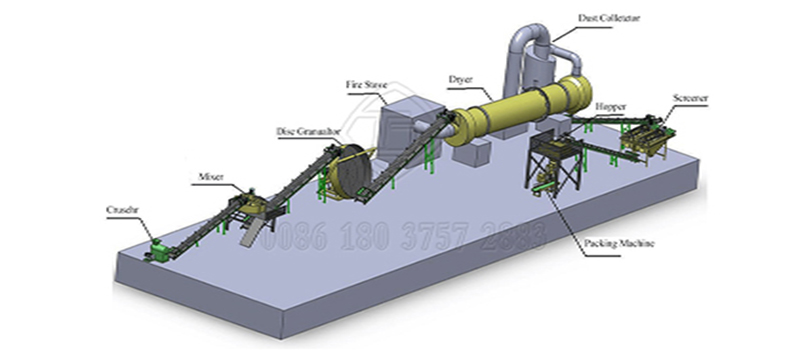
Of course, you can check this page for more details about the design and structure of the pig manure machine!
How to Compost Pig Manure

Tips To Start A Small-Scale Organic Fertilizer Production Plant

Do you want to start a small-scale organic fertilizer production plan? Do you want to make sure your fertilizer production plant is profitable? If the answer to these questions is yes, you have come to the right place. In this article, we will discuss how you should go about starting your very own business of producing organic fertilizer.

Industrial small scale compound fertilizer equipment

First and foremost, it is important for you to realize that there is huge demand for organic fertilizer in the market as consumers these days are aware of the dangers of use of harmful chemicals in the production of food. Therefore, setting up your own organic fertilizer production plant can be a profitable business venture but it is important for you to prepare a business plan and then execute that business plan.

There are several aspects that should be considered to draw a profitable business plan. Some of the important aspects you should consider include availability of raw materials, choosing the right organic fertilizer factory, marketing strategy to sell organic fertilizer and various other such things.

One of the first things you need to do is conduct a survey in order to discover the availability of raw materials for producing organic fertilizer. Organic fertilizer is produced using a wide variety of materials that contain organic matter, potassium, phosphorus and nitrogen among other things. Therefore, you need to check the local availability of organic materials.

Needless to say, you will need a continuous supply of raw material in order to keep your factory running. Since an organic fertilizer factory deals with big volumes, it is better to establish the factory in places that already have ample supply of organic materials. These places can be near a chicken farm or a pig farm or near other farms where ample supply of such organic materials is available.

Another important aspect is the choice of fertilizer machine . As far as the choice of fertilizer machine is concerned, there are several important factors you need to take into account. Do not make the mistake of choosing a machine only on the basis of initial price. You need to take into account the overall cost of running the factory along with initial price in order to create a profitable business plan. So, pay attention to reputation of the manufacturer, capacity of the plant, after sales service offered by the company and other such things. Don’t forget about availability of power consumption as well as water supply nearby in order to meet the needs of production.

As far as the marketing is concerned, you should consult with experts in the business in order to find out the type of organic fertilizers preferred by farmers along with the annual production as well as consumption of organic fertilizer and other such things. There are many organizations that specialize in such things. You will need to do some research in order to find local organizations that can help with marketing of organic fertilizer.

Overall, it’s not that difficult to draw a business small production plan selling organic fertilizer but you need to be objective to make sure that your business venture is profitable. The above mentioned tips should help you in drawing up a profitable business plan.