Ways to Minimize the Cost of Biofertilizer Production

Biofertilizers play a crucial role in promoting sustainable agriculture by providing essential nutrients to plants and improving soil health. However, the cost of biofertilizer production can be a significant challenge for producers. Click there to get the detailed biofertilizer plant cost. In this blog, we will explore various strategies that can help minimize the cost of biofertilizer production while maintaining quality and effectiveness.

Optimizing Raw Material Sourcing:
One of the key factors contributing to the cost of biofertilizer production line is the sourcing of raw materials. Producers can minimize costs by optimizing the sourcing of raw materials. This can involve negotiating with suppliers for better prices, exploring alternative sources of raw materials, and bulk purchasing to take advantage of discounts. By carefully managing raw material sourcing, producers can reduce costs without compromising on the quality of biofertilizers.

raw material
raw material for producing biofertilizer

Efficient Production Processes:
Efficiency in production processes is essential for minimizing the cost of biofertilizer production. Producers should focus on streamlining workflows, improving resource utilization, and minimizing waste. Implementing lean manufacturing principles can help identify and eliminate inefficiencies in production processes, leading to cost savings. By optimizing production processes, producers can increase productivity and reduce production costs.

Investing in Technology and Automation:
Investing in technology and automation can also help minimize the cost of producing biofertilizer. Automated processes can increase efficiency, reduce labor costs, and improve accuracy in production. By incorporating technology such as sensors, monitoring systems, and automated equipment, producers can achieve higher levels of precision and consistency in biofertilizer production. While the initial investment in technology may be high, the long-term cost savings and increased productivity make it a worthwhile investment. Welcome to buy YUSHUNXIN‘S bio organic fertilizer equipment. Most of our biofertilizer making machine are automated and need only be controlled automatically.

Utilizing Sustainable Practices:
Adopting sustainable practices in biofertilizer production can not only benefit the environment but also help minimize costs. Using organic waste materials as raw materials, implementing recycling and reusing strategies, and optimizing energy usage can all contribute to cost savings. Most biofertilizer manufacturers choose to launch the animal manure as biofertilizer projects to reduce cost. Sustainable practices can also enhance the overall quality and effectiveness of biofertilizers, making them more appealing to environmentally-conscious consumers.

Use Animal Manure as Biofertilizer

Collaborating with Research Institutions:
Collaborating with research institutions and universities can provide producers with access to the latest advancements in biofertilizer production technology. Research collaborations can lead to the development of innovative production methods, new formulations, and cost-effective production techniques. By staying informed about the latest research and trends in biofertilizer production, producers can continuously improve their processes and reduce costs.

Minimizing the cost of biofertilizer production is essential for ensuring the sustainability and profitability of the industry. By optimizing raw material sourcing, improving production processes, investing in technology and automation, adopting sustainable practices, and collaborating with research institutions, producers can effectively reduce production costs while maintaining high-quality biofertilizers. Implementing these strategies can help biofertilizer producers stay competitive in the market and contribute to a more sustainable agriculture sector. If you want to know the detailed cost of producing biofertilizer, you can visit:https://www.biofertilizerproduction.com/product/biofertilizer-plant-cost/

How Do Disc Granulators Enhance the Quality of Mineral Fertilizers?

Disc granulator plays an essential role in improving the quality of mineral fertilizers by ensuring consistent granule formation and nutrient retention. Understanding their function provides insights into how these machines positively impact the overall production process of mineral fertilizers.

Which Raw Materials Are Ideal for Mineral Fertilizer Production?

In the production of mineral fertilizers, several raw materials stand out for their nutrient content and availability. Common examples include phosphate rock, potassium ore, and limestone.

Phosphate rock serves as a key source of phosphorus, vital for energy transfer and root development in plants. Potassium ore, primarily found as potassium chloride, provides potassium critical for plant health, aiding in water retention and disease resistance. Limestone, rich in calcium carbonate, supplies calcium, an essential element for cellular structure and growth.

Different industries utilize these minerals to meet diverse agricultural needs. For instance, horticultural producers often demand fertilizers rich in phosphorus to ensure vibrant blooms and strong root systems. Meanwhile, turf management requires balanced fertilizers that support grass growth and resilience. Recognizing these requirements assists manufacturers in tailoring their production processes, helping to maximize the benefits of the minerals used.

Disc Pelletizer for Mineral Fertilizer Production

How Do Disc Granulators Function to Improve Fertilizer Quality?

Pan granulator operates by transforming fine mineral powders into uniform granules through a controlled granulation process. The basic design includes a rotating disc where raw materials combine with moisture to facilitate granule formation. The operator can adjust the angle of the disc and the moisture levels, which helps to achieve optimal aggregation and granule size.

Key features of disc granulators include high-throughput capacity and an efficient moisture control mechanism. These features allow for the consistent production of high-quality granules that maintain their shape and nutrient content. The hydrodynamic movement within the machine promotes particle clustering, leading to the formation of superior granules with reduced dust formation.

Other machines also enhance the granulation process in mineral fertilizer production. For example, an ore fertilizer crusher machine reduces the size of raw materials before they enter the granulation phase, ensuring uniform particle size. Similarly, a screening machine sorts out non-conforming granules, allowing only high-quality particles to reach the packaging stage.

disc limestone pellets making machine

What Are the Advantages of High-Quality Granules in Fertilizer Production?

Producing high-quality granules provides several notable benefits. Firstly, granular fertilizers exhibit improved flowability, which simplifies handling during distribution and application. This characteristic enhances efficiency, reducing waste during the spreading process.

Another significant advantage is the increased durability of well-formulated granules. High-quality granules transport better without breaking apart, minimizing nutrient loss. This characteristic is crucial for manufacturers aiming to deliver effective fertilizers that promote healthy plant growth and yield higher returns for users.

Furthermore, uniform granules contribute to better solubility rates compared to powders. When applied, these granules dissolve evenly, ensuring consistent nutrient delivery. Nutrient spikes often associated with powder fertilizers become less of a concern, leading to improved plant health and productivity.

Which Additional Machines Support Mineral Fertilizer Quality?

Alongside disc granulators, several other machines play vital roles in optimizing mineral fertilizer production. For example, rotary drum dryers control moisture levels in raw materials, ensuring that they enter the granulation process at ideal conditions. Proper moisture management significantly enhances the quality of the resulting granules.

Moreover, employing double roller press granulators can diversify the production capabilities, allowing manufacturers to create granules under specific pressure. This versatility contributes to adapting the production process to different raw materials, improving overall efficiency and output quality.

Conclusion

Disc granulators significantly improve the quality of mineral fertilizers by enhancing granulation efficiency and maintaining nutrient integrity. By effectively transforming raw materials, such as phosphate rock and potassium ore, into uniform granules, these machines address the needs of diverse markets. The operational principles and benefits of disc granulators illustrate their fundamental role in modern fertilizer production.

Manufacturers aiming to refine their mineral fertilizer processes should consider the benefits of advanced granulation technologies. Collaborating with established equipment providers, like Yushunxin, can further optimize production capabilities and ensure high-quality fertilizers that meet market demands. You can visit: https://www.mineralfertilizerproductionsolutions.com/product/disc-granulator-machine/

Создание передовой линии по производству жидких удобрений 1000 л/ч: инновации и оптимизация в производстве удобрительного оборудования

В современной быстроразвивающейся сельскохозяйственной промышленности жидкие удобрения, благодаря их удобству в применении, быстрому усвоению и высокой эффективности, пользуются большим спросом. Для удовлетворения рыночных потребностей производители удобрительного оборудования постоянно инновируют технологии, чтобы повышать производственную эффективность, обеспечивать качество продукции и снижать воздействие на окружающую среду. В этой статье мы подробно рассмотрим, как создать эффективную производственную линию жидких удобрений 1000 л/ч, предоставляя ключевые взгляды и советы для производителей удобрений.

Линия по производству жидких водорастворимых удобрений

Обзор производственной линии:
Производственная линия жидких удобрений 1000 л/ч предназначена для поддержания непрерывного и эффективного производственного процесса. Она обычно включает ключевые этапы, такие как хранение сырья, смешивание, растворение, дозирование, фасовка и упаковка. Для производителя удобрительного оборудования критически важно убедиться, что оборудование на каждом этапе работает на оптимальном уровне и хорошо интегрировано.

Ключевое оборудование и технологии:

1. Система хранения сырья:
Эффективная система хранения жизненно необходима для обеспечения стабильного снабжения и контроля качества сырья. Использование современных бункеров и жидких резервуаров с датчиками и системами автоматического управления позволяет обеспечить свежесть сырья и условия хранения.

2. Эффективный блок смешивания и растворения:
Смешивание является ключевым этапом производства жидких удобрений. Использование миксеров с высоким сдвигом обеспечивает быстрое и равномерное смешивание ингредиентов, а растворители с функциями нагрева или охлаждения могут эффективно контролировать процесс растворения в зависимости от потребностей различных ингредиентов.

3. Точная система дозирования:
Качество жидких удобрений зависит от точного состава. С помощью дозирующих насосов и онлайн-аналитических приборов (например, pH-метров и кондуктометров) контролируется количество добавляемых ингредиентов, чтобы каждая партия продукции соответствовала заранее определенным стандартам.

4. Фасовка и упаковка:
Оборудование для фасовки должно быть высокоточным и надежным, чтобы предотвратить потери и гарантировать качество упаковки. Автоматическая линия фасовки повышает эффективность и снижает ручное вмешательство, а передовые упаковочные машины обеспечивают безопасность продукции во время транспортировки и на полках магазинов.

5. Система управления и автоматизация:
Интегрированная система автоматического управления является мозгом производственной линии. Путем мониторинга и корректировки производственных параметров в реальном времени можно оптимизировать производственную эффективность, сократить ошибки и обеспечить полное ведение учета данных для непрерывного контроля качества и оптимизации производства.

Простая линия по производству жидких водорастворимых удобрений

Экология и безопасность:
При разработке и внедрении производственной линии жидких удобрений необходимо учитывать требования экологии и безопасности. Все оборудование должно соответствовать последним экологическим стандартам, а также приниматься меры по снижению энергопотребления и выбросов. Кроме того, при проектировании линии следует учитывать безопасность операторов и возможность быстрого реагирования в чрезвычайных ситуациях.

Заключение:
Создание передовой производственной линии жидких удобрений 1000 л/ч является сложным и тонким процессом, который включает в себя высокотехнологичное оборудование, выбор оборудования, контроль процесса и управление окружающей средой. Для производителей удобрительного оборудования ключом к успеху является интеграция новейших технологий и предоставление надежных, эффективных и экологически безопасных решений. Благодаря постоянным инновациям и оптимизации мы можем помочь сельскохозяйственным производителям повышать урожайность, одновременно заботясь о нашей общей планете. Для получения дополнительной информации посетите:https://www.sxmashina.com/liniya-po-proizvodstvu-zhidkikh-vodorastvorimykh-udobreniy/

Tips for Making Liquid Biofertilizer: A Complete Guide

Biofertilizers have gained popularity in recent years due to their eco-friendly nature and effectiveness in improving soil health. Liquid biofertilizers, in particular, are a great alternative to chemical fertilizers as they are easy to apply and provide essential nutrients to plants in a more bioavailable form. In this blog post, we will discuss some essential tips for making liquid biofertilizer at a small scale.

Key Tips for Making Liquid Biofertilizer:

1. Selecting the Right Ingredients:
The first step in making liquid biofertilizer is to choose the right ingredients. You can use various organic materials such as vermicompost, cow dung, kitchen waste, and plant residues. These materials are rich in nutrients and beneficial microorganisms that can enhance soil fertility.

liquid biofertilizer

2. Proper Mixing Ratio:
To ensure the effectiveness of your liquid biofertilizer, it is crucial to maintain the proper mixing ratio of the ingredients. A general rule of thumb is to mix equal parts of organic materials with water. However, you can adjust the ratio based on the nutrient requirements of your plants.

3. Fermentation Process:
Fermentation is a crucial step in the production of liquid biofertilizer as it helps in the breakdown of organic materials and promotes the growth of beneficial microorganisms. To ferment the mixture, store it in a sealed container and keep it in a warm, dark place for a few days. Stir the mixture occasionally to ensure proper aeration.

4. Straining and Dilution:
After the fermentation process is complete, strain the mixture using a fine mesh strainer to remove any solid particles. The strained liquid can be diluted with water in a 1:3 or 1:5 ratio before application. Dilution helps in ensuring that the nutrients are evenly distributed and prevent any risk of burning the plants.

This is just one of the ways to make liquid biofertilizer, click to see other tips.

liquid biofertilizer production

Liquid biofertilizer can be applied to the soil or sprayed directly on the leaves of plants. It is essential to apply the biofertilizer during the cool hours of the day to prevent evaporation and maximize nutrient absorption. Regular application every 2-3 weeks can help in promoting healthy plant growth and improving soil fertility.

YuShunxin has a complete liquid biological fertilizer production line, welcome to consult.

Conclusion:
Making liquid biofertilizer  is a cost-effective and eco-friendly way to provide essential nutrients to your plants. By following the tips mentioned above, you can create a high-quality biofertilizer that will not only improve plant growth but also contribute to sustainable agriculture practices. If you have further questions, please visit:https://www.biofertilizerproduction.com/product/liquid-biofertilizer-production-technology/

How a Compost Granulating Machine Quickly Transforms Compost into Organic Fertilizer Pellets

Organic farming and gardening have seen a significant rise in recent years, driven by a growing awareness of the benefits of Organic fertilizer using. One key component in the organic fertilizer manufacturing is the compost fertilizer granulating machine, a remarkable piece of equipment that efficiently converts compost into organic fertilizer pellets. These pellets are not only easy to handle and store but also provide a slow-release nutrient source like NPK for plants, making them highly beneficial for any agricultural venture.

The Basics of Compost Granulation

Compost granulating machines, also known as compost fertilizer pelletizers, are designed to process compost into small, uniform pellets. These machines utilize mechanical pressure to compress the compost material, or liquid cohesion to speed up compost granules production, ensuring that it maintains its nutrient-rich properties while taking on a pelletized form. The process starts with feeding raw compost into the granulating machine, where it undergoes several stages of refinement and compression.

Key Components and Workflow

When you want to prepare quality organic fertilizer from compost, usually you need to do following steps:

1. Feeding System: The compost material is loaded into the feeding system, which ensures a steady and controlled flow into the granulating chamber. This helps maintain consistency and quality in the pellets produced.

2. Granulating Chamber: Within the chamber, the compost is subjected to high pressure using rollers or extrusion mechanisms. This compresses the material into pellet shapes, ensuring uniformity in size and density. Some advanced machines also incorporate binding agents to enhance pellet integrity.

3. Drying and Cooling: After granulation, the pellets are often passed through fertilizer drying and cooling systems to reduce moisture content and harden the pellets. This step is crucial for ensuring the longevity and effectiveness of the fertilizer.

4. Screening and Packaging: Finally, the pellets are screened to remove any irregularities or undersized particles. The finished product is then ready for packaging and distribution.

Go here to get details.

Benefits of Using Compost Granulating Machines

1. Efficiency: These machines can process large volumes of compost quickly, making them ideal for both small-scale and industrial-scale operations. The automatic compost granulation process significantly reduces manual labor and time.

2. Nutrient Preservation: By converting compost into pellets, the essential nutrients are preserved and made available in a slow-release format. This ensures prolonged nourishment for plants, promoting healthier growth and higher yields.

3. Ease of Use: The pellet form is easier to handle, transport, and apply than loose compost. This makes it highly convenient for farmers and gardeners, reducing waste and improving application precision.

4. Environmental Benefits: Utilizing compost granulating machines encourages the recycling of organic waste into valuable fertilizer, promoting sustainable agricultural practices and reducing landfill waste.

Conclusion

The compost granulating machine stands as a testament to modern agricultural innovation. By transforming compost into organic fertilizer pellets quickly and efficiently. If you are an organic fertilizer manufacturer, this is a good investing project, you can visit https://www.granulatedcompostsolutions.com/product/compost-granulating-machine/ for best compost granulation machine.

Tips for Biofertilizer Making Process: Enhancing Soil Health Naturally

In recent years, the demand for organic and sustainable farming practices has been on the rise. As an essential component of organic farming, biofertilizers offer a natural and eco-friendly alternative to synthetic fertilizers. Biofertilizers are made from organic materials such as plant residues, animal manure, and microbial cultures, which provide essential nutrients to plants and improve soil health. In this blog, we will explore the key tips for making biofertilizers and how they can benefit your garden or farm.

biofertilizer production line.

Selection of Raw Materials

The first step in making biofertilizers is selecting the right raw materials. Organic materials such as compost, vermicompost, animal manure, and crop residues are commonly used for making biofertilizers. It is essential to ensure that the raw materials are of high quality and free from contaminants such as chemicals, pesticides, and heavy metals. Using organic materials will help enhance the microbial activity in the soil and improve nutrient availability for plants.

Proper Composting Techniques

Composting is a crucial process in biofertilizer making, as it helps break down organic materials into nutrient-rich compost. Proper composting techniques involve creating the right balance of carbon and nitrogen-rich materials, maintaining the right moisture level, and turning the compost regularly to aerate it. Adding bioactivators such as microbial cultures or organic matter accelerators can help speed up the composting process and enhance the quality of the biofertilizer.

Similarly, you can use a biofertilizer compost turner to speed up the fermentation of the biofertilizer compost. YushunXin has some biofertilizer composting equipment, such as crawler type composting machine, groove type turning machine and wheel type turning machine. You can click to learn more.

poultry manure composting.

Incorporating Microbial Cultures

Microbial cultures play a vital role in the process of making bio fertilizer, as they contain beneficial microorganisms that promote plant growth and suppress harmful pathogens. Adding bioinoculants such as rhizobium, azotobacter, mycorrhiza, and other beneficial bacteria and fungi to the compost can enhance its nutrient content and improve soil fertility. These microbial cultures help fix nitrogen, solubilize phosphorus, and enhance nutrient uptake by plants, leading to better crop yields and healthier soil.

Application and Benefits of Biofertilizers

Once the biofertilizer is ready, it can be applied to the soil either by mixing it with the soil or by foliar spraying. Biofertilizers help improve soil structure, increase nutrient availability, enhance water retention capacity, and promote beneficial microbial activity in the soil. They also reduce the dependence on synthetic fertilizers, minimize environmental pollution, and promote sustainable farming practices. Regular application of biofertilizers can lead to healthier plants, higher yields, and improved soil health over time.

In conclusion, making biofertilizer is a rewarding and sustainable practice that can benefit your garden or farm in many ways. By following the tips mentioned above and incorporating biofertilizers into your farming practices, you can enhance soil health, reduce chemical inputs, and promote sustainable agriculture for a greener future. If you are interest in it, you can visit:https://www.biofertilizerproduction.com/product/bio-organic-fertilizer-production-line/

Essential Equipment for Producing Chicken Dung and Biochar Fertilizer

Producing high-quality carbon-based fertilizers from chicken dung and biochar requires a series of specialized equipment. This blog explores the key machinery involved in the production process, focusing on the specific needs of carbon-based fertilizer manufacturing. By understanding the equipment necessary for this production line, manufacturers can optimize their operations to produce effective and sustainable fertilizers.

What Raw Materials Are Ideal for Carbon-Based Fertilizer Production?

Carbon-based fertilizers primarily utilize organic materials like chicken dung and biochar. Chicken dung is a nutrient-rich waste product that, when properly processed, serves as an excellent base for organic fertilizers. Biochar, produced through the carbonization of organic matter, acts as a powerful soil amendment due to its ability to retain nutrients and improve soil structure.

These materials need careful processing to be transformed into uniform granules or pellets suitable for agricultural use. Granulation is a critical step in this transformation, ensuring that the fertilizer is easy to handle, store, and apply. The combination of chicken dung with biochar enhances the fertilizer’s nutrient profile while also providing the benefits of carbon sequestration, making it a sustainable choice for modern agriculture.

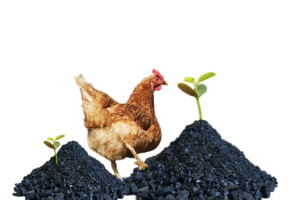
biochar and chicken dung

What Machinery Is Essential for Chicken Dung and Biochar Fertilizer Production?

Producing carbon-based fertilizers from chicken dung and biochar requires a range of specialized machinery. Each piece of equipment plays a vital role in converting raw materials into high-quality granules or pellets. Key machines include carbonization equipment, crushing machines, granulators, and drying machines.

Carbonization equipment, such as a carbonization furnace, is used to convert organic waste into biochar. This process involves heating the organic material in an oxygen-limited environment, transforming it into a stable form of carbon that can be used as a fertilizer component. The furnace must operate at precise temperatures to ensure the biochar retains its beneficial properties.

Once biochar is produced, it needs to be mixed with chicken dung and other additives. A crushing machine is typically employed at this stage to break down any large particles, ensuring a consistent and uniform mixture. This step is crucial for achieving even granulation, as it prepares the raw materials for the next stage in the production process.

Granulation machinery, such as a disc granulator or rotary drum granulator, is then used to form the mixture into granules. These granulators work by rotating the material, causing it to form into spherical granules. The granulation process not only shapes the fertilizer but also increases its density, improving storage and application properties.

How Does the Choice of Equipment Impact Fertilizer Quality?

The production of carbon-based fertilizer from chicken manure is directly influenced by the efficiency and precision of the machinery used in its production. For instance, the drying machine plays a critical role in reducing the moisture content of the granules, which is essential for preventing clumping and ensuring long-term storage stability. Efficient drying also enhances the durability of the granules, making them more resistant to breaking during handling and transportation.

Furthermore, the integration of a high-performance packing machine at the end of the production line ensures that the final product is securely packaged, protecting it from environmental factors such as moisture and contamination. This step is essential for maintaining the fertilizer’s quality until it reaches the end-user.

Why Trust Yushunxin Equipment for Carbon-Based Fertilizer Production?

Manufacturers looking to invest in high-quality equipment for producing carbon-based fertilizers can rely on Yushunxin, a professional fertilizer equipment manufacturer. Yushunxin’s machines are designed to meet the specific demands of carbon-based fertilizer production, offering efficiency, reliability, and superior performance. With advanced features and robust construction, Yushunxin’s equipment ensures that producers can achieve consistent results while optimizing their production processes.

In conclusion, producing chicken dung and biochar fertilizer involves a carefully coordinated process that requires specialized equipment. From carbonization and crushing to granulation and drying, each step is crucial for transforming raw materials into effective, high-quality carbon-based fertilizers. By selecting the right machinery, producers can enhance the efficiency of their operations and produce fertilizers that meet the needs of modern agriculture. You can visit: https://www.charbasedfertilizermachine.com/product/chicken-dung-and-biochar-as-fertilizer/