how to compost pig manure

Composting pig manure is an effective way to transform a waste product into a valuable resource. Pig manure is high in nitrogen, phosphorus, and potassium, making it an excellent source of nutrients for plants. However, it can also be a source of pollution if not managed properly. In this article, we will discuss the steps for composting pig manure to create a nutrient-rich soil amendment for your garden.

Aniaml Manure for Organic Fertilizer Production

Step 1: Collecting Pig Manure

The first step in composting pig manure is to collect it. Pig manure can be collected using a shovel or a manure scraper. It is important to collect only the manure and not the bedding material, as the bedding material will slow down the composting process. Pig manure can be collected in a pile or a bin. If collecting in a pile, it is recommended to turn the pile regularly to ensure proper aeration and decomposition.

Step 2: Preparing the Composting Site

The composting site should be located in a well-drained area and away from water sources, such as streams or ponds. The site should be sunny, as the heat from the sun will help to accelerate the composting process. The composting site should be level and have good air circulation. The site should be prepared by removing any grass or vegetation, and a layer of gravel or wood chips should be added to the bottom to aid in drainage.

Step 3: Building the Compost Pile

The compost pile should be built in layers, starting with a layer of dry, carbon-rich material such as straw or leaves. This layer should be about 6 inches thick. Next, add a layer of pig manure, about 2 to 3 inches thick. Repeat this layering process until the pile is about 3 to 4 feet tall. The top of the pile should be covered with a layer of straw or leaves to help retain moisture.

Step 4: Maintaining the Compost Pile

The compost pile should be kept moist but not wet. If the pile is too wet, it may become anaerobic, which will slow down the composting process and create an unpleasant odor. The pile should be turned regularly to ensure proper aeration and decomposition. The pile should be turned every 3 to 5 days, or when the internal temperature of the pile drops below 100°F. The internal temperature of the pile can be measured using a compost thermometer.

Step 5: Harvesting the Compost

The compost pile will be ready to harvest when it has decomposed into a dark, crumbly, soil-like material. This process can take anywhere from 6 to 12 months, depending on the size of the pile and the environmental conditions. To harvest the compost, the pile should be turned onto a tarp or into a wheelbarrow. Any large pieces of material should be removed, and the compost should be screened to remove any remaining debris.

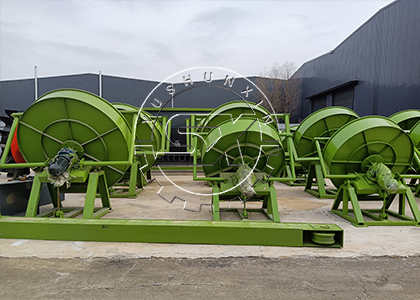
Windrow Compost Turner

In conclusion, composting pig manure is an effective way to transform a waste product into a valuable resource. By following these simple steps, you can create a nutrient-rich soil amendment for your garden while reducing waste and preventing pollution. Remember to always wear gloves and wash your hands thoroughly after handling pig manure. Happy composting!

Of course, you can check this page for more details about the design and structure of the pig manure machine!

How to Compost Pig Manure

How to Choose a Suitable NPK Fertilizer Production Line?

NPK fertilizer, which contains three essential elements nitrogen, phosphorus, and potassium, is widely used in agriculture to increase crop yields and improve soil fertility. Different nutrients have different effects.However, producing NPK fertilizer is not a simple task, and it requires a reliable and efficient production line to ensure the quality of the final product. In this passage, we will discuss how to choose a suitable NPK fertilizer production line.

Consider Your Production Capacity

Before choosing an NPK fertilizer production line, you need to determine your production capacity. The production capacity of the production line should match your expected production volume. If you have a small farm, you may need a small production line, while a large farm requires a larger production line. It’s essential to choose a production line that can meet your production needs and avoid unnecessary expenses.

Evaluate Your Budget

Another crucial factor to consider is your budget. An NPK fertilizer production line is a significant investment, and you need to ensure that you have enough funds to cover the cost of the production line. However, you don’t want to overspend on a production line that is too large for your needs. Determine your budget and look for a production line that fits within your financial constraints.

Choose a Reliable Manufacturer——SX

When choosing an NPK fertilizer production line, you need to select a reliable manufacturer. A reputable manufacturer will provide you with high-quality equipment that meets your production needs. SX has a good reputation and a track record of producing quality equipment. You can check online reviews and ask for referrals from other making fertilizer people to find a reliable manufacturer.

Consider the Production Process

The production process is another critical factor to consider when choosing an NPK fertilizer production line. The production process should be efficient and environmentally friendly. Look for a production line that uses advanced technology to minimize waste and reduce energy consumption. A good production line should also have a high level of automation to increase production efficiency and reduce labor costs.

Select the Right Equipment

An NPK fertilizer production line consists of several pieces of equipment, including a batching system, a mixer, a granulator, a dryer, a cooler, a screening machine, and a manure packaging machine. You need to choose the right equipment based on your production needs and the characteristics of your raw materials. The equipment should be easy to operate, maintain, and repair.

Consider After-Sales Services

Finally, you need to consider the after-sales services provided by the manufacturer. A good manufacturer should provide you with technical support, equipment maintenance, and repair services. Look for a manufacturer that has a reliable customer service team that can respond to your needs promptly.

In conclusion, choosing a suitable NPK fertilizer production line requires careful consideration of several factors, including your production capacity, budget, manufacturer reputation, production process, equipment selection, and after-sales services. By following these guidelines, you can choose a production line that meets your needs and ensures the quality of your final product. For details you can visit https://www.fertilizerproductionproject.com/npk-fertilizer-production-line/.

How to Turn Chicken Manure into Fertilizer?


Chicken manure is a fantastic source of fertilizer for gardens and agricultural fields. It is packed with essential nutrients like nitrogen, phosphorus, and potassium that plants need to grow healthy and strong. However, using raw chicken manure as fertilizer can be dangerous for your plants and your health. To make it safe and effective, it’s important to compost and age chicken manure properly. Using a fertilizer machine can make this process even easier and more efficient.

chicken manure disposal

Four Steps From Chicken Poop to Fertilizer

Step 1: Collection

Collect fresh chicken manure from your chicken coop or chicken farm. It’s essential to collect the manure regularly to prevent it from accumulating and attracting pests.

Step 2: Composting

The next step is to compost the chicken manure. Composting is the process of breaking down organic matter into a nutrient-rich fertilizer. A chicken manure compost turner can help speed up this process by shredding the chicken manure and mixing it with other organic materials like leaves and grass clippings. This creates a more uniform mixture that will break down more quickly and evenly. The compost should be turned regularly to ensure that it breaks down evenly and doesn’t smell.

groove type chicken manure compost turner

Step 3: Aging

After the compost has been created, it needs to age. This process allows the compost to mature and stabilize, making it safe to use as fertilizer. Again, a fertilizer machine can make this process more efficient by shredding and mixing the compost. Spread the compost out in a sunny area and let it sit for a few weeks. Turn the compost regularly to ensure that it ages evenly.

Step 4: Application

Once the chicken manure has been composted and aged, it’s time to use it as fertilizer. A fertilizer machine can help spread the compost evenly and quickly over your garden or agricultural field. Simply load the compost into the machine’s hopper and drive the machine over your garden or field. The device will distribute the compost evenly, ensuring your plants get the necessary nutrients.

Tips for Success Chicken Manure Fertilizer:

  • Always wear gloves and a mask when handling chicken manure to avoid contact with bacteria and dust.
  • Avoid using fresh chicken manure as fertilizer, as it can burn plants and spread harmful bacteria.
  • Store chicken manure compost in a dry and cool area to prevent it from becoming moldy or attracting pests.
  • Use chicken manure compost in moderation, as too much nitrogen can harm plants and pollute waterways.
  • Choose a fertilizer machine that is appropriate for your needs. Consider the size of your garden or field, the type of soil, and the amount of compost you need to apply.

In conclusion, using a fertilizer machine can help make turning chicken manure into fertilizer easier and more efficient. Composting and aging the chicken manure is essential to make it safe and effective as fertilizer. By following these tips and using a fertilizer machine, you can turn chicken manure into a valuable resource for your garden or agricultural field.

Choose Double Roller Granulator for Making Fertilizer Pellets

Double roller granulator is a popular choice for making fertilizer pellets due to its high efficiency, durability, and versatility. Click here to get more information. Here are some of the reasons why you should choose double roller granulator for making fertilizer pellets:

  1. High Efficiency:

Double roller granulator is designed to produce high-quality fertilizer pellets efficiently. It uses a unique pressing technology to compress the raw materials into granules, which results in a high yield and a low waste ratio.

  1. Durability:

Double roller granulator is made of high-quality materials that are resistant to wear and tear, which means that it can withstand the demands of continuous operation.

  1. Versatility:

Double roller granulator is capable of producing different types of fertilizer pellets, including organic fertilizer, inorganic fertilizer, and compound fertilizer. This makes it a versatile option for farmers and fertilizer manufacturers.

  1. Low Maintenance:

Double roller granulator for fertilizer requires minimal maintenance, which reduces the overall cost of production. Its simple design and few moving parts mean that it is easy to operate and repair.

  1. Environmentally Friendly:

Double roller granulator is an environmentally friendly option for making fertilizer pellets. It reduces the amount of waste generated during the fertilizer manufacturing process and helps to conserve natural resources.

Overall, double roller granulator is an excellent choice for making fertilizer pellets due to its high efficiency, durability, versatility, low maintenance, and environmental friendliness.


A double roller granulator is a machine that uses a unique pressing technology to produce fertilizer pellets. Here are the steps involved in the process of making pellets using a double roller granulator:

  1. Raw Material Preparation:

The first step is to prepare the raw materials for granulation. The raw materials can be in the form of powder, granules or other forms. The raw materials need to be selected and mixed in appropriate proportion to ensure the quality of the pellets.

  1. Feeding:

The prepared raw materials are then fed into the feeding hopper of the double roller granulator.

  1. Granulating:

The feeding system pushes the raw materials into the compacting chamber of double roller granulator https://www.granulatorforfertilizer.com/double-roller-granulator/ , where two rollers compress the raw materials into small, dense granules. The rollers are made of high-quality materials and are designed to exert a high pressure on the raw materials.

  1. Cutting:

As the rollers rotate, the granules are cut into the desired size by a knife that is fixed on the side of the compacting chamber.

  1. Screening:

The granules are then screened to remove any oversize or undersize particles, ensuring that only the desired size pellets are collected.

  1. Packaging:

The finished pellets are then packaged for storage or transportation.

The double roller granulator uses a dry granulation process, which means that no water or binder is added during the process. This makes it a cost-effective and environmentally friendly option for producing high-quality fertilizer pellets.

How to use organic fertilizer fermentation tank to compost in your production line

Organic fertilizer fermentation tanks are useful tools for composting organic materials into nutrient-rich fertilizers. Here are the basic steps for using an organic fertilizer fermentation tank in your production line.


Choose your materials

The first step in using an organic fertilizer fermentation tank is to choose the materials you will compost. This can include kitchen scraps, yard waste, and other organic materials. It’s important to ensure that your materials are free of contaminants and that you have a good balance of carbon-rich and nitrogen-rich materials.


Load the tank

Once you have your materials, load them into the fermentation tank. It’s important to fill the tank to the recommended level, as overfilling can prevent proper airflow and hinder the composting process in your fertilizer production line.

Add a starter

To help jumpstart the composting process, add a starter to the tank. This can include composted material by windrow compost turner in SX, animal manure, or a commercial compost starter.


Monitor the temperature

Composting generates heat, and it’s important to monitor the temperature inside the fermentation tank to ensure that it stays within the ideal range. This can typically range between 120-160°F (49-71°C), depending on the materials being composted.


Mix the materials

Periodically mixing the manure materials in the fermentation tank can help promote even decomposition and prevent the formation of hotspots that can slow down the composting process.


Wait for the compost to mature

Depending on the materials being composted and other factors such as temperature and humidity, the compost can take anywhere from several weeks to several months to mature. Once the compost is fully decomposed and has a dark, crumbly texture, it’s ready to use. Click to read more.


Remove the compost

When the compost is ready, it can be removed from the fermentation tank and used as a nutrient-rich fertilizer for your plants.

Overall, using an organic fertilizer fermentation tank can be a highly effective way to turn organic materials into valuable fertilizer. By following these basic steps, you can optimize the composting process and produce high-quality compost for your production line. Therefore, you can visit https://www.fertilizerproductionproject.com/organic-fertilizer-fermentation-tank/ for your reference.

How to Make Fertilizer Pellets by Disc Granulation Machine?

Disc granulation machine is an efficient equipment for making fertilizer pellets. Here are the steps to make fertilizer pellets by disc granulation machine, and you can click here to get more information:

  1. Prepare the raw materials:

Collect the required raw materials of granulator for fertilizer, such as nitrogen-rich materials like urea, ammonium nitrate, and poultry manure, phosphorus-rich materials like superphosphate, and potassium-rich materials like potassium chloride.

  1. Mix the raw materials:

Mix the raw materials in the right proportion to achieve the desired NPK ratio. The mixture should be homogeneous and without lumps.

  1. Add the binder:

Add a binder such as water or clay to the mixture to improve the pelletization process. The binder helps to hold the particles together and improves the strength of the pellets.

  1. Feed the mixture into the disc granulation machine:

The disc granulation machine https://www.granulatorforfertilizer.com/disc-pelletizer-for-sale/ has a rotating disc where the mixture is fed. The disc rotates and the mixture is evenly distributed on the disc.

  1. Spray the liquid:

Spray a liquid binder onto the mixture as the SX disc pelletizer for sale rotates. The liquid binds the particles together, forming small pellets.

  1. Adjust the disc inclination angle:

Adjust the inclination angle of the disc to control the size of the pellets. A higher inclination angle produces smaller pellets, while a lower inclination angle produces larger pellets.

  1. Collect and dry the pellets:

The pellets are discharged from the disc and collected. The pellets are then dried in a rotary dryer to remove excess moisture and improve their strength.

  1. Sieve the pellets:

Sieve the pellets to remove any oversized or undersized pellets. The final product is a uniform size of fertilizer pellets.

  1. Package and store:

Package the fertilizer pellets in bags and store them in a cool, dry place.


By following these steps, you can make fertilizer pellets efficiently by disc pelletizer for sale.
Besides, there are several benefits of using a disc granulator to make fertilizer pellets:
  1. Efficient and uniform pelletization:

Disc granulators have a rotating disc that uniformly distributes the raw materials, resulting in even-sized and shaped pellets. This makes the fertilizer more efficient and easier to apply, as the nutrients are evenly distributed in each pellet.

  1. Versatility:

Disc granulators can process a wide range of raw materials, including organic materials, inorganic materials, and waste products, making it a versatile tool for making different types of fertilizer.

  1. Low cost:

Disc granulators are relatively inexpensive compared to other types of granulators, making them a cost-effective option for small and medium-sized fertilizer manufacturers.

  1. Easy maintenance:

Disc granulators are simple to operate and maintain, and require minimal downtime for maintenance.


Overall, large scale disc granulators for sale offer a cost-effective and efficient way to make high-quality fertilizer pellets, with a range of benefits for both the manufacturer and the environment.

How To Setup a Organic Fertilizer Making Plant

Setting up an organic fertilizer making plant can be a complex process, but here are some general steps you can follow:

Conduct Market Research

Conduct research to understand the demand for organic fertilizers production in your region. Identify the different types of organic fertilizers that are in demand.

Develop a Business Plan

Create a organic fertilizer manufacturing business plan that outlines the scope of the project, the capital required by a organic fertilizer plant setup, the marketing plan, and the expected returns.

Organic fertilizer making business plan design

Identify a Suitable Location

Identify a location for the plant that is easily accessible to the raw materials required for your organic fertilizer making process. The location should also be near potential customers for the end product.

Obtain Permits and Licenses

Obtain the necessary permits and licenses required to start a organic fertilizer production project. This may include environmental permits, zoning permits, and business licenses.

Purchase Equipment

Purchase the equipment necessary for the manufacturing process. And SX fertilizer making machines are excellent choice. Whether you want to make granular organic fertilizer or powdery. It can provide you with mixers, grinders, pelletizers, dryers, and packaging machines. Click to learn more

Equipment commonly used in organic fertilizer production

Source Raw Materials

Source the raw materials required for the fertilizer making process. This may include organic waste materials such as animal manure waste, industrial waste, and agricultural waste.

Hire Employees

Hire employees with experience in fertilizer manufacturing and operations. Here, SX can provide you full automatic organic fertilizer making lines with fewer workers employment.

Test and Optimize the Manufacturing Process

Test the manufacturing process and optimize it for efficiency and quality.

Develop a Marketing Plan

Develop a marketing plan to promote the organic fertilizer and reach potential customers. This may include advertising, attending trade shows, and working with distributors.

Monitor and Improve

Monitor the manufacturing process, customer satisfaction, and market trends. Continuously improve the process and product to remain competitive in the market.

It is important to note that the process of setting up an organic fertilizer making plant may vary depending on the specific location and market conditions. Therefore, it is recommended to seek advice from experts and professionals in the industry. You can visit https://www.fertilizerbusinessplan.com/organic-fertilizer-production-project/ for reference.