How does Carbonization Furnace Produce Charcoal

Do you want your fertilizer to be more competitive? Do you want your fertilizer sales to be better? Then you can try producing charcoal-based fertilizer. Because fertilizers rich in organic carbon are better for stable and high crop yields.If you want to produce charcoal based fertilizer then you need an equipment that can produce carbon. And we recommend the charcoal furnace equipment for you.This article contains the role and working principle of the charcoal furnace equipment in the production line, as well as the advantages of the charcoal furnace equipment. If you want to learn more information, you can click here. It can provide you with a lot of information you want.

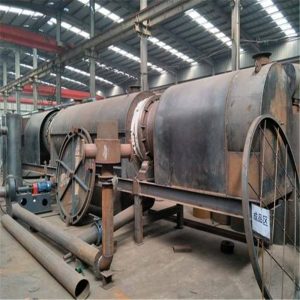
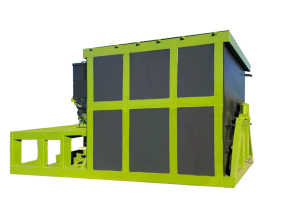
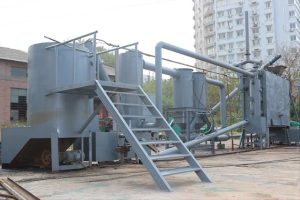
carbonization furnace
Carbonization furnace

What is the process of making charcoal from biomass

Step 1: Collection of Biomass

The process starts by collecting biomass materials. Common sources are agricultural residues, forestry waste, and other organic materials. These include rice husks, corn stover, sugarcane bagasse, wood chips, garden waste, and food waste.

Step 2: Drying

Biomass must be dried to reduce its moisture content to around 10-15%. This is crucial because high moisture levels can inhibit the carbonization process. Drying can be done naturally (sun drying) or through mechanical dryers.

Step 3: Size Reduction

Once dried, the biomass is processed to reduce its size to ensure uniformity and improve handling. This typically involves chipping, shredding, or grinding the material to a consistent size suitable for the carbonizer.

Step 4: Feeding System

The prepared biomass is transported to the carbonizer’s feeding system. This is often done using conveyor belts or augers, ensuring a continuous and controlled flow of material into the carbonization unit.

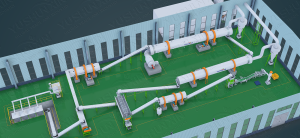
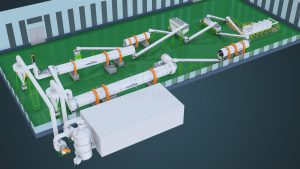
horizontal carbonization furnacehorizontal carbonization furnace for charcoal

Step 5: Pyrolysis

Inside the carbonizer, the biomass undergoes pyrolysis at temperatures between 300°C and 700°C in a low-oxygen environment. This thermochemical decomposition transforms the organic material into biochar, with by-products such as syngas and bio-oil.

Step 6: Syngas and Bio-Oil Collection

Syngas produced during pyrolysis is captured and cleaned. It can generate heat or electricity to power the carbonization process, boosting energy efficiency. Bio-oil, another by-product, is collected for use in various applications or further processing.

Step 7: Cooling

The biochar is discharged from the carbonizer into a cooling system to bring down its temperature and stabilize its structure. This is important to prevent combustion and preserve the quality of the biochar.

Step 9: Packaging

After passing quality control, the biochar is packaged according to customer requirements. It can be bagged in small quantities for retail or loaded in bulk for industrial use.

3 Advantages of Charcoal Furnace Equipment

High Thermal Efficiency

Carbonizer equipment is designed to maximize thermal efficiency during the carbonization process. This high efficiency is achieved by the equipment’s ability to retain heat within the system, minimizing energy loss. Additionally, advanced carbonizers often incorporate insulation and heat recovery systems that recycle the heat generated during pyrolysis to maintain the necessary temperatures. Moreover, this not only ensures consistent performance but also makes the process more efficient and cost-effective.

 Rapid Processing Speed

Modern carbonizer equipment is engineered to accelerate the carbonization process. At the same time, it without compromising the quality of the carbon produced.  using of continuous feed systems, where material is constantly added and carbonized. It significantly speeds up production compared to traditional batch methods. And most importantly, this continuous operation allows for steady production rates. It makes highly suitable for industrial applications where large volumes of carbon are required regularly.

Consistent Product Quality

Carbonizer equipment offers superior control over the carbonization parameters, such as temperature and processing time. These controls are critical for producing high-quality carbon. Additionally, precise control ensures that each batch of carbon produced meets consistent quality standards, with uniform size, density, and carbon content. This level of consistency is particularly important for applications requiring high-purity carbon, such as in agriculture.

If you have any question, you can click my web site :https://www.charbasedfertilizermachine.com/
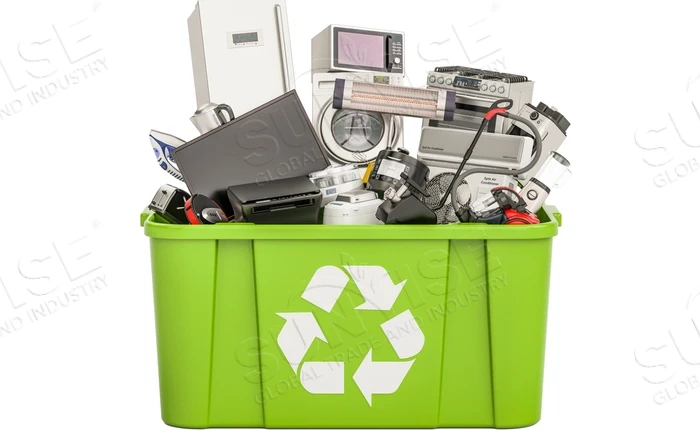
Cómo reciclar placas electrónicas y ayudar al medio ambiente

Hoy en día, la tecnología avanza a pasos agigantados, y con ella, también crece la cantidad de placas electrónicas que se desechan. Estos componentes son fundamentales en diversos dispositivos electrónicos, pero su incorrecta disposición puede causar un grave impacto ambiental. En este artículo, nosotros le mostraremos cómo reciclar residuos electrónicos de manera responsable. y contribuir así a la protección del medio ambiente.

1. Conoce los puntos de recogida de residuos electrónicos:

En muchas ciudades, existen centros de reciclaje especializados en la recolección de residuos electrónicos. Estos lugares están equipados para recibir placas electrónicas, así como otros componentes y dispositivos obsoletos. Infórmate sobre los puntos de recogida cercanos a tu área y asegúrate de llevar tus placas electrónicas allí.

reciclar placas de circuito
2. Desmonta tus dispositivos y triturar las placas:

Antes de desechar cualquier dispositivo electrónico que contenga placas, es importante desmontarlo correctamente. Utiliza herramientas adecuadas para desmontar placas de circuito y trituración de placas de circuito. Esto facilitará el proceso de reciclaje y permitirá una reutilización más eficiente de los materiales. Por ejemplo, cobre, resina, fibra.

3. Busca programas de reciclaje de electrónicos:

En algunos lugares, se ofrecen programas de reciclaje de electrónicos, donde puedes entregar tus placas electrónicas para su correcta disposición. Estos programas aseguran que los componentes sean desechados de manera responsable, minimizando el impacto ambiental. Investiga si hay algún programa de este tipo en tu comunidad y participa activamente en él.

4. Considera la posibilidad de reutilización:

Si tus placas electrónicas aún están en buen estado, puedes considerar la posibilidad de darles una segunda vida. Algunos centros de reparación de electrónicos pueden utilizar estas placas para restaurar otros dispositivos o incluso transformarlos en proyectos de electrónica casera. De esta manera, contribuirás al reciclaje y a la reutilización sostenible de los componentes electrónicos.

cirtitos
cirtitos
5. Infórmate sobre el reciclaje local:

Cada lugar puede tener diferentes políticas y regulaciones respecto al reciclaje de placas electrónicas. Investiga acerca de las normas y regulaciones locales para asegurarte de seguir los procedimientos adecuados. Al educarte sobre las prácticas de reciclaje de tu localidad, podrás hacerlo de manera más eficiente y contribuir a un futuro más sostenible.

residuo electrónico
residuo electrónico
Conclusión:

El reciclaje de placas electrónicas es fundamental para reducir el impacto ambiental causado por el rápido avance tecnológico. Siguiendo los pasos mencionados anteriormente, podrás reciclar tus placas electrónicas de manera responsable y ayudar al medio ambiente. Recuerda que cada pequeña acción cuenta y juntos podemos hacer la diferencia en la protección de nuestro entorno. ¡Comienza hoy mismo a reciclar tus placas electrónicas y sé parte del cambio!

The Comprehensive Guide to Cat Litter Production

Cat litter, an indispensable product for cat owners worldwide, undergoes a meticulous production process to ensure its effectiveness in odor control and moisture absorption. From the preparation of raw materials to the final packaging stage, each step plays a crucial role in delivering a high-quality product. In this comprehensive guide, our company SX delve into the intricacies of cat litter production, exploring each stage in detail. Click

1. Preparation of Raw Materials

The cat litter production line begins with the careful selection and preparation of raw materials. Primary ingredients such as clay minerals, silica gel, and natural fibers are sourced from reputable suppliers. These raw materials undergo rigorous quality checks to ensure they meet the required standards for cat litter production. Additionally, any additives, such as odor neutralizers or antimicrobial agents, are procured and prepared according to specific formulations.

2. Mixing Materials and Additives

Once the raw materials are assembled, they undergo a series of pretreatment processes to optimize their properties for cat litter production. This may involve washing to remove impurities, drying to achieve the desired moisture content, and grinding to achieve the appropriate particle size. Each raw material is treated with precision to enhance its absorbency and clumping ability, ensuring superior performance in the final product.

3. Crushing Materials

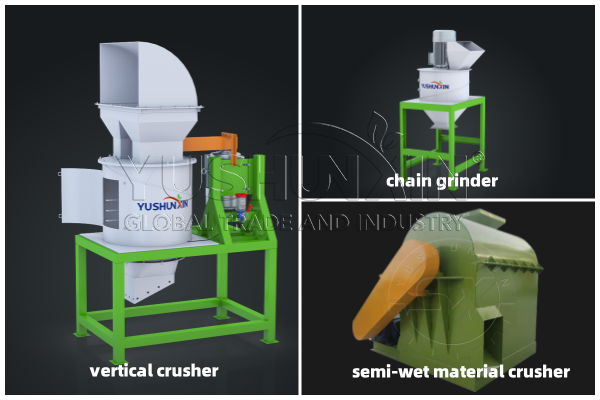
In the crushing stage, raw materials are further processed to achieve the desired consistency and particle size. This step is critical for enhancing the absorbency and texture of the cat litter. Specialized machinery such as crushers and pulverizers are employed to break down the raw materials into uniform particles, ready for the next stage of production.

fertilizer crushing machine for cat litter production

4. Sifting Materials

Following the crushing stage, the materials undergo a sifting process to remove any oversized or undersized particles. This ensures uniformity in particle size, essential for consistent performance in absorbing moisture and controlling odor. Fertilizer sifting equipment is utilized to achieve precise particle size distribution, resulting in high-quality cat litter with optimal clumping properties.

5. Mixing Materials and Additives

Once the raw materials are prepared and sifted, they are carefully blended to create the final cat litter formula. Additives such as fragrance enhancers, antimicrobial agents, and moisture-absorbing compounds are precisely measured and added to the mixture according to specific formulations. The mixing process is closely monitored to ensure thorough dispersion of additives, resulting in a homogenous blend ready for granulation.

6. Granulating Cat Litter

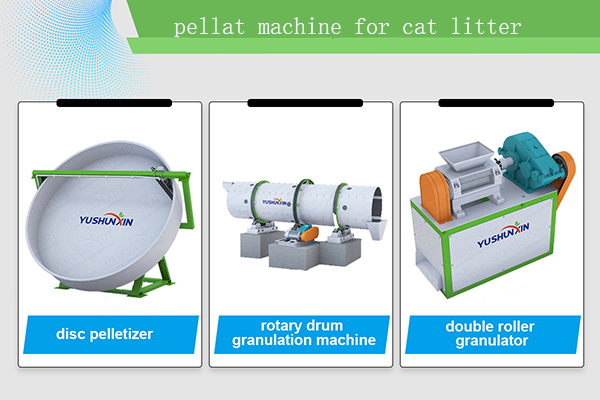
Granulation is a crucial stage in cat litter production, where the mixed materials are formed into granules of uniform size and shape. This is typically achieved using a granulator or pelletizer, which compacts the mixture under controlled pressure to create consistent granules. The granulation process enhances the clumping ability and absorbency of the cat litter, ensuring easy scooping and effective odor control.

fertilizer pellet machine for cat litter production line

7. Drying, Cooling, and Packing

The final stage of cat litter production involves drying, cooling, and packing the granules for distribution. The granules are carefully dried to remove any remaining moisture, ensuring optimal performance and shelf stability. After drying, the cat litter is cooled to room temperature before being packed into bags or containers of various sizes. Each package is sealed to preserve freshness and prevent moisture ingress, ready to be shipped to retailers and cat owners worldwide.

In conclusion, the production of cat litter is a meticulous process that involves careful selection, preparation, and processing of raw materials to create a high-quality product. From the initial stages of raw material preparation to the final packaging phase, each step is essential in ensuring the effectiveness and reliability of cat litter for maintaining a clean and hygienic environment for cats and their owners. Click https://www.fertilizerequipmentprice.com/cat-litter-production-line/

How to Produce Biofertilizer from Biochar

Producing bio fertilizer from carbon, specifically biochar, involves combining the carbon-rich material with beneficial microbes that can enhance soil fertility and plant growth. Below is a detailed. And if you want to know more, you can click here. And we will tell you the step-by-step guide on setting up a production line to create microbial fertilizer from biochar:

Step-by-Step Production Line Process:

Step 1: Biochar Production

Raw Material Collection: Gather biomass such as agricultural waste, wood chips, or other organic materials.

Carbonization: Process the biomass in a carbonization furnace to produce biochar. This involves heating the biomass in a low-oxygen environment to convert it into a stable form of carbon. We can provide you with our company’s charcoal furnace equipment, which can help you make charcoal quickly. Production capacity can reach 4 tons per hour.

Cooling and Storage: Allow the biochar to cool and then store it in a dry environment to prevent contamination. We can provide you with our company’s cooling machines to help you cool carbon quickly. It can produce up to 20 tons per hour.

Cooler Equipment for biochar biofertilizer

Step 2: Microbial Culture Preparation

Microbe Selection: Select appropriate microbial strains that are beneficial for plants, such as nitrogen-fixing bacteria, phosphorus-solubilizing bacteria, or mycorrhizal fungi.

Culture Growth: Grow the microbial cultures in a controlled environment. Use a nutrient-rich growth medium and maintain optimal conditions of temperature and pH to maximize microbial biomass.

Step 3: Mixing Biochar with Microbes

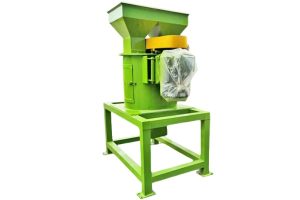
Preparation of Biochar: Before mixing, ensure the biochar is ground to a suitable size and is free from contaminants. To ensure uniformity in size, we offer you our company’s new vertical pulverizer with high efficiency and production.

vertical crusher for biochar biofertilizer

Mixing Together: Mix the biochar with the microbial culture. The process can be done in a mixer machine where the biochar is combined with a liquid culture of microbes. We recommend you our company’s twin-shaft mixers, which are more efficient than the single-shaft ones.

fertilizer mixer for biochar biofertilizer

Composting: Allow the mixture to incubate for a period to enable the microbes to colonize the biochar. This step might require maintaining specific moisture and temperature conditions to ensure successful microbial growth.

Step 4: Addition of Nutrients

Nutrient Enrichment: Enhance the microbial fertilizer by adding nutrients that can be beneficial for plant growth, such as nitrogen, phosphorus, potassium, and trace minerals. These can be added in soluble forms that microbes can utilize to multiply and become more effective.

Step 5: Drying and Granulation

Drying: Dry the biochar-microbe mixture to reduce moisture content, making it stable and easy to handle. We recommend you our company’s dryer with a capacity of 1-20 tons.

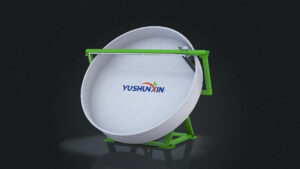
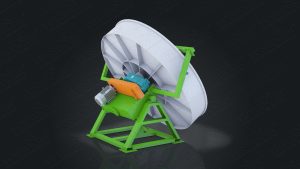
Granulation: Process the dried mixture through a granulator to form pellets or granules. This step improves the ease of application and handling of the fertilizer. We recommend our disc pelletizer with a pelletizing rate of up to 95%.

pan granulator for sale

Step 6: Quality Control and Packaging

Testing: Test the final product for microbial activity, nutrient content, and contamination to ensure it meets quality standards.

Packaging: Package the microbial fertilizer in moisture-proof bags or containers to prevent contamination and loss of microbial activity during storage and transport. We can offer you our bagging machine, which is capable of baling 60-100 bags of biochar biofertilizer per minute!

Step 7: Storage and Distribution

Storage: Store the packaged microbial fertilizer in a cool, dry place to preserve its effectiveness.

Conclusion

Producing microbial fertilizer from biochar involves several critical steps from biochar production to microbial inoculation and final product formulation. Each stage must be carefully controlled to ensure that the biochar is effectively utilized as a carrier for beneficial microbes, ultimately enhancing soil fertility and plant growth. This type of fertilizer not only supports sustainable agriculture by recycling organic waste but also enhances soil health through the synergistic effects of carbon and microbes. If you want to learn more how to prouce biofertilizer from carbon, you can visit my website: https://www.charbasedfertilizermachine.com/product/make-bio-fertilizer-from-biochar/

How to produce 20 tons per hour of charcoal-based fertilizer

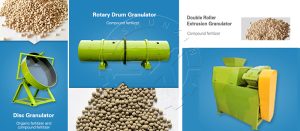
Creating a production line capable of generating 20 tons per hour of charcoal-based fertilizer involves setting up a series of processes and using specific machinery to ensure efficiency and quality. Here’s a detailed guide on how to set up this production process, including the use of a rotary drum granulate equipment and two horizontal mixer equipment:

Rotary Drum Granulator

1. Overview of the Production Process

If you want to learn more about carbon-based fertilizer process, you can click our website: https://www.charbasedfertilizermachine.com/product/make-bio-fertilizer-from-biochar/

Composting the carbon and organic matters: Decomposing organic matter to form a nutrient-rich base.

Adding Carbon Powder into organic matters: Integrating charcoal powder to enhance the carbon content.

Mixing the carbon and organic matters: Thoroughly blending the compost and carbon powder to ensure uniformity.

Crushing the carbon and organic matters: Breaking down any large particles to create a consistent size.

Granulating the carbon and organic matters: Forming the material into granules using a granulator.

Drying the carbon and organic matters: Removing moisture to stabilize the granules.

Cooling the carbon and organic matters: Reducing the temperature of the dried fertilizer to enhance stability.

Packaging the carbon and organic matters: For easier storage and transportation.

2. Equipment Specification

Rotary Drum Granulator: 

This is central to the granulation process. You’ll need a rotary drum granulator that can handle the desired throughput of 20 tons per hour. Ensure it has adequate capacity and power to operate continuously under full load.

Horizontal Mixers: 

Two mixers are recommended to efficiently mix large volumes of material. These mixers will be used in both the initial mixing of compost and carbon powder, and the post-crushing mixing to ensure a homogenous mixture before granulation.

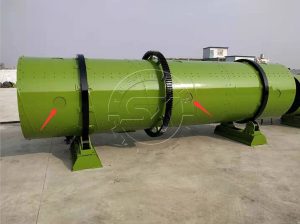
Biochar fertilizer drum machine

3. Advantages of Using a Rotary Drum Granulator

Scalability: Suitable for large-scale production due to its high capacity.

Efficiency: Provides continuous processing, which is vital for achieving a 20 tons per hour production rate.

Uniformity: Ensures that the granules are uniform in size and shape, which is crucial for consistent product quality.

Versatility: Capable of handling different types of materials and moisture contents, making it adaptable to various formulations of charcoal-based fertilizer.

4. Benefits of Granulating Carbon-Based Fertilizer

Improved Nutrient Delivery: Granules break down slowly, providing a gradual release of nutrients, which is beneficial for plant growth.

Reduced Dust Pollution: Granulating the fertilizer minimizes dust, making the product safer and cleaner to handle and transport.

Enhanced Product Handling: Granules are easier to apply using standard farming equipment, improving usability for end-users.

Marketability: Granular fertilizers are often preferred by farmers due to their ease of use and storage, leading to better market acceptance.

rotary drum granulation machine

5.Production Line Setup

Feed Preparation:
Use shredders and crushers to prepare the raw materials for composting. Ensure the compost reaches the necessary maturity before adding charcoal powder.

Initial Mixing:
Load the mature compost and charcoal powder into the twin shaft mixers. Mix thoroughly to ensure an even distribution of charcoal.

Secondary Processing:
Crush the mixed material to ensure it is fine enough for granulation. Pass the crushed mixture through the second mixer to achieve a uniform, fine blend.

Granulation:
Feed the uniformly mixed material into the rotary drum granulator. Adjust the moisture content and drum speed to optimize granule formation.

Drying and Cooling:
Convey the granules through a drying system to reduce moisture content. After drying, cool the granules to enhance their stability and reduce caking.

Packaging and Storage:
Package the cooled granules for distribution. Store in a dry, cool place to maintain product quality.Implementing this detailed process will help you achieve a high-efficiency production line for charcoal-based fertilizer, aiming for an output of 20 tons per hour. If you have any question, you can click here to cantack us.

Granulating Ten Tons per Hour with Roller Granulators

In the world of agricultural production, efficiency is key. charcoal-based fertilizers play a vital role in enhancing soil fertility and crop yield. Among the various methods of fertilizer production, granulation stands out for its efficiency and effectiveness. In this blog, we delve into the process of granulating ten tons of carbon-based fertilizer per hour using roller granulators.

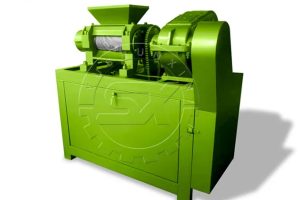
double roller extrusion for biochar

Achieving Ten Tons per Hour Output:

To achieve a production rate of ten tons per hour with roller granulators, a well-optimized setup of four machines is essential. Here’s how it can be accomplished:

Machine Configuration:

Divide the process into four stages, each handled by a dedicated roller granulator. This ensures continuous operation and maximizes output.

Optimized Feeding System:

Implement a robust feeding system that ensures a consistent and uniform flow of raw materials into each granulator.

Efficient Cooling and Drying:

Incorporate efficient cooling and drying systems to swiftly cool and dry the granules, allowing for rapid processing and packaging.

Fast pulverizing process:

Crushing can make the charcoal-based fertilizer material of the same size, which is conducive to your later better granulation with the roller granulator.

Controlled Process Parameters:

Fine-tune parameters such as granulation speed, moisture content, and particle size to optimize throughput without compromising product quality.

double roller equipment for biochar fertilizer

Understanding Roller Granulators:

A roller granulator is a type of granulation equipment used in fertilizer production. It operates by compressing fine powders or powdery materials between two counter-rotating rollers, forming compacted sheets that are then broken into granules of the desired size. If you want to know more details about Roller Pelletizer,  you can click here.

Benefits of Roller Granulators:

Double roller granulators offer several advantages over other granulation methods:

High Efficiency:

Roller granulators can achieve high throughput rates, making them ideal for large-scale production.

Uniform Granule Size:

The controlled compression process ensures uniformity in granule size, leading to consistent product quality.

Versatility:

Roller granulators can handle a wide range of materials and formulations, including carbon-based fertilizers with varying compositions.

Low Maintenance:

With fewer moving parts and simple operation, roller granulators require minimal maintenance, reducing downtime and production costs.

double roller extrusion for carbon-based fertilizer

Advantages of Granulation:

Granulation, in general, offers numerous benefits for fertilizer production:

Improved Handling:

Granulated fertilizers are easier to handle, transport, and apply compared to powdered or liquid formulations.

Reduced Dust Generation:

Granulation minimizes dust generation during handling and application, improving worker safety and environmental cleanliness.

Enhanced Nutrient Release:

Granules provide controlled release of nutrients, ensuring optimal uptake by plants and reducing the risk of leaching or runoff.

Conclusion:

Mastering the production of carbon-based fertilizers at a rate of ten tons per hour with roller granulators requires careful planning, optimized processes, and the right equipment setup. Roller granulators offer efficiency, uniformity, and versatility, making them a preferred choice for large-scale fertilizer manufacturers. By harnessing the benefits of granulation, agricultural producers can enhance soil fertility, improve crop yield, and contribute to sustainable farming practices. If you want learn about how to granulate, you can click our website:https://www.charbasedfertilizermachine.com/

Why the composting of charcoal-based fertilizer should use self-propelled turner

Introduction:

In the world of sustainable gardening and farming, composting for biochar and organic matters stands out as a transformative process. It converts charcoal and organic waste into a rich soil amendment, providing numerous environmental and economic benefits. With the advent of self-propelled composters, the process of carbon and organic matters have become more efficient and accessible. This blog explores the benefits of composting for biochar and organic waste, the advantages of self-propelled composters, and the optimal conditions required for effective composting.

Moving-Type-Compost-Turner1
Moving-Type-Compost-Turner

The Benefits of Composting for Biochar Fertilizer

Composting is more than just waste reduction. It is a critical component in the cycle of sustainability. By mixing kitchen scraps and yard waste into carcoal and composting, you create a nutrient-rich biochar fertilizer that can greatly enhance soil quality. This biochar fertilizer introduces beneficial organisms to the soil, helps retain moisture, reduces the need for chemical fertilizers, and promotes healthier plant growth. Furthermore, composting reduces methane emissions from landfills and lowers your carbon footprint, making it an environmentally friendly practice. If you have questions about composting, you can click our web to learn more: https://www.charbasedfertilizermachine.com/2024/03/30/compost-making-tips/
Advantages of Self-Propelled Composters

Self-propelled composters revolutionize the traditional composting process by automating many of the labor-intensive steps. Here are some of the key advantages:

Efficiency:

These machines mix and aerate the compost materials automatically, speeding up the biochar and organic matters  composting process significantly.

Ease of Use:

With moving type composters, physical exertion is minimized. There’s no need for manual turning, making it accessible to more people can drive to compost carcoal and organic matter materials, including those with physical limitations.

Consistency:

These devices maintain consistent movement and aeration, which leads to more uniform compost.

Scalability:

Designed to handle larger volumes than traditional compost bins, self-propelled turners are ideal for extensive biochar fertilizer composting or community composting efforts.

The self-propulsion feature ensures that the compost material is turned regularly and thoroughly, which is crucial for aerobic decomposition. By automating this process, the composter not only saves time and labor but also produces high-quality compost more reliably.

Self moving type compost turner for biochar

Optimal Conditions for Composting

The effectiveness of composting relies heavily on maintaining the right temperature and humidity within the compost pile:

Temperature: The ideal temperature range for composting is between 135 to 160 degrees Fahrenheit (57 to 71 degrees Celsius). This range is crucial for destroying harmful pathogens and weed seeds, while also promoting the activity of beneficial microorganisms that break down organic material.

Humidity: The compost pile should maintain a moisture content of about 40 to 60%. This level of humidity is essential to support the microbial life that decomposes the organic material. The pile should feel like a wrung-out sponge—moist but not dripping.

Monitoring these conditions in a self-propelled composter is often easier, as many models come equipped with sensors and controls to maintain the ideal composting environment automatically.

Conclusion

Self-propelled composters represent a significant advancement in composting of biochar fertilizer technology, making it more accessible and less labor-intensive. By understanding and leveraging the right conditions for composting, gardeners and farmers can improve their sustainability practices and contribute positively to the environment. As technology progresses, the integration of these tools into everyday gardening practices promises to enhance our approach to recycling organic waste and supporting healthy, productive soils. If you want to learn more, you can click here.

How to make 30t/h npk fertilizer granules?

In the realm of granulation technology, where efficiency and precision are paramount, one exemplary innovation stands out—the 30 t/h roller press granulation production line. Far beyond a mere conveyor of raw materials, this production line acts as a metamorphosis catalyst, seamlessly converting powder into uniform granules at an impressive pace.

Key Features of the Production Line

Central to this groundbreaking technology is the double roller extrusion granulator, colloquially known as the “press.” This critical component ensures not only high efficiency but also impeccable granulation quality. Its innovative design propels the compact and dry granulation process forward, rendering it adaptable to a diverse array of materials and production requirements.

Equipment Selection of Simple NPK Fertilizer Extrusion Granulation Line

Diverse Raw Material Adaptability

The versatility of the roller press granulation production line shines through its ability to accommodate a wide spectrum of raw materials. Consider the following examples:

1. Agricultural Waste: Crop straws, corn stalks, and bagasse find a new lease on life as high-quality organic fertilizer through the adept utilization of the roller press granulator.

2. Chemical Powders: From ammonium chloride to ammonium phosphate and urea, chemical powders undergo a metamorphosis into uniform, robust granules, thereby enhancing efficiency in storage and transportation.

3. Industrial Waste: Coal gangue, fly ash, and slag, once deemed as industrial by-products, are transformed into valuable commodities, simultaneously mitigating waste and bolstering product utility.

Learn more about 30t/h granulation process.

NPK Materials for Double Roller Extruder

The Powder Granulation Process: Step by Step

1. Raymond Mill System: The journey begins with the meticulous preparation of the powder. Whether mineral or chemical in nature, the powder undergoes precision milling via the raymond mill system, guaranteeing a consistent and top-tier powder output.

2. Double Shaft Mixer: The mixed powder encounters the double shaft mixer, where an assortment of additives can be seamlessly integrated to augment the granules’ properties. The mixer ensures the homogeneous distribution of these additives throughout the powder.

3. Disc Feeders: Regulating the material flow into the double roller extrusion granulator, the disc feeders play a pivotal role. Here, under immense pressure, the powder undergoes compression and morphs into granules, thanks to the collaborative efforts of multiple rollers.

4. Rotary Screener: Post-granulation, the granules undergo scrutiny via the rotary screener, which meticulously segregates oversized or undersized particles, allowing only the epitome of granules to progress to the subsequent phase.

5. Coating Machine (Optional): For those desiring an additional layer of refinement, the granules can undergo coating via the coating machine. This optional step confers benefits such as enhanced flowability, aesthetic enhancement, or moisture protection.

6. Double Bucket Granules Packing Scale: The culmination of the process sees the granules meticulously packed and weighed utilizing the double bucket granules packing scale, ensuring precision and consistency in packaging.

Conclusion

The advent of the 30 t/h granulation production line heralds a new era in granulation technology, characterized by unparalleled efficiency and quality. With its advanced features, notably the double roller extrusion granulator, this production line caters to a myriad of industries, seamlessly transforming raw materials into marketable granular products. Backed by Yushunxin’s commitment to innovation and reliability, the roller press granulation production line emerges as a veritable game-changer in the industry.

For further insights, visit: https://www.extruder-granulator.com/30-t-h-roller-press-granulation-production-line

How to pelletize carbon and fertilizer with disc granulator machine?

Introduction:

In the quest for sustainable agriculture, carbon-based fertilizers have emerged as a pivotal solution for enhancing soil health and reducing chemical runoff. The key to maximizing the benefits of these fertilizers lies in the efficiency of their production. Our disc granulator is engineered to streamline this process, ensuring high-quality, nutrient-rich fertilizer.

What is a Disc Granulator?

A disc granulator is a type of rotating machinery utilized primarily in the agricultural industry to transform raw materials into granular fertilizer. It’s an essential tool for manufacturers looking to produce high volumes of biochar fertilizer with consistent quality.

pan granulator for sale

Working Principle of the Disc Granulator

Our disc granulator operates on a straightforward yet effective principle. Installed at a precise incline, the disc rotates, causing the material inside to roll rapidly. As the disk body rotates, the carbon-based fertilizer materials rise to their highest point before falling vertically under the influence of a strategically placed scraper. During the rotation, carcoal-based fertilizer particles experience a centrifugal force, pressing them against the disk wall where they undergo extrusion and rolling, gradually forming into pellets. These biochar fertilizer pellets eventually overflow from the edge of the disc as they reach the desired size.

How charcoal-based fertilizer goes from composting to pelletizing

The process of transforming compost into carbon- based granulated fertilizer begins with the composting stage. Compost produces high temperatures of 60 degrees or more to kill disease and insect eggs and weed seeds. where organic waste decomposes into rich, nutrient-dense material.  Following composting, the material will be crush, so that can better to granulate. And then you can send carcoal-based fertilizer materials into disc granulator, where it is mechanically forced into dense, uniform pellets. The end result is a high-quality, sustainable fertilizer that is easy to distribute and beneficial for plant growth.

Features of Our Company’s Disc Granulator

High Pelletizing Rate:

Our disc granulator achieves an impressive 95% pelletizing rate, minimizing waste and maximizing output.

Wet Pelletizing Method:

This technique not only ensures the structural integrity of the pellets but also enhances their appearance, making them more marketable.

Production Capacity:

Capable of producing 4-6 tons of high-quality fertilizer per hour, our granulator is designed for both small and large-scale operations.

Competitive Pricing:

Priced between $800 and $16,000, our granulator offers exceptional value, combining top-tier technology with affordability.

pan granule machine for sale

Conclusion

Leverage the advanced technology of our disc granulator to elevate your charfertilizer production. With its high efficiency, aesthetic pellet output, and robust design, it’s an invaluable asset for any fertilizer production business. For more details or to arrange a demonstration, please contact us at info@charbasedfertilizermachine.com


Линия по производству фосфорных удобрений: основная конкурентоспособность производителей оборудования для удобрений.

Являясь одним из трех основных элементов питания в сельскохозяйственном производстве, фосфор является ключевым компонентом, способствующим развитию корневой системы растений и созреванию цветов и плодов. Фосфатные удобрения являются неотъемлемой частью сельскохозяйственного производства, а их стабильные и надежные поставки имеют решающее значение для обеспечения продовольственной безопасности и повышения урожайности сельскохозяйственных культур. Для производителей оборудования для внесения удобрений проектирование и поставка эффективных линий по производству фосфорных удобрений является важным способом удовлетворения рыночного спроса и поддержания конкурентоспособности отрасли.

Дисковый гранулятор 3 м.

**Планирование и проектирование производственной линии**
Эффективное планирование компоновки линии по производству фосфорных удобрений может обеспечить бесперебойный производственный процесс и высокую производительность. Полная производственная линия должна учитывать не только эффективность производства. Нам также необходимо рассмотреть возможность плавного соединения нескольких звеньев, таких как обработка сырья, транспортировка материала, смешивание, грануляция, сушка, охлаждение, сортировка и упаковка. Как профессиональный производитель оборудования для внесения удобрений, мы будем производить продукцию в соответствии с вашими конкретными требованиями и фактическими производственными возможностями. Предоставить вам индивидуальные решения по проектированию производственной линии. Для достижения оптимального производственного процесса и экономической эффективности.

**Управление сырьем и предварительная обработка**
Первым шагом в производстве фосфорных удобрений является управление и предварительная обработка сырья. Производство фосфорных удобрений обычно требует в качестве сырья фосфорной кислоты, фосфоритной руды и других вспомогательных материалов. Это сырье необходимо измельчить и правильно дозировать перед поступлением на производственную линию. Точная система предварительной обработки сырья не только повышает эффективность производства, но и обеспечивает качество конечного продукта.

Дробильное оборудование мельницы Раймонд.

**Технология смешивания и грануляции**
Смешивание — ключевой этап производства фосфорных удобрений, который напрямую влияет на однородность частиц удобрений. Современные линии по производству фосфорных удобрений используют эффективные смесители, обеспечивающие тщательное смешивание отдельных ингредиентов. В процессе грануляции используется эффективный гранулятор, такой как дисковый гранулятор или барабанный гранулятор. Сформируйте из смеси гранулы одинакового размера. Это не только повышает мобильность удобрений и удобство их использования, но также облегчает хранение и транспортировку удобрений.

**Система сушки и охлаждения**
Сушка и охлаждение являются важными звеньями в производстве фосфорных удобрений, обеспечивающими стабильность продукта. В процессе сушки из гранул удаляется лишняя влага, что предотвращает комкование продукта при хранении или транспортировке. Охлаждение заключается в регулировании температуры частиц фосфорных удобрений после высыхания. Во избежание потери эффективности удобрений или рисков безопасности, вызванных чрезмерной температурой.

**Контроль качества и упаковка**
Следующим звеном производственной линии является контроль качества продукции и упаковка. Линии по производству высококачественных фосфорных удобрений будут оснащены современным испытательным оборудованием для контроля качества продукции и обеспечения соответствия каждой партии фосфорных удобрений национальным стандартам и потребностям сельскохозяйственного производства. Автоматизированная система упаковки позволяет быстро и эффективно завершить окончательную упаковку и повысить эффективность всей производственной линии.

Площадь готовой продукции

**Охрана окружающей среды и устойчивое развитие**
При проектировании нашей линии по производству фосфорных удобрений мы также учитывали факторы защиты окружающей среды и устойчивого развития. Сократите потребление энергии и выбросы отходов за счет оптимизации производственных процессов и оборудования. Наша линия по производству фосфорных удобрений поможет вам создать более экологически чистый метод производства. В то же время за счет улучшения использования ресурсов и снижения производственных затрат. Беспроигрышная ситуация для вас с точки зрения экономической выгоды и защиты окружающей среды.

Линия грануляции с вращающимся барабаном

Линия по производству фосфорных удобрений является одним из важных продуктов производителей оборудования для удобрений. Мы обеспечиваем мощную поддержку вашего сельскохозяйственного производства посредством постоянных инноваций и технологических усовершенствований. В будущем, с развитием технологий и изменением рыночного спроса. Наша линия по производству фосфорных удобрений продолжит развиваться в более автоматизированном, экологически чистом и эффективном направлении. Для получения дополнительной информации о линии по производству фосфорных удобрений посетите:https://www.sxmashina.com/fosfor-kak-udobrenie/

Horizontal Fermentation Pot

In the realm of sustainable agriculture, innovative technologies that optimize resource utilization and enhance production efficiency are increasingly critical. One such innovation is the horizontal fermenter tank, a pivotal tool in the production of charcoal-based fertilizers. This article delves into what a horizontal fermenter is and explores its numerous advantages in fertilizer production.

What is a Horizontal Fermenter?

A horizontal fermenter tank is a type of industrial equipment used to ferment organic materials, including charcoal, under controlled conditions. Unlike traditional vertical fermenters, this apparatus is designed horizontally, which influences both its functionality and efficiency. The horizontal layout facilitates easier loading and unloading of materials and provides a more uniform heat distribution during the fermentation process.

Typically constructed from robust materials like stainless steel, a horizontal fermenter consists of a cylindrical chamber with a rotating axis. This design ensures that the materials inside are consistently turned, promoting an even fermentation process. Advanced models are equipped with temperature and moisture sensors, allowing precise control of the internal environment, which is crucial for producing high-quality charcoal-based fertilizer. You can view our web to learn more: https://www.charbasedfertilizermachine.com/product/horizontal-fermentation-tank/

horizontal fermentation tank for biochar fertilizer

Advantages of Horizontal Fermenters

Improved Material Handling:

The horizontal design simplifies the process of loading and unloading organic material. This is particularly beneficial in handling bulky or heavy loads of raw materials like biochar, which are integral to charcoal-based fertilizers. By reducing the physical strain and the time needed for handling, horizontal fermenters enhance operational efficiency.

Enhanced Fermentation Control:

Horizontal fermenters provide superior control over the fermentation environment compared to their vertical counterparts. The ability to precisely manage factors such as temperature, humidity, and turning frequency results in a more consistent product quality. This precise control is essential for optimizing the properties of the charcoal-based fertilizer, such as its nutrient release rates and microbial activity.

Increased Efficiency:

The rotational mechanism of the horizontal fermenter ensures that all material is equally exposed to microbial action. This not only speeds up the fermentation process but also increases the efficiency of the conversion of inputs into usable fertilizer. Faster processing times mean more product output over the same period, enhancing overall productivity.

Horizontal ferment tank for carbon-based fertilizer

Scalability and Versatility:

Horizontal fermentation pot are highly scalable, making them suitable for both small-scale operations and large-scale commercial productions. Their design allows for easy integration into existing production lines without significant modifications. Furthermore, they can be used for a variety of fermentation-based products beyond charcoal-based fertilizers, such as compost and other organic fertilizers.

Energy Efficiency:

Modern horizontal fermenters are designed to maximize energy efficiency. The even distribution of heat and the effective insulation minimize energy loss, reducing the overall energy requirement for the fermentation process. This not only lowers production costs but also supports sustainability goals by reducing the carbon footprint of fertilizer production.

In conclusion, the horizontal fermenter represents a significant advancement in the production of charcoal-based fertilizers. Its design and operational advantages align perfectly with the needs of modern, sustainable agriculture, offering improved efficiency, better product control, and versatility. As the demand for eco-friendly agricultural inputs grows, technologies like the horizontal fermenter will play a crucial role in meeting global food production challenges sustainably and efficiently. If you want to know more about Horizontal Fermenter, you can click here.

Chicken dung and biochar as fertilizer

Introduction:

Chicken manure, often viewed as waste, holds immense potential as a valuable resource in making biochar fertilizer. By harnessing the power of carbonization, we can transform this abundant waste into a nutrient-rich fertilizer. In this blog, we will explore two common processes and equipment for making carbon fertilizer from chicken manure, catering to both those who need to produce carbon from scratch and those who already have access to carbon material.


Carbonization Process:

For those without access to carbon material, the first step involves the carbonization of organic materials such as coconut shells,  straw or chicken dung using a continuous carbonization furnace. This furnace operates on the principle of thermal decomposition, converting organic matter into carbon. With a capacity of about 500kg/h, materials containing less than 10% per ton can yield approximately 280kg-310kg of final carbon products.

carbonization furnace catch

Adding Carbon Powder:

Alternatively, if the customer already possesses carbon material, the process becomes simpler. Carbon powder is added to the chicken manure, creating a carbon-based fertilizer. This method skips the carbonization step and directly incorporates carbon into the mixture. That’s why you need an efficient blender. We recommend a double shaft mixer.

Common Processes:

Both approaches follow a series of common steps to convert chicken manure into carbon-based fertilizer:

Composting:

Chicken manure and biochar fertilizer’s making need to undergoes a composting process to break down organic matter and eliminate pathogens. So you need a composter, we recommend our self-propelled tumbler. You can click our web to get more information abut how to compost : https://www.charbasedfertilizermachine.com/2024/03/30/biochar-making-process/

Mixing:

Carbon material, whether freshly carbonized or in powder form, is thoroughly mixed with the composted chicken manure. This ensures uniform distribution of nutrients.

Crushing:

The making of chicken dung and biochar fertilizer may undergo crushing to achieve a finer consistency, facilitating subsequent processing. So we recommend the new-type organic fertilizer crusher.

Granulating:

The crushed mixture is formed into granules, enhancing its usability and ease of application in the field. That’s why we recommend disc pelletizer.

Screening:

Carbon-based fertilizer granules from chicken manure  are screened to remove any oversized or undersized particles, ensuring product consistency.

Packaging:

The final fertilizer product is packaged into appropriate containers for distribution and use by farmers. Our company has palletizers and packaging machines, both of which save time and increase efficiency.

carbonization furnace

How to compost quickly:

To compost quickly, focus on optimizing temperature, humidity, and ventilation. Maintain a temperature range of 45°C to 60°C, with humidity controlled at 55% to 60%. Adequate ventilation is crucial for supplying oxygen to microorganisms and promoting decomposition. Turn the compost regularly to aerate it and distribute heat evenly. By ensuring these conditions, you accelerate the composting process, yielding nutrient-rich fertilizer in a shorter time frame. Composting not only efficiently recycles organic waste but also produces a sustainable fertilizer rich in essential nutrients, promoting healthier soil and plants while reducing environmental impact.  If you need to compost tips, you can click here to learn more.

What are the advantages of our equipment

Environmental Sustainability:

Our equipment utilizes advanced carbonization technology to convert organic waste, such as chicken manure, into high-quality charcoal-based fertilizer. This process not only reduces environmental pollution from organic waste but also promotes a circular economy by efficiently utilizing resources.

Efficient Production:

With high production capacity, our equipment swiftly transforms organic waste into fertilizer. The continuous operation of our carbonization furnace ensures consistent production rates, processing approximately 500 kilograms of raw material per hour.

Cost-Effectiveness:

Compared to traditional fertilizer production methods, charcoal-based fertilizer production offers energy and cost savings. Additionally, our equipment facilitates the conversion of waste into valuable products, reducing waste management costs.

How to process zeolite to make granules

Zeolite is a naturally occurring mineral that is commonly used in various industries for its unique properties such as high adsorption capacity, ion exchange, and catalytic activity. In order to use zeolite in various applications, it is often processed into granules. Here is a step-by-step guide on how to process zeolite to make granules:

  1. Raw Material Selection

The first step in processing zeolite to make granules is to select the right raw material. Zeolite can be found in various forms such as powder, pellets, or chunks. The choice of raw material will depend on the desired size and shape of the final granules.

  1. Crushing and Grinding

Once the raw material has been selected, the next step is to crush and grind it into smaller particles. This can be done using various types of crushers and mills such as jaw crushers, hammer mills, or ball mills. The goal is to reduce the size of the zeolite particles to a uniform size that is suitable for granulation.

  1. Mixing and Binder Addition

After the zeolite has been crushed and ground, it is then mixed with a binder to help the particles stick together during the granulation process. The binder can be a liquid or a powder, and the amount used will depend on the desired properties of the final granules.

  1. Granulation

The next step is to granulate the zeolite-binder mixture. This can be done using various granulation methods such as extrusion, pelletizing, or agglomeration. The choice of granulation method will depend on the desired size and shape of the final granules.

zeolite drum granulation line
  1. Drying and Sizing

After the zeolite has been granulated, it is then dried to remove any moisture that may have been added during the granulation process. This can be done using various drying methods such as oven drying, fluid bed drying, or rotary kiln drying. Once the granules are dry, they are then sized to ensure that they are all uniform in size.

  1. Packaging and Storage

The final step in processing zeolite to make granules is to package and store the granules. This can be done using various packaging materials such as bags, drums, or bulk containers. The granules should be stored in a dry, cool place to prevent any moisture from being reabsorbed.

In conclusion, processing zeolite to make granules involves selecting the right raw material, crushing and grinding, mixing and binder addition, granulation, drying and sizing, and packaging and storage. By following these steps, you can produce high-quality zeolite granules that can be used in various industries for their unique properties.

Biomass Carbonization Machine Prices

The quest for sustainable and eco-friendly energy solutions has led to the innovative process of biomass carbonization. This technique involves converting organic materials into charcoal through a process called pyrolysis, which occurs in the absence of oxygen. As demand for biomass charcoal surges, businesses and environmental enthusiasts are looking to invest in biomass carbonization machines. However, the price of these machines can be a significant consideration. In this blog, we will delve into the factors influencing the cost of biomass carbonization machines and offer insights into making an informed purchase.

Understanding Biomass Carbonization Machines:

Before discussing pricing, it’s essential to understand what biomass carbonization equipment are and how they operate. These machines are designed to process various types of biomass, such as wood chips, sawdust, agricultural residues, and even municipal waste, converting them into biochar, syngas, and bio-oil. The end-products have numerous applications, from soil enrichment to renewable energy generation.

biomass carbonization equipment

Factors Impacting Biomass Carbonization Machine Prices:

1.Production Capacity:

The size and throughput of the machine significantly affect the cost. The price of small-scale biochar making units that process a few kilograms per hour can be considerably less expensive than industrial-scale machines capable of processing several tons per hour.

2. Technology and Efficiency:

Advances in technology, such as continuous carbonization system, can increase the efficiency of the conversion process. More sophisticated machines with higher efficiency and automation levels are likely to come with a higher price tag. Click here to learn more.

3. Material Quality and Durability:

High-quality materials such as stainless steel components ensure durability and longevity but also add to the machine’s cost. Investing more upfront can lead to lower maintenance costs and a longer lifespan for the equipment.

4. Energy Consumption:

The energy required to power the machine contributes to operational costs. Machines designed with energy efficiency in mind might be more expensive initially but can save money in the long run through reduced energy bills.

5. After-Sales Service and Warranty:

Good after-sales service, including installation guidance, training, and warranty, can be worth the extra investment. Machines that come with comprehensive service agreements may have higher prices but provide peace of mind and support over the machine’s life.

6. Customization:

Custom features tailored to specific needs, such as feedstock type or desired end-product characteristics, can influence the cost. Custom-engineered solutions will typically cost more than standard models.

Price Range and What to Expect:

Biomass carbonization machine prices can vary widely, from a few thousand dollars for basic, small-scale equipment to several hundred thousand dollars for large, fully automated industrial systems. It’s crucial to balance your budget with the machine’s quality, output requirements, and operational costs.

Conclusion:

The price of a biomass carbonization machine is shaped by a variety of factors, all of which should be considered in the context of your specific needs and budget. By understanding these cost determinants and doing comprehensive research, you can make a well-informed decision that aligns with your financial constraints and sustainability goals. More precise quote for carbonizer, you can visit https://www.biocharmaker.com/2023/11/21/carbonization-furnace-price/

Horizontal Fermentation Tank

In today’s world, where sustainability is becoming increasingly vital, the agricultural industry is seeking innovative solutions to enhance productivity while minimizing environmental impact. Composting has emerged as a sustainable practice with numerous benefits for soil health and biochar fertility. At the forefront of this green revolution is our company’s cutting-edge horizontal fermenter, a game-changer in composting technology. In this blog, we delve into the advantages of composting on fertilizer production and introduce the unparalleled features of our horizontal fermenter.

Benefits of biochar composting

Composting, the process of decomposing organic materials to create nutrient-rich fertilizer. There are many harmful organisms such as pathogenic bacteria and roundworm eggs breeding inside the manure, and the high temperature period of 50-70°C in the composting process up to about 10 days can kill these harmful microorganisms completely. What’s more, some active substances such as humic acid produced during the decomposition of compost can sequester phosphorus and potassium in the soil, making the fertilizer rich in a variety of nutrients. If  you want to know how to composting biochar materials, you can click here.

However, traditional composting methods often pose challenges such as manual labor, space requirements, and odor management. This is where our horizontal fermenter steps in to revolutionize the composting process. Here are four key advantages of our innovative technology:

High Degree of Automation:

Our horizontal ferment machine  boasts state-of-the-art automation, minimizing the need for manual intervention and streamlining the biochar fertilizer composting process. Advanced sensors and control systems monitor and regulate temperature, moisture levels, and airflow, ensuring optimal conditions for efficient fermentation. This automation not only reduces labor costs but also enhances the consistency and quality of the compost produced.

Fully Closed Structure with Excellent Sealing:

Unlike traditional biochar fertilizer

‘composting methods that may result in unpleasant odors and nutrient loss, our horizontal fermenter is designed as a fully closed structure with superior sealing. This feature prevents the escape of odorous gases and minimizes nitrogen leaching, resulting in a more controlled and environmentally friendly composting biochar fertilizer process. The sealed design also mitigates the risk of contamination and ensures compliance with stringent environmental regulations.

Space-saving Design:

Space constraints are a common challenge in composting biochar facilities, especially in urban areas where land availability is limited. Our horizontal fermenter addresses this issue with its compact footprint, maximizing efficiency and space utilization. By occupying minimal floor space, our technology allows for flexible installation options and facilitates integration into existing facilities, thereby reducing capital investment and operational costs.

Versatile Applicability:

One of the standout features of our horizontal fermenter is its versatility. Capable of processing a wide range of organic waste materials, including agricultural residues, food scraps, and green waste, our technology offers a scalable solution for diverse composting needs. Whether in agricultural settings, municipal waste management facilities, or industrial operations, our horizontal fermenter delivers consistent performance and superior results.

In conclusion, composting represents a sustainable solution for enhancing soil fertility and reducing waste, with profound implications for agricultural productivity and environmental stewardship. Our company’s horizontal fermenter redefines composting technology with its advanced automation, closed structure, space-saving design, and versatile applicability. By embracing this innovative approach to composting, farmers, waste managers, and industry professionals can unlock the full potential of organic waste as a valuable resource for fertilizer production, paving the way towards a greener and more sustainable future. In the end, you can click this to view more :https://www.charbasedfertilizermachine.com/product/horizontal-fermentation-tank/

Self-Propelled Compost Turner

Enhancing Fertilizer Production with Our Advanced Composter

Composting stands as a cornerstone of sustainable agriculture, offering a natural and eco-friendly solution to enriching soil fertility and enhancing crop yield. At YuShunXin company, we are dedicated to revolutionizing fertilizer production through our cutting-edge composter. In this blog, we delve into the numerous benefits of composting for fertilizer and highlight the distinctive advantages of our composter, focusing on its ability to improve permeability, adjust moisture levels, and regulate temperature within the raw material pile. If you want to learn about how to composting, you can click here to learn more about composting tips.

The advantage of Composting: Transforming Waste into Fertilizer

Composting holds immense potential for fertilizer production, offering a cost-effective and environmentally friendly alternative to synthetic fertilizers. By recycling organic waste materials such as food scraps, yard trimmings, and agricultural residues, composting generates nutrient-rich organic matter that replenishes soil nutrients and enhances soil structure. The resulting compost acts as a natural fertilizer, providing essential nutrients to plants, improving soil moisture retention, and promoting beneficial microbial activity. From reducing reliance on chemical fertilizers to mitigating nutrient runoff and soil erosion, composting offers a host of benefits for sustainable agriculture and soil health.

Crawl compost machine

Advantages of Our  Crawl Composter Machine

Improvement of Permeability in the Raw Material Pile

Effective composting relies on proper aeration and oxygen diffusion within the raw material pile to support aerobic microbial activity. Inadequate airflow can lead to anaerobic conditions, resulting in unpleasant odors and inefficient decomposition. Our composter is engineered to enhance the permeability of the raw material pile, ensuring optimal oxygenation and promoting aerobic decomposition. By facilitating airflow, our crawl compost machine accelerates the composting process, producing high-quality compost suitable for fertilizer production.

Adjustment of Moisture Levels in the Raw Material Pile

Moisture management is crucial for successful composting, as it directly affects microbial activity and decomposition rates. Our crawl composter machine features advanced moisture adjustment capabilities, allowing users to regulate and maintain optimal moisture levels within the raw material pile. Whether composting wet organic materials or dry agricultural residues, our composter ensures uniform moisture distribution, promoting efficient decomposition and nutrient retention. By optimizing moisture levels, our composter enables the production of well-balanced compost with ideal nutrient content for fertilizer application.

Adjustment of Temperature in the Raw Material Pile

Temperature plays a critical role in composting, influencing microbial activity, nutrient transformation, and pathogen reduction. Our composter incorporates temperature regulation mechanisms to monitor and adjust heat levels within the raw material pile. By maintaining optimal temperatures, our composter ensures efficient composting while minimizing the risk of odor generation and nutrient loss. Whether composting in cold climates or hot conditions, our crawl composter equipment offers precise temperature control for consistent and high-quality compost production.

Conclusion

Composting holds immense potential for fertilizer production, offering numerous environmental, economic, and agronomic benefits. With our advanced composter, we are taking composting to new heights, enhancing permeability, moisture control, and temperature regulation within the raw material pile. By optimizing these key aspects of composting, our composter empowers users to produce high-quality compost for fertilizer application, contributing to sustainable agriculture and soil health. Join us in harnessing the power of composting to cultivate healthier soils and grow a greener future. You can click here to view more information: https://www.charbasedfertilizermachine.com/product/self-propelled-compost-turner/

How to Select the Ideal Equipment for Your 10 t/h Production Needs?

Selecting the right equipment is crucial for enhancing efficiency and productivity in any production line. This is particularly true for businesses aiming to meet specific production targets such as 10 tons per hour (t/h). When it comes to meeting the demands of a 10 t/h powder granulation production requirement, it is crucial to choose the right equipment that can ensure efficiency and effectiveness.

Section 1: Understanding the Granulation Process

To embark on selecting the ideal equipment, it is essential to first understand the granulation process. Granulation involves the transformation of raw materials into desired granules. It promotes uniformity, improves handling, and enhances the overall efficiency of the production line. By using Yushunxin’s efficient double roller extrusion granulator, the press, compact, and dry granulation methods can be seamlessly applied.

Equipment Selection of Simple NPK Fertilizer Extrusion Granulation Line

Section 2: Key Features of Yushunxin’s Double Roller Extrusion Granulation Production Line

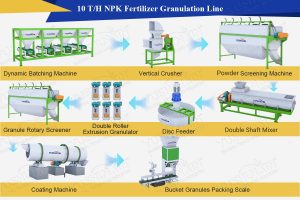
2.1 Loader Type Feeder and Crain Crusher

The first step in any granulation process is the efficient feeding and crushing of raw materials. Yushunxin’s dry granulation production line (10 t/h) excels in this aspect, featuring a state-of-the-art loader type feeder and crain crusher. These equipment ensure a steady material flow and guarantee the timely and effective crushing of the raw materials, resulting in high-quality granules.

2.2 Horizontal Mixer

To achieve a homogeneous mixture and ensure consistent quality throughout the manufacturing process, Yushunxin’s production line incorporates a powerful horizontal mixer. This equipment offers exceptional mixing capabilities, allowing for uniform dispersion of ingredients and minimizing production variations.

10 TPH NPK Fertilizer Granulation Line

2.3 Double Roller Extrusion Granulator

At the heart of Yushunxin’s production line, the double roller extrusion granulator takes center stage. This innovative equipment is designed to efficiently compress and shape the granules, resulting in desired size, density, and shape characteristics. Its robust design ensures long-lasting performance, minimizing downtime and maximizing productivity.

2.4 Rotary Screening Machine

Once the granules are formed, a rotary screening machine is employed to separate oversized and undersized particles, ensuring only the desired granules move forward to the next stage. This crucial equipment promotes product uniformity and guarantees the high-quality output of the production line.

2.5 Automatic Packaging Scale and Belt Conveyors

Completing the granulation process, Yushunxin’s production line integrates an automatic packaging scale and a network of belt conveyors. These equipment streamline the packaging and transportation process, ensuring efficient storage and delivery of the final product.

Click here for more details.

Section 3: Raw Materials and Applications

To provide a comprehensive perspective, it is essential to shed light on the raw materials examples during the granulation process. Yushunxin’s production line effectively handles various materials, including but not limited to organic fertilizers, inorganic fertilizers, and compound fertilizers. It efficiently converts these materials into high-quality granules that cater to the specific needs of agricultural and industrial applications.

NPK Materials for Double Roller Extruder

Conclusion

In conclusion, selecting the right equipment for your 10 t/h production needs is paramount to achieving optimum productivity. Yushunxin’s double roller extrusion granulation production line, with its exceptional features and advantages, offers a reliable solution to meet and exceed your granulation requirements. By leveraging the loader type feeder, crain crusher, horizontal mixer, double roller extrusion granulator, rotary screening machine, automatic packaging scale, and belt conveyors, you can elevate your production capabilities and ensure consistent quality. You can visit: https://www.extruder-granulator.com/10-t-h-npk-fertilizer-granulation-line/

Biochar organic fertilizer manufacturing

In an age where sustainability and environmental consciousness are paramount, the quest for organic solutions permeates every aspect of our lives, including gardening and agriculture. Biochar organic fertilizers making, in particular, have gained significant traction due to their eco-friendly nature and ability to enhance soil health while nurturing plant growth.

biochar and chicken dung

Why we Need to Make Biochar Organic Fertilizer

Biochar organic fertilizers manufacturing, unlike their synthetic counterparts, are derived from natural sources such as animal manure, compost, plant residues, and organic minerals. They are rich in essential nutrients like nitrogen, phosphorus, and potassium, along with a host of micronutrients vital for plant development.

The Benefits of Making Biochar Organic Fertilizer

Biochar organic fertilizer production has many advantages, which includes help environment, cost-effective and enhanced soil health.

  • Environmental Friendliness: By utilizing organic materials readily available in your surroundings, you reduce reliance on chemical-laden commercial fertilizers, thereby minimizing environmental pollution and soil degradation.
  • Cost-Effective: Homemade organic fertilizers are often cheaper than store-bought alternatives, making gardening more affordable in the long run.
  • Enhanced Soil Health: Organic fertilizers improve soil structure, promote microbial activity, and enhance water retention capacity, fostering a conducive environment for plant growth. You can click here to view more.

How to Craft Your Own Biochar Organic Fertilizer

Step 1: Gather Your Ingredients

  • Nitrogen Sources: This includes materials like composted manure, poultry litter, or legume cover crops.
  • Phosphorus Sources: Bone meal, rock phosphate, or fish bone are excellent choices.
  • Potassium Sources: Wood ash or potassium sulfate are effective options.
  • Micronutrient Boosters: Seaweed, kelp meal, or eggshells can provide essential trace minerals.

Step 2: Mix in the Right Proportions

Aim for a balanced N-P-K ratio (Nitrogen-Phosphorus-Potassium) suitable for your plants’ needs. A general ratio of 1:2:1 works well for most garden plants, but adjustments can be made based on soil tests and plant requirements.

biochar fertilizer
biochar organic fertilizer

Step 3: Composting and Fermentation

Combine your ingredients in a compost bin or designated area. Ensure proper aeration and moisture levels for microbial activity. Allow the mixture to decompose and ferment over several weeks to months, periodically turning and watering it as needed.

Step 4: Application

Once the organic matter has fully decomposed into a dark, crumbly texture, it’s ready for use. Apply the fertilizer to the soil around your plants, avoiding direct contact with stems or leaves.

Water the area thoroughly to help nutrients penetrate the soil and reach plant roots.

The Essence of Biochar Organic Fertilizers

Biochar organic fertilizers making, unlike their synthetic counterparts, are derived from natural sources such as animal manure, compost, plant residues, and organic minerals. They are rich in essential nutrients like nitrogen, phosphorus, and potassium, along with a host of micronutrients vital for plant development.

In a world where sustainability is no longer an option but a necessity, embracing organic practices like homemade fertilizer production is a small yet significant step towards a greener future. By harnessing the power of nature’s bounty and recycling organic waste into nutrient-rich soil amendments, we not only promote healthier ecosystems but also reap the rewards of bountiful harvests and flourishing gardens.

In a world where sustainability is no longer an option but a necessity, embracing organic practices like homemade fertilizer production is a small yet significant step towards a greener future. By harnessing the power of nature’s bounty and recycling organic waste into nutrient-rich soil amendments, we not only promote healthier ecosystems but also reap the rewards of bountiful harvests and flourishing gardens. If you want to learn about more, then you can click to this web to learn more: https://www.charbasedfertilizermachine.com/product/organic-fertilizer-manufacturing/.


How to use chicken manure dryer to remove excessive moisture

Introduction to Chicken Manure Drying

Chicken manure is a valuable resource for agricultural and horticultural activities, often used as a natural fertilizer due to its high nitrogen, phosphorus, and potassium content. However, fresh chicken manure contains a significant amount of moisture, which can be problematic for storage, transport, and application. Excess moisture in chicken manure can lead to the production of unpleasant odors, the proliferation of pathogens, and the loss of valuable nutrients. Therefore, it is essential to reduce the moisture content of chicken manure before it can be effectively used or sold, and this is where chicken manure dryers come into play.

Understanding Chicken Manure Dryers

A chicken poop dryer is a machine that uses heat to evaporate moisture from the manure. These dryers come in various sizes and configurations, from small, on-farm units to large, industrial-scale machines. They operate on different energy sources such as electricity, natural gas, or biomass. The purpose of these machines is to bring down the moisture level of the manure to a more manageable level, usually around 10-15%, which makes the manure suitable for long-term storage, transportation, and as a potent fertilizer.

Preparing Chicken Manure for Drying

Collection and Pre-Processing

Before using the manure dryer, collect the fresh chicken manure from the poultry farm. It’s best to remove large debris and any foreign objects that might interfere with the drying process. The manure should then be broken down into smaller particles to increase the surface area for more efficient drying. This can be done using a grinder or a crusher.

Ensuring Uniform Moisture Content

For optimal drying, the manure should have a uniform moisture content. This can be achieved by mixing or turning the manure pile to distribute moisture evenly. Manure that is too wet may need to be combined with drier material to reach a consistency suitable for the drying process.

Operating the Chicken Manure Dryer

Loading the Dryer

Once the manure is prepared, it’s time to load it into the dryer. Depending on the design of the dryer, this might be done manually or with a mechanical feeding system. Ensure that the manure is spread out evenly to facilitate uniform drying.

Setting the Temperature and Drying Time

Consult the manufacturer’s guidelines to set the correct temperature and drying time for your specific dryer model. Temperatures are typically set between 200 to 500 degrees Fahrenheit, depending on the dryer type and the desired final moisture content. The drying time can vary from a few hours to over a day.

Monitoring the Process

Throughout the drying process, it’s important to monitor the temperature and moisture levels to ensure the manure is drying evenly and prevent overheating, which could lead to nutrient loss or combustion. Some dryers come equipped with sensors and control systems that automatically adjust the conditions to maintain optimal drying. If the moisture is too large, you can use manure separator to remove excessive moisture in advance.

Post-Drying Handling

Cooling the Dried Manure

After the drying process, the manure will be hot and needs to be cooled before storage or use to prevent condensation and moisture buildup. This can be done by spreading the manure out in a well-ventilated area or using a cooling machine if available.

Storage and Packaging

Properly dried chicken manure can be stored in bags, containers, or piles. It should be kept in a dry, covered area to prevent reabsorption of moisture from the environment. For commercial operations, it may be packaged in smaller quantities for ease of transport and sale.

Safety Considerations and Maintenance

Ventilation and Dust Control

The drying process can generate dust and strong odors. Adequate ventilation is necessary to protect the health of workers and to comply with environmental regulations. Dust collection systems may be required to minimize the spread of particulate matter.

Regular Maintenance

To ensure the longevity and efficiency of the dryer, perform regular maintenance according to the manufacturer’s schedule. This includes cleaning, lubricating moving parts, and checking for wear and tear. A well-maintained dryer will provide reliable service and help prevent unexpected downtime.

Safety Measures

Always follow safety guidelines when operating a chicken manure dryer. This includes wearing personal protective equipment, such as gloves, masks, and safety glasses, and adhering to proper procedures to prevent accidents and injuries.

Conclusion

Using a chicken manure dryer is an effective method to remove excessive moisture from chicken manure, turning it into a valuable product for agricultural use. Proper preparation, operation, and maintenance of the drying equipment are crucial for achieving the desired results while ensuring safety and efficiency. With the right practices, chicken manure can be transformed from waste to wealth, contributing to sustainable farming practices and improved soil health. After chicken manure disposal, you can compost chicken poop for organic fertilizer making.

Biochar and chicken dung as fertilizer

As the global population continues to grow, the demand for sustainable agricultural practices becomes increasingly pressing. In the pursuit of greener alternatives, the use of biochar fertilizer has emerged as a promising solution. This blog post aims to tell you the potential of biochar and chicken dung as a sustainable fertilizer, focusing specifically on its role in improving soil health and promoting crop growth.

biochar and chicken dung

What is Biochar?

Biochar is a carbon material from the pyrolysis of chicken dung and other organic materials, This carbonization process transforms these materials into a stable, highly porous substance that can be applied to improve soil fertility.

Benefits of Biochar Fertilizer

 Enhanced nutrient retention:

Biochar has a high cation exchange capacity, allowing it to adsorb and retain essential nutrients in the soil, making them more accessible to plants.

Improved water holding capacity:

The porous structure of biochar helps retain water, reducing the need for frequent irrigation and increasing drought resistance.

pH regulation:

Biochar acts as a buffer, stabilizing soil pH levels and creating optimal conditions for nutrient absorption.

Soil structure enhancement:

By improving soil aggregation, biochar enhances soil aeration, drainage, and root penetration, facilitating healthier plant growth.

biochar fertilizer
biochar fertilizer

Chicken Dung as a Feedstock for Biochar Production

The Potential of Chicken Dung

Chicken dung, can be utilized as a fertilizer with biochar. Its abundance and availability make it a sustainable and cost-effective option for farmers.

Biochar Production Process

  1. Feedstock preparation: Collect chicken dung and separate it from any non-organic contaminants.
  2. Pyrolysis: Heat the chicken dung in a controlled environment, without oxygen, to transform it into biochar.
  3. Cool down and storage: Allow the biochar to cool down and store it in a dry area to retain its quality.

If you want to learn more, you can click here to learn about.

Implementing Biochar Fertilizer

Application Methods
  1. Surface application: Spreading biochar evenly across the soil surface and incorporating it to a depth of a few inches.
  2. Seed coating: Coating seeds with biochar before planting to provide initial contact between the emerging roots and biochar particles.
  3. Composting: Mixing biochar with chicken dung compost to enhance fertilizer nutrient content and improve soil organic matter.

Conclusion:

As we strive for sustainable agricultural practices, exploring alternative fertilizers like biochar can play a crucial role in enhancing soil health, improving crop productivity, and mitigating climate change. By utilizing biochar made from readily available fertilizer like chicken dung, farmers can embrace a greener approach to agriculture while reducing waste and improving overall sustainability. Let us foster a future where biochar fertilizer becomes an integral part of global agricultural systems, ensuring a greener and more prosperous world. What’ more, you can click https://www.charbasedfertilizermachine.com/product/chicken-dung-and-biochar-as-fertilizer/ this page to view more.


The Rise of Large-Scale Organic Fertilizer Manufacturing

In recent years, the organic agriculture movement has gained significant traction among consumers, farmers, and policymakers alike. With an increasing demand for sustainable farming practices and organic food, the production of organic fertilizers has become an industry of paramount importance. Large-scale organic fertilizer manufacturing is not just an environmentally conscious decision but also a response to a growing market need. In this blog post, we’ll delve into the world of organic fertilizer production on a grand scale, exploring its benefits, challenges, and the future it holds for agriculture.

The Organic Advantage

Organic fertilizers are derived from natural sources such as plant, animal, and mineral matter. Unlike their synthetic counterparts, these fertilizers enrich the soil with organic matter, nitrogen, phosphorus and potassium, promoting soil health, increasing water retention, and encouraging biodiversity. The advantages are clear:
– Sustainable Practices: Organic fertilizers contribute to sustainable agricultural cycles, avoiding the depletion of soil nutrients and reducing chemical runoff into water bodies.
– Enhanced Soil Structure:The use of organic materials improves soil structure, leading to better root growth and enhanced nutrient uptake by plants.
– Long-term Fertility:Organic fertilizers release nutrients slowly, providing a long-term supply of nourishment to crops.

Scope of Large-Scale Production

Transitioning from small-scale composting to large-scale organic fertilizer manufacturing requires significant investment and strategic planning. Here’s what such a scale of operation typically encompasses:

– Sourcing Raw Materials:Large-scale production of organic fertilizer relies on extensive sources of organic waste, such as crop residues, livestock manure, food waste, and industrial organic by-products.
– Advanced Composting Techniques:Employing advanced composting methods like windrow composting, in-vessel composting, or aerated static pile composting can handle substantial quantities of organic waste efficiently.
– Quality Control:Consistent product quality is vital. This involves regular testing for nutrient content, pathogen levels, and the presence of any contaminants.
– Packaging and Distribution:Efficient packaging solutions are required to handle large volumes, along with a robust distribution network to reach diverse markets.

Investment and Costs

To set up a large-scale organic fertilizer manufacturing plant, the financial outlay can be considerable. Key cost factors include:

– Facility and Infrastructure:This includes the cost of land, construction, and the setup of composting systems and storage facilities.
– Machinery and Equipment: Investment in heavy-duty equipment like compost turners, shredders, mixers, granulators, and packaging machines is necessary. Click here to learn more.
– Regulatory Compliance:Ensuring adherence to environmental regulations and obtaining necessary certifications can incur additional costs.
– Research and Development:Staying competitive may require ongoing R&D to improve product effectiveness and to develop new fertilizer formulations.

Fertilizer Production Machinery

Overcoming Challenges

Expanding into large-scale organic fertilizer production is not without its challenges:

– Supply Chain Management:Establishing reliable sourcing channels for organic waste and managing logistics is crucial.
– Odor Control and Environmental Concerns: Large-scale composting operations must address odor control and ensure minimal environmental impact.
– Market Competition:Competing against established chemical fertilizers and other organic products requires strategic marketing and brand positioning.

The Future Holds Promise

Despite the challenges, the future for large-scale organic fertilizer manufacturing looks bright, driven by factors such as:

– Policy Support:Many governments now promote organic farming through incentives and subsidies.
– Market Demand:The organic food market is witnessing robust growth, with consumers increasingly willing to pay a premium for sustainable produce.
– Technological Innovation:Advances in composting technologies and automation are making large-scale production more viable and efficient.

Conclusion

As the world tilts toward sustainable farming, large-scale organic fertilizer manufacturing stands out as a crucial industry for the future of agriculture. It represents an intersection of ecological responsibility and economic opportunity, offering a way to support the planet’s health while tapping into a lucrative market. Though not without its challenges, the industry’s trajectory suggests that organic fertilizer production will continue to scale up, fueled by innovation, policy support, and a collective commitment to sustainable agriculture. If you are interested in the ptoject, you can visit https://www.fertilizerbusinessplan.com/how-to-make-organic-fertilizer-in-a-large-scale/

How to make organic compost?

Organic fertilizer fermentation is commonly carried out using aerobic methods. The trench composting system is a popular method used by organic fertilizer production companies. In this system, aerobic bacteria absorb, oxidize, and decompose waste materials under good ventilation and sufficient oxygen conditions. Through their metabolic activities, aerobic microorganisms convert a portion of the absorbed organic matter into simple inorganic substances, releasing energy needed for microbial growth activities and synthesizing new cellular cytoplasm, allowing microorganisms to continuously grow, reproduce, and produce more biomass.

Nitrogen NPK and organic fertilizer making

The Groove Fermentation System: A Popular Choice for Organic Fertilizer Production

Typically adopted by organic fertilizer manufacturing enterprises, the groove fermentation system is a sophisticated method that ensures optimal aeration and sufficient oxygen for the aerobic bacteria to thrive. This system is comprised of six major components: the pre-mixing system, the material distribution system, the turning and fermentation system, the material collection system, the aeration system, and the exhaust gas deodorization system. Each component plays a crucial role in maintaining the right moisture content, carbon-to-nitrogen ratio, and looseness in the compost, thereby facilitating oxygen diffusion and ensuring an effective fermentation process.

Understanding the Components of the Groove Fermentation System

1. Pre-mixing System

Prior to entry into the fermentation groove, chicken or pig manure and filler materials are blended using a mixer. This step is vital to achieving the appropriate moisture content (50%-60%) and carbon-to-nitrogen ratio (25:1 to 30:1), which are essential for successful composting.

2. Turning and Fermentation System

The design of the fermentation groove, whether it comprises a single or multiple grooves, is based on the span of the turning machine and the fermentation cycle, ensuring the structural integrity to withstand the pressures exerted during the process.

Click here for more details.

Groove Fermentation Workshop Construction

3. Material Distribution System

The system could either feature a single groove structure, where compost enters from one end and exits from the other, or a multi-groove setup, where an automatic distribution machine fills the front 3-4 meters of the fermentation groove, with materials moving 4 meters with each turn.

4. Material Collection System

In multi-groove structures, an automatic collection device gathers materials from the fermentation groove after each turn, moving them to the maturation workshop.

5. Aeration for Oxygen Supply

A high-pressure blower supplies oxygen forcefully, with air entering the compost pile from beneath through an aeration board.

6. Exhaust Gas Deodorization

Throughout the composting process, water vapor along with odorous gases like ammonia and hydrogen sulfide are emitted. Jet fans installed at the top of the composting workshop facilitate air flow, while exhaust outlets on the sides channel the odorous gases to biofilters for treatment.

activated carbon filter

7. Maturation Workshop

Post-fermentation, the compost, still not fully matured, undergoes a secondary maturation process to reach the desired level of decomposition.

Where to buy  High-quality Compost Machines?

Transitioning smoothly into the realm of composting solutions, it’s worth noting the advanced technology brought forward by Yushunxin’s compost machines. Yushunxin offers an array of compost turners and fermentation pots designed to cater to diverse composting needs, including rail type compost turner; windrow type (moving type compost turner, crawler type compost turner); and fermentation pots (vertical or horizontal). Each of these machines is engineered to optimize the aerobic fermentation process, ensuring efficient breakdown of organic materials into high-quality compost.

Compost Machines
Compost Machines

Conclusion

Finally, the method of organic fertilizer fermentation plays a pivotal role in sustainable agriculture, with aerobic fermentation being the most efficient and environmentally friendly option. The introduction of advanced composting machines by Yushunxin has revolutionized this process, making it more accessible and practical for various applications. These machines, with their innovative design and features, offer a promising solution to meet the growing demand for organic fertilizer. You can visit this website: https://www.fertilizerproductequipment.com/bio-composter-machine/