In the realm of granulation technology, where efficiency and precision are paramount, one exemplary innovation stands out—the 30 t/h roller press granulation production line. Far beyond a mere conveyor of raw materials, this production line acts as a metamorphosis catalyst, seamlessly converting powder into uniform granules at an impressive pace.
Key Features of the Production Line
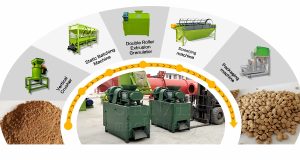
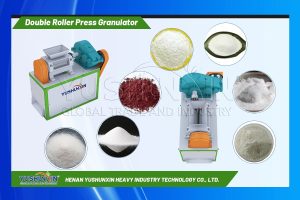
Central to this groundbreaking technology is the double roller extrusion granulator, colloquially known as the “press.” This critical component ensures not only high efficiency but also impeccable granulation quality. Its innovative design propels the compact and dry granulation process forward, rendering it adaptable to a diverse array of materials and production requirements.
Diverse Raw Material Adaptability
The versatility of the roller press granulation production line shines through its ability to accommodate a wide spectrum of raw materials. Consider the following examples:
1. Agricultural Waste: Crop straws, corn stalks, and bagasse find a new lease on life as high-quality organic fertilizer through the adept utilization of the roller press granulator.
2. Chemical Powders: From ammonium chloride to ammonium phosphate and urea, chemical powders undergo a metamorphosis into uniform, robust granules, thereby enhancing efficiency in storage and transportation.
3. Industrial Waste: Coal gangue, fly ash, and slag, once deemed as industrial by-products, are transformed into valuable commodities, simultaneously mitigating waste and bolstering product utility.
Learn more about 30t/h granulation process.
The Powder Granulation Process: Step by Step
1. Raymond Mill System: The journey begins with the meticulous preparation of the powder. Whether mineral or chemical in nature, the powder undergoes precision milling via the raymond mill system, guaranteeing a consistent and top-tier powder output.
2. Double Shaft Mixer: The mixed powder encounters the double shaft mixer, where an assortment of additives can be seamlessly integrated to augment the granules’ properties. The mixer ensures the homogeneous distribution of these additives throughout the powder.
3. Disc Feeders: Regulating the material flow into the double roller extrusion granulator, the disc feeders play a pivotal role. Here, under immense pressure, the powder undergoes compression and morphs into granules, thanks to the collaborative efforts of multiple rollers.
4. Rotary Screener: Post-granulation, the granules undergo scrutiny via the rotary screener, which meticulously segregates oversized or undersized particles, allowing only the epitome of granules to progress to the subsequent phase.
5. Coating Machine (Optional): For those desiring an additional layer of refinement, the granules can undergo coating via the coating machine. This optional step confers benefits such as enhanced flowability, aesthetic enhancement, or moisture protection.
6. Double Bucket Granules Packing Scale: The culmination of the process sees the granules meticulously packed and weighed utilizing the double bucket granules packing scale, ensuring precision and consistency in packaging.
Conclusion
The advent of the 30 t/h granulation production line heralds a new era in granulation technology, characterized by unparalleled efficiency and quality. With its advanced features, notably the double roller extrusion granulator, this production line caters to a myriad of industries, seamlessly transforming raw materials into marketable granular products. Backed by Yushunxin’s commitment to innovation and reliability, the roller press granulation production line emerges as a veritable game-changer in the industry.
For further insights, visit: https://www.extruder-granulator.com/30-t-h-roller-press-granulation-production-line
