How to Buy the Best Chicken Manure Fertilizer Pellet Machine

Chicken manure is an excellent organic fertilizer that can enrich soil with essential nutrients. However, to get the most out of this valuable resource, you need the right equipment to turn it into high-quality fertilizer pellets. When purchasing a chicken manure fertilizer pellet machine, it’s important to consider the type of machine that best suits your needs, as well as factors like capacity, efficiency, and cost-effectiveness. This guide will help you make an informed decision on buying the best chicken manure fertilizer pellet machine.

Types of Pellet Machines for Chicken Manure Fertilizer

1. Economical Double Roller Granulator:

This granulator is an excellent choice for those who need a cost-effective and efficient solution for chicken manure granulation. The double roller granulator uses a dry granulation process, meaning no drying is required after the pellets are formed. This method reduces energy consumption and operational costs. It’s suitable for small to medium-scale production, where moisture content in the manure is not excessively high.

2. Disc Pelletizer for High-Moisture Chicken Manure Granulation:

For granulating chicken manure with high moisture content, a disc pelletizer is a better choice. This machine is specifically designed to handle wet materials and efficiently shape them into pellets. It operates through a rotating disc that forms the manure into small, uniform pellets while controlling the moisture level. Disc pelletizers are ideal for medium to large-scale operations where the chicken manure needs to be processed quickly, especially when moisture content is above 30%.

Equipment for Simple Disc Granulation Line

3. Large-Capacity Drum Granulator:

A drum granulator is best suited for large-scale chikcen manure pellet production. This machine is designed for high-capacity production and can handle large volumes of chicken manure, making it a great investment for industrial-scale operations. The drum granulator uses a rotating drum to agitate the material, causing it to bind together and form pellets. The high-capacity design ensures consistent pellet size and uniformity, while the process can handle higher moisture content, making it ideal for high-moisture chicken manure.

Learn more.

Rotary Drum Granulator

Key Considerations When Buying a Pellet Machine

1. Capacity Requirements:

Consider how much chicken manure you need to process daily or weekly. The capacity of the pellet machine should align with your production goals. If you’re running a small farm, a smaller machine like the double roller granulator may be sufficient. For large-scale commercial production, a drum granulator will offer the capacity you need.

2. Moisture Handling:

Chicken manure can vary in moisture content depending on its source and age. Machines like the disc pelletizer and drum granulator are ideal for processing manure with higher moisture content, while the double roller granulator is better suited for drier materials.

3. Energy Efficiency:

Energy consumption is a significant factor in operating costs. Machines that require drying, such as disc pelletizers for high-moisture manure, can be more energy-intensive. Dry granulation machines, like the double roller granulator, are more energy-efficient as they do not require additional drying steps.

4. Durability and Maintenance:

The longevity of the machine is another important consideration. Look for machines made with durable materials and quality construction. Regular maintenance, such as lubrication and inspection of moving parts, will ensure the longevity and efficiency of your pelletizer.

5. Price and Return on Investment:

Compare prices of chicken manure granulation machines and assess the return on investment (ROI). Consider factors like operational efficiency, machine durability, and the amount of time and labor saved with automatic pelletizers. A more expensive, higher-capacity machine might offer better value in the long run for larger operations.

Conclusion

When purchasing a chicken manure fertilizer pellet machine, the best choice depends on your scale of operation, moisture content of the manure, and budget. Whether you opt for an economical double roller granulator, a disc pelletizer for high-moisture content, or a large-capacity drum granulator, ensure that the machine meets your specific production needs. By considering factors like capacity, moisture handling, and energy efficiency, you can make an informed purchase that will enhance your fertilizer production while maximizing profits. If you are interested in the project, you can visit https://www.manuremanagementplan.com/chicken-manure-pellet-machine/

Fertilizer Making Machines for Poultry Waste Disposal

Poultry farming is a thriving industry that provides a significant source of protein for consumers worldwide. However, with the growth of poultry production comes a challenge – the disposal of poultry waste. Poultry waste, such as manure and bedding materials, can be a significant environmental problem if not managed properly. Fortunately, fertilizer making machines offer a sustainable and cost-effective solution for converting poultry waste into valuable organic fertilizers. In this blog, we will explore the benefits and process of poultry waste disposal by fertilizer making machines and how this innovative technology is transforming waste management in the poultry industry.

1. The Problem of Poultry Waste Disposal:

Poultry waste, including manure, feathers, bedding materials, and feed residues, can pose a range of environmental and health risks if not managed effectively. Improper disposal of poultry waste can lead to water and soil contamination, emissions of greenhouse gases, and the spread of pathogens and diseases. Traditional disposal methods, such as land application and landfilling, are often inefficient, costly, and unsustainable in the long run. Finding a sustainable solution for poultry poop management is crucial for the environmental sustainability of the poultry industry.

Poultry manure to fertilizer process

2. The Role of Fertilizer Making Machines:

Fertilizer making machines are specialized equipment designed to convert organic waste materials, such as poultry manure, into high-quality organic fertilizers through a process known as composting or fermentation. These machines utilize a series of processes, including shredding, mixing, fermentation, and granulation, to transform poultry waste into nutrient-rich organic fertilizers that can improve soil fertility, enhance crop productivity, and reduce the reliance on chemical fertilizers. Click here to learn more.

3. Benefits of Poultry Waste Disposal by Fertilizer Making Machines:

– Environmental sustainability: Fertilizer making machines provide a sustainable solution for poultry waste disposal by converting organic waste into valuable fertilizers, reducing the environmental impact of waste disposal and promoting a circular economy approach.
– Nutrient recycling: Poultry waste contains valuable nutrients, such as nitrogen, phosphorus, and potassium, that can be recycled and reused as organic fertilizers to improve soil health and crop yields.
– Cost-effective: By converting poultry waste into organic fertilizers, farmers can reduce their dependence on chemical fertilizers, lower input costs, and improve the overall profitability of their operations.
– Pathogen reduction: The poultry manure composting process carried out by fertilizer making machines helps to eliminate pathogens, weed seeds, and odors present in poultry waste, making the resulting fertilizers safe and beneficial for agricultural use.
– Soil health improvement: Organic fertilizers produced from poultry waste by fertilizer making machines can enhance soil structure, increase microbial activity, and promote soil health, leading to sustainable and productive agricultural practices.

4. Applications of Organic Fertilizers from Poultry Waste:

– Crop production: Organic fertilizers derived from poultry waste can be used to enhance soil fertility, promote plant growth, and increase crop yields in a wide range of agricultural crops, including fruits, vegetables, grains, and legumes.
Horticulture: Organic fertilizers are well-suited for use in horticultural applications, such as gardening, landscaping, and ornamental plant cultivation, to improve soil quality, support plant growth, and reduce environmental impact.
– Sustainable agriculture: Organic fertilizers from poultry waste play a vital role in sustainable agriculture practices by reducing chemical inputs, minimizing environmental pollution, and promoting soil conservation and biodiversity.

Conclusion:

Fertilizer making machines offer a sustainable and innovative solution for poultry waste disposal by converting organic waste into valuable organic fertilizers that benefit both the environment and agricultural productivity. By embracing this technology, poultry farmers can effectively manage their waste streams, reduce environmental impact, and enhance soil health and crop yields. Poultry waste disposal by fertilizer making machines represents a win-win solution that turns waste into wealth and contributes to a more sustainable and resilient food production system for future generations. If you are interested in poultry manure waste disposal machine, you can visist https://www.manuremanagementplan.com/poultry-waste-disposal-system/ for more details.

how to compost pig manure

Composting pig manure is an effective way to transform a waste product into a valuable resource. Pig manure is high in nitrogen, phosphorus, and potassium, making it an excellent source of nutrients for plants. However, it can also be a source of pollution if not managed properly. In this article, we will discuss the steps for composting pig manure to create a nutrient-rich soil amendment for your garden.

Aniaml Manure for Organic Fertilizer Production

Step 1: Collecting Pig Manure

The first step in composting pig manure is to collect it. Pig manure can be collected using a shovel or a manure scraper. It is important to collect only the manure and not the bedding material, as the bedding material will slow down the composting process. Pig manure can be collected in a pile or a bin. If collecting in a pile, it is recommended to turn the pile regularly to ensure proper aeration and decomposition.

Step 2: Preparing the Composting Site

The composting site should be located in a well-drained area and away from water sources, such as streams or ponds. The site should be sunny, as the heat from the sun will help to accelerate the composting process. The composting site should be level and have good air circulation. The site should be prepared by removing any grass or vegetation, and a layer of gravel or wood chips should be added to the bottom to aid in drainage.

Step 3: Building the Compost Pile

The compost pile should be built in layers, starting with a layer of dry, carbon-rich material such as straw or leaves. This layer should be about 6 inches thick. Next, add a layer of pig manure, about 2 to 3 inches thick. Repeat this layering process until the pile is about 3 to 4 feet tall. The top of the pile should be covered with a layer of straw or leaves to help retain moisture.

Step 4: Maintaining the Compost Pile

The compost pile should be kept moist but not wet. If the pile is too wet, it may become anaerobic, which will slow down the composting process and create an unpleasant odor. The pile should be turned regularly to ensure proper aeration and decomposition. The pile should be turned every 3 to 5 days, or when the internal temperature of the pile drops below 100°F. The internal temperature of the pile can be measured using a compost thermometer.

Step 5: Harvesting the Compost

The compost pile will be ready to harvest when it has decomposed into a dark, crumbly, soil-like material. This process can take anywhere from 6 to 12 months, depending on the size of the pile and the environmental conditions. To harvest the compost, the pile should be turned onto a tarp or into a wheelbarrow. Any large pieces of material should be removed, and the compost should be screened to remove any remaining debris.

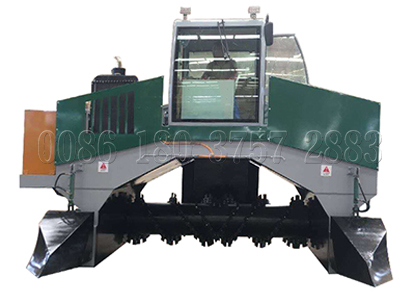
Windrow Compost Turner

In conclusion, composting pig manure is an effective way to transform a waste product into a valuable resource. By following these simple steps, you can create a nutrient-rich soil amendment for your garden while reducing waste and preventing pollution. Remember to always wear gloves and wash your hands thoroughly after handling pig manure. Happy composting!

Of course, you can check this page for more details about the design and structure of the pig manure machine!

How to Compost Pig Manure

Tips For Processing Huge Quantities Of Cow Dung Wastes

Do you have a huge amount of cows inside your cow farm? Are you experiencing difficulity working with the huge quantity of cow dung waste produced daily? Do you need to understand how you need to process large volumes of cow dung wastes inside your cow farm? If the solution to these questions is yes, you might have come to the correct place.

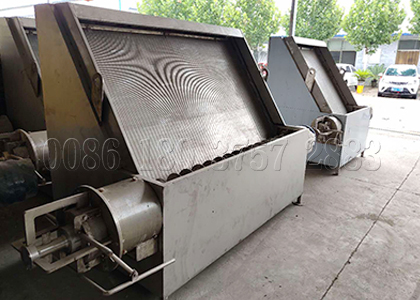
Dewatering machine for cow dung processing

While cow dung has become traditionally employed in many parts around the globe as being an organic fertilizer for many years, hardly any people are aware of the huge nutrients and vitamins of the organic cow dung fertilizer. Also, preparing organic fertilizer from cow dung at small scale is pretty easy as it doesn’t require an excessive amount of manual effort but doing the work with a huge scale is a whole different task. Thankfully, you will find mechanical solutions on the market today that allow you to turn huge amount of cow dung waste into organic fertilizer through the procedure of composting.

Cow Dung Compost Machine

Fresh cow dung is filled with viruses and parasites, and it needs to be properly fermented to be used being an organic fertilizer. In order to convert it into organic fertilizer at the large, you will have to purchase machines that have been created specifically to process cow dung or another biomass material into compost. Here is what you ought to find out about making organic fertilizer with cow dung waste.

Fresh cow dung is better for composting in comparison with old cow dung. Therefore, fresh cow dung has to be collected to start the composting process. It is important to ensure that the water content of fresh cow dung is approximately 60%. Higher or lower moisture content will change the composting process. Machines are available in the market which will help you with maintaining the proper moisture content. 60% moisture content is ideal for proliferation of aerobic bacteria which is responsible for fermentation of your cow dung.

Since you will have a large cattle farm and gain access to plenty of fresh cow dung waste, it is recommended to employ a leavening agent to get the fermentation process started. The fermentation process can occur without the leavening agent but adding the agent towards the material can help in kick starting the procedure and permit you to finish the composting process quicker. You don’t need too much of it as a around 250 g of leavening agent is typically enough to process around a lot of fresh cow dung waste. Go to https://fertilizerequipmentmanufacturer.com/cow-dung-fertilizer-machine/ choose your best cow manure processing machines.

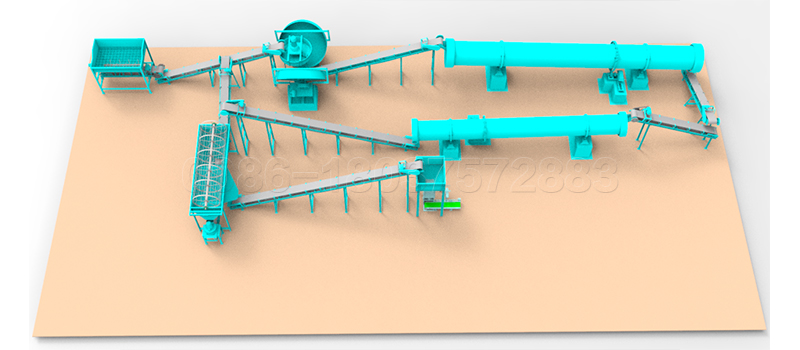
Fertilizer Production Line for Cow Dung Disposal

You can find multiple approaches to compost the cow dung waste. If you utilize the windrows method, you will have to accumulate the raw material in rows using a width of about 1 to 2 m and a height close to 1.2 m. If you intend to use a fermentation tank, this product should be transferred into the tank to permit the composting process to begin. This whole process should take around 20 days. When the organic fertilizer is ready, you possess alternative methods to hold it. For instance, you could make fertilizer pellets with the aid of a granulating machine. You can also pack it in big bags.

Overall, one of the most profitable way to handle large amount of cow dung waste is to invest in a composting answer to convert cow dung waste into organic fertilizer that is in huge demand today. Following the aforementioned tips should help you in picking the right technique for handling cow dung waste.