What Is the Cost Difference Between Pelletizing and Granulating in NPK Fertilizer Production?

In modern NPK fertilizer manufacturing, production technology and machinery selection directly affect total fertilizer plant cost. A fertilizer producer who plans a compound fertilizer production line must carefully analyze the cost difference between pelletizing and granulating processes. Both methods transform powder materials into uniform particles, yet they require different equipment configurations, energy inputs, and maintenance budgets. The comparison between pelletizing and granulating becomes a key factor in determining the final NPK fertilizer production plant cost and long-term economic efficiency.

A complete NPK fertilizer production line often includes raw material crushing, batching, mixing, granule-forming, drying, cooling, screening, and packaging sections. Each stage influences the material flow and investment scale. Therefore, understanding the specific requirements of pelletizing or granulation machinery helps optimize plant design and reduces unnecessary fertilizer factory cost during setup and operation.


Raw Materials and Their Role in Compound Fertilizer Granule or Pellet Production

Raw material characteristics determine process selection and production efficiency. Common raw materials for compound or NPK fertilizer production include urea, ammonium sulfate, ammonium chloride, potassium chloride, ammonium nitrate, monoammonium phosphate (MAP), diammonium phosphate (DAP), and various micronutrient powders. These sources provide balanced nitrogen, phosphorus, and potassium components necessary for NPK compound fertilizer manufacturing.

Different materials show different moisture contents, solubility, and hardness. For example, urea and potassium chloride dissolve easily and suit granulating procedures based on drum granulators or rotary wet granulation equipment, while MAP and DAP perform better in dry granulation lines with double roller extrusion granulators. When the raw materials contain more crystal particles or harder substances, a crushing machine and precise batching machine become necessary to maintain consistent granule formation. The compatibility between raw material properties and production machinery determines not only granule quality but also the compound fertilizer manufacturing plant cost related to energy consumption and equipment wear.

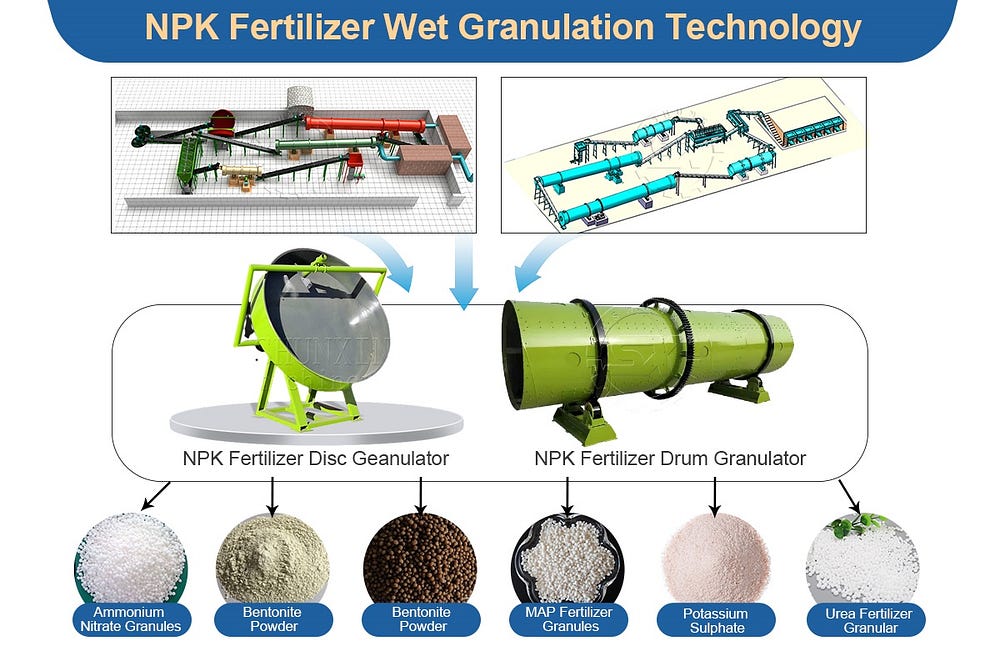
NPK Mixtures Wet Granulation Technology


Pelletizing vs. Granulating: Which Process Brings Higher NPK Fertilizer Plant Setup Cost?

Pelletizing and granulating show distinct differences in mechanical design and investment scale. A pelletizing line usually employs a pelletizer or pellet making machine that compresses powder material into dense pellets. This procedure often requires higher energy input and stronger mechanical pressure. It produces pellets with smooth surface and high bulk density, suitable for long-distance transport. However, the stronger compression and drying process increase the fertilizer plant cost, mainly due to higher energy use and equipment abrasion.

Granulation, on the other hand, forms granules by agglomeration and rolling. Disc granulators, drum granulators, or double roller extrusion granulators are typical choices in NPK fertilizer granulation production lines. Granulating equipment consumes less energy than pelletizing because it relies on rolling or extrusion instead of high compression force. Consequently, granulating lines usually show lower NPK fertilizer production plant setup cost and reduced maintenance expenses. Nevertheless, pelletizing offers better particle strength and more uniform shape, which can improve product image for high-end compound fertilizer markets. The selection depends on expected output, product type, and target market.


Additional Machines That Affect Compound Fertilizer Manufacturing Cost

Besides granulators or pelletizers, several auxiliary machines influence total fertilizer factory cost. A rotary drying machine and cooling machine help stabilize granule moisture and prevent caking. A screening machine separates qualified granules from oversized or undersized particles, ensuring uniform product quality. The packing machine, designed for automatic weighing and sealing, improves packaging efficiency and reduces labor cost. Each additional piece of equipment increases initial NPK fertilizer plant setup cost but enhances production stability and long-term output capacity.

Integrating these machines properly helps a fertilizer producer achieve balanced investment and sustainable operation. The overall fertilizer manufacturing procedure becomes more energy-efficient, lowering per-ton production cost over time. Therefore, a project designer must calculate not only equipment purchase price but also long-term operation expense to achieve optimal fertilizer plant cost performance.


Conclusion

In summary, the cost difference between pelletizing and granulating depends on material properties, target product quality, and equipment configuration. Pelletizing requires higher compression equipment and energy, leading to a larger fertilizer production plant cost. Granulating, in contrast, provides a more economical setup with lower operation cost, suitable for many compound fertilizer manufacturers seeking balanced investment and efficiency.

A professional fertilizer equipment manufacturer such as Yushunxin supplies complete NPK fertilizer production lines, including disc granulators, double roller extrusion granulators, rotary drum granulators, rotary dryers, and screening machines. Reliable machinery support enables stable granulation or pelletizing performance and helps fertilizer producers reduce overall NPK fertilizer plant cost while maintaining consistent product quality. You can visit: https://www.fertilizerproductequipment.com/npk-fetilizer-plant-cost/
How Do Manufacturing Processes Affect NPK Fertilizer Production Costs?

The efficiency of manufacturing processes plays a critical role in determining the costs associated with the production of NPK (Nitrogen, Phosphorus, and Potassium) fertilizers. Understanding how various factors influence production expenses enables fertilizer manufacturers to streamline operations, improve profitability, and enhance product quality. This blog explores the raw materials suitable for NPK fertilizer production, the importance of specific machinery in the production line, and how these elements collectively impact overall production costs.

What Raw Materials Are Suitable for NPK Fertilizer Production?

The choice of raw materials directly impacts the cost structure of NPK fertilizer production. Commonly used raw materials include ammonium sulfate, urea, triple superphosphate, potassium chloride, and various micronutrients. Each of these raw materials contributes essential nutrients necessary for plant growth, and their availability can significantly influence the production costs.

For instance, ammonium sulfate is frequently used as a nitrogen source due to its high nutrient content and reasonable cost. Similarly, potassium chloride serves as a key potassium source and is widely available, which helps in keeping production costs manageable. The selection of these materials should also take into account their procurement costs, transportation fees, and storage expenses. By optimizing the raw material choices, manufacturers can enhance their competitive edge in the fertilizer market.

NPK Mixtures Wet Granulation Technology

How Do Machinery Features Impact Fertilizer Production Costs?

The selection and characteristics of machinery directly affect the operational efficiency of an NPK fertilizer production line. Machines such as granulators, batching machines, and drying systems play crucial roles in the manufacturing process, each contributing to overall production costs.

For instance, a disc granulator is often employed for its ability to produce uniform granules efficiently. The granulation process is vital for ensuring that the NPK fertilizers are easy to apply and dissolve effectively in soil. A well-designed granulator enhances product consistency and reduces waste, leading to lower production costs over time.

Moreover, the inclusion of a rotary drying machine or a cooling machine can optimize the drying and cooling phases of the production process. This equipment helps in maintaining the quality of the final product while minimizing energy consumption. By investing in advanced machinery, manufacturers can achieve greater throughput with lower operational costs, which ultimately influences the overall npk fertilizer manufacturing plant cost.

What Role Do Production Procedures Play in Cost Management?

The production procedure adopted in NPK fertilizer manufacturing significantly influences cost management strategies. Efficient processes not only reduce waste but also improve the overall output of the production line. Implementing a systematic batching process, for example, ensures that the correct proportions of raw materials are used without excess, driving down raw material costs.

Additionally, integrating a screening machine into the production line allows for the removal of impurities, ensuring that only high-quality granules are packed. This step not only enhances product quality but also reduces the risk of returns, which can further lower overall costs. Streamlining production processes through automation and efficient workflow design can enhance productivity and reduce labor costs.

Conclusion

In conclusion, the manufacturing processes involved in NPK fertilizer production play a vital role in determining production costs. By carefully selecting suitable raw materials, investing in advanced machinery, and optimizing production procedures, manufacturers can significantly reduce their overall fertilizer plant setup cost. Understanding these elements allows for better planning and execution of production strategies, enabling companies to thrive in a competitive market.

For those looking to enhance their NPK fertilizer production capabilities and reduce costs, investing in high-quality equipment from a professional fertilizer equipment manufacturer like Yushunxin can make a substantial difference. Their range of machinery is designed to improve efficiency and product quality, thereby maximizing profitability in fertilizer production. You can visit: https://www.fertilizerproductequipment.com/npk-fetilizer-plant-cost/

Key Factors Influencing the Cost of Setting Up A NPK Fertilizer Manufacturing Plant

Setting up a NPK fertilizer production plant involves various critical factors that directly impact the overall cost. For investors and manufacturers considering this venture, understanding these factors is essential to make informed decisions. By analyzing the elements that affect the fertilizer plant setup cost, one can optimize investment and ensure efficient operation of the facility.

What Raw Materials Are Suitable for NPK Fertilizer Production?

The selection of raw materials is a fundamental aspect that influences the NPK fertilizer manufacturing plant cost. Common raw materials suitable for NPK fertilizer production include urea, ammonium nitrate, ammonium phosphate, potassium chloride, and micronutrients like zinc sulfate and boron. These components are blended to create customized fertilizer formulations that meet specific crop nutrition requirements. The availability, quality, and price of these raw materials directly affect the fertilizer factory cost. Additionally, sourcing raw materials locally can reduce transportation expenses, thereby impacting the overall plant setup cost.

NPK Mixtures Wet Granulation Technology

How Do Equipment Features Affect Granule Production Costs?

The machinery and equipment used in granule production play a significant role in determining the NPK fertilizer plant cost. Advanced granulating machines, such as granulators, pelletizers, and ball-making equipment, enhance production efficiency but may require a higher initial investment. Equipment features like automation, capacity, energy consumption, and durability are crucial considerations. For instance, investing in a high-capacity granulator can increase production output but also raises the initial fertilizer manufacturing plant cost. Balancing equipment features with budget constraints is essential to optimize production without excessively inflating the plant setup cost.

Why Is the Choice of Production Process Important for Cost Management?

The chosen production process or procedure significantly affects both operational efficiency and setup costs. Different granulation methods, including drum granulation, disc granulation, extrusion pelletizing, and blending processes, require specific machinery and technical expertise. The complexity and automation level of the production process can lead to variations in the compound fertilizer factory cost. A simplified production process may reduce initial costs but could impact product quality and operational efficiency. Therefore, selecting an appropriate production process that aligns with production goals is vital for managing the fertilizer plant setup cost effectively.

Conclusion

Understanding the factors that influence the cost of setting up a NPK fertilizer manufacturing plant is crucial for making strategic investment decisions. Raw material selection, equipment features, and production processes are key elements that determine the overall fertilizer manufacturing plant cost. By carefully evaluating these factors, investors and manufacturers can optimize costs while ensuring high-quality granule production. Partnering with a professional fertilizer equipment manufacturer, such as Yushunxin, provides expert guidance and customized solutions to establish an efficient and cost-effective fertilizer production facility. You can visit: https://www.fertilizerproductequipment.com/npk-fetilizer-plant-cost/

How to use disc pellet making equipment to produce 20:10:10 npk fertilizer

Introduction

Disc pellet making equipment is a crucial tool in the production of NPK (Nitrogen, Phosphorus, and Potassium) fertilizers, particularly the 20:10:10 formulation. This machinery allows for the efficient and consistent production of fertilizer pellets, ensuring optimal nutrient distribution and ease of application. In this passage, we will delve into the process of using disc pellet making equipment to make 20:10:10 NPK fertilizer, highlighting the steps, considerations, and benefits involved.

disc compound fertilizer granulation line

Understanding Disc Pellet Making Equipment

Components of the Equipment

Disc pellet making equipment, also known as a pan granulator, comprises several key components: the disc (pan), scraper, main frame, reducer, motor, and support base. The disc is typically inclined at an angle, allowing for the agglomeration of raw materials into pellets as it rotates.

Working Principle

The working principle of disc pellet making equipment involves the combination of raw materials in a rotating disc. As the disc rotates, the materials are lifted and dropped repeatedly, causing them to gradually form into pellets. The addition of a liquid binder helps to enhance pellet formation and improve the strength of the final product.

Preparing Raw Materials

Selection of Ingredients

To produce 20:10:10 NPK fertilizer, precise proportions of nitrogen (N), phosphorus (P), and potassium (K) sources are required. Common sources include urea or ammonium nitrate for nitrogen, superphosphate for phosphorus, and potassium chloride or potassium sulfate for potassium. Ensure that all raw materials are of high quality and free from contaminants.

Grinding and Mixing

The raw materials must be finely ground and thoroughly mixed to ensure uniform nutrient distribution. Grinding process helps to increase the surface area of the materials, enhancing their reactivity and ease of pellet formation. A uniform mix is crucial for maintaining the 20:10:10 nutrient ratio in the final pellets.

Pellet Formation Process

Feeding the Raw Materials

Once the raw materials are prepared, they are fed into the rotating disc. The disc’s inclination and rotational speed are adjusted to achieve the desired pellet size and shape. The addition of a liquid binder, such as water or a specialized binding agent, helps to enhance pellet cohesion.

Pellet Growth and Discharge

As the disc rotates, the raw materials undergo repeated lifting and dropping, gradually forming into pellets. The scraper helps to guide the pellets towards the discharge area. Once the pellets reach the desired size, they are discharged from the disc for further processing.

Drying and Cooling

Importance of Drying

Drying is a critical step in the production of NPK fertilizer pellets. It removes excess moisture, enhancing pellet strength and stability. Drying also prevents caking and ensures that the pellets remain free-flowing during storage and application.

Cooling Process

After drying, the pellets are cooled to ambient temperature. Cooling helps to solidify the binder, further strengthening the pellets. It also prevents thermal damage to the pellets and ensures that they are safe to handle and package.

Screening and Packaging

Screening for Quality Control

Screening is essential to ensure that the pellets are of uniform size and free from fines and oversized particles. A vibrating screen or rotary sieve can be used to separate the pellets based on size. Oversized pellets are crushed and reprocessed, while fines are recycled back into the disc pellet making equipment.

Packaging the Final Product

Once the pellets have been screened, they are ready for packaging. Proper packaging helps to protect the pellets from moisture and contamination, ensuring their quality and shelf life. The packaged fertilizer is then ready for distribution and use.

Conclusion

Using disc pellet making equipment to produce 20:10:10 NPK fertilizer involves several critical steps, from preparing raw materials and forming pellets to drying, cooling, screening, and packaging. This process ensures that the final product is of high quality, with uniform nutrient distribution and optimal physical properties. By following these steps, manufacturers can produce effective and reliable NPK fertilizer pellets, contributing to enhanced agricultural productivity and soil health. Visiting: https://www.fertilizerproductionproject.com/20-10-10-npk-fertilizer-manufacturing-process-in-usa/

Understanding the Cost Factors of Setting Up a Fertilizer Manufacturing Plant

The agricultural industry relies heavily on fertilizers to enhance soil fertility and boost crop yield. As such, the demand for both organic and compound fertilizers remains high. But, entrepreneurs looking to venture into the fertilizer production business must consider the cost of setting up a manufacturing plant. Here will provide an overview of the key expenses involved in establishing a fertilizer manufacturing facility.

Land Acquisition and Construction Costs:

Before any machinery can be installed, you must secure a location for your fertilizer production plant. The cost of land varies considerably based on geographic location, zoning regulations and size of your fertilizer plant area. Once the land is acquired, construction costs come into play. These include the actual building of the facility, utility connections like water, electricity, gas, and sewer systems, as well as any necessary infrastructure for storage and transportation.

Machinery and Equipment Investment:

The core of your fertilizer manufacturing plant is the machinery required to produce the fertilizer. The fertilizer equipment costs depend on the type of fertilizer you intend to manufacture (organic, compound, or both), the production capacity, and the level of automation. Some of the essential pieces of equipment include compost turners, crushers, mixers, granulators, dryers, coolers, screening machines, and packaging machines. Investment in quality equipment ensures efficiency, reliability, and a long-term operation of your plant. Click here to learn more.

Regulatory Compliance and Licensing:

Fertilizer production is subject to environmental and safety regulations. Compliance costs include obtaining necessary permits, zoning approvals, and environmental assessments. These costs can be significant and often require hiring experts to navigate the regulatory landscape. Additionally, ongoing costs are associated with maintaining compliance with these regulations.

Raw Materials and Supply Chain Management:

The cost of raw materials is a recurring expense that significantly affects the overall profitability of the plant. Animal manure for organic fertilizer making, urea, MOP, DAP for NPK fertilizer production. Factors such as the availability, transportation, and price volatility of raw materials must be considered. Efficient supply chain management can help reduce these costs by securing favorable contracts with suppliers, optimizing inventory levels, and managing logistics.

organic and compound fertilizer making

Labor and Training:

Skilled labor is essential for operating sophisticated machinery and ensuring quality production. The costs associated with labor include wages, benefits, and any necessary training programs to keep your staff up-to-date with the latest technology and industry standards. The size of your workforce will depend on the plant’s capacity and automation level.

Utilities and Operational Expenses:

Utility costs such as electricity, water, and gas are ongoing expenses necessary for production. Additionally, operational costs include maintenance and repair of equipment, insurance, and administrative expenses. Efficient operation and energy-saving technologies can help reduce these costs over time.

Marketing and Sales:

To successfully sell your fertilizer products, you’ll need to establish a brand presence, market your products effectively, and build a sales network. These efforts can include online marketing, attending trade shows, hiring sales personnel, and developing partnerships with distributors.

Conclusion:

Setting up a fertilizer manufacturing plant is a significant investment with numerous cost factors to consider. While the initial setup costs can be substantial, the long-term profitability of such a venture is promising, given the essential role of fertilizers in agriculture. Prospective investors should conduct a thorough financial analysis, including a detailed business plan that accounts for all the expenses outlined above. By carefully planning and understanding the costs involved, entrepreneurs can set the foundation for a successful and sustainable fertilizer production business. For more details, you can visit https://fertilizerequipmentmanufacturer.com/fertilizer-manufacturing-plant-cost/

What is the process of making 17:17:17 npk fertilizer

NPK fertilizers play a crucial role in enhancing plant growth and productivity by providing essential nutrients. The numbers on fertilizer bags, such as 17:17:17, represent the percentage of nitrogen (N), phosphorus (P), and potassium (K) in the fertilizer. In this passage, we will delve into the intricate process of manufacturing 17:17:17 NPK fertilizer.


Raw Materials Selection: Foundation of NPK Fertilizer Production

The first step in producing 17:17:17 NPK fertilizer involves carefully selecting raw materials. Nitrogen sources, such as urea or ammonium nitrate, contribute to the nitrogen content. Phosphorus is derived from phosphate rocks or superphosphate, while potassium is obtained from sources like potassium chloride.


Blending: Achieving the Perfect Formula

Blending is a critical phase where the selected raw materials are mixed to achieve the desired NPK ratio. Precision is key, as the balanced combination of nitrogen, phosphorus, and potassium is essential for optimal plant nutrition. The blending process ensures uniform distribution of nutrients throughout the fertilizer mixture.


Granulation: Forming the Fertilizer Granules

After blending, the next step is granulation. This process involves forming small granules from the blended mixture. Granulation not only facilitates ease of handling and application but also controls the release of nutrients, promoting a steady and sustained supply to plants. So you can use extrusion equipment, disc granulation machine and drum granulator.


Drying: Removing Moisture for Stability

The freshly formed granules contain moisture, which needs to be removed for the fertilizer to achieve stability and longevity. Drying is typically carried out using specialized equipment, ensuring that the final product meets quality standards and is suitable for storage and transportation.


Quality Control: Ensuring Fertilizer Purity

To guarantee the effectiveness of 17:17:17 NPK fertilizer, rigorous quality control measures are implemented. This involves testing samples for nutrient content, granule size, and absence of impurities. Quality control ensures that farmers receive a reliable and consistent product for their agricultural needs.


Packaging: Ready for Agricultural Application

Once the fertilizer passes quality control, it is ready for packaging. The packaging process involves filling bags with the precisely formulated 17:17:17 NPK fertilizer granules. Properly labeled bags provide essential information to farmers, guiding them on the correct application rates for different crops and soil types.


Conclusion: Nurturing Plants with 17:17:17 NPK Fertilizer

In conclusion, the production of 17:17:17 NPK fertilizer is a meticulous and well-defined process. From raw material selection to quality control, each step contributes to the creation of a balanced fertilizer that promotes plant growth, crop yield, and overall agricultural sustainability. Understanding this process sheds light on the science behind the bags of fertilizer that play a vital role in global food production. If you want to make other npk fertilizer, we can also provide you with the best solution.

What’s the Initial Investment Required for Setting Up a Fertilizer Production Plant?

Investing in an organic fertilizer plant can cultivates sustainability, meets market demands, and grows profits. However, for prospective investors and entrepreneurs considering entry into this fertilizer industry, the burning question remains: How much does it cost to start a fertilizer production plant cost?

Fertilizer Plant Setup


1. Cost of Infrastructure and Plant Setup

The first major expense when setting up a fertilizer production plant is acquiring suitable land and constructing the required infrastructure. The plant layout, facilities, and processing units are essential considerations. Costs associated with land rents, building construction, and installation of necessary equipment can vary significantly depending on the plant’s size and capacity.

Small-scale fertilizer factory construction may require a lower upfront cost, focusing primarily on essential machinery and storage units. On the contrary, larger plants may demand more substantial investments to accommodate the increased production capacity.

Fertilizer Production Workshop Construction

2. Cost of Fertilizer Manufacturing Equipment

Investing in quality manufacturing equipment and machinery is crucial for efficient production. To find a famous fertilizer equipment manufacturer, such as and fertilizer granulators, SX drying machines and packaging machinery, each equipment contributes to the overall efficiency of the production process. The choice of equipment will depend on the type of fertilizer, production capacity, and level of automation. Shunxin provides a lot of manufacturing plans according to customers’ needs, 1-2 t/h, 5-8 t/h, 10 t/h, or 20t/h.

Budgeting for the purchase of equipment is necessary for accurate cost estimation. Investing in modern, state-of-the-art equipment might initially require a higher capital outlay but often proves to be a wise decision in the long run. Enhanced precision, reduced energy consumption, and increased production rates are among the benefits that can outweigh the initial costs.

Fertilizer Production Machinery

3. Cost of Raw Materials

Understanding the raw materials needed for fertilizer production is integral to estimating the initial investment accurately. Organic fertilizers typically rely on biomass, animal manure, and other organic matter, while inorganic fertilizers may require chemicals like ammonia, phosphoric acid, and potash. The costs associated with sourcing these raw materials, along with transportation and storage, significantly affect to the initial investment. Additionally, transportation costs may arise if the selected raw materials are not readily available near the production facility.

Click here for more details!

Organic Fertilizer Raw Materials

4. Labor and Training

Skilled and trained labor is essential for the successful operation of a fertilizer production plant. The cost of hiring experienced personnel, including technicians, operators, and administrative staff, should be considered. Moreover, investing in employee training programs and hiring experienced professionals may contribute to the initial investment but pays dividends in terms of operational efficiency and product quality.

Click here for more details!

5. Regulatory Compliance and Licensing

Complying with regulatory requirements and obtaining permits is a crucial part of establishing a fertilizer manufacturing plant. Obtaining the necessary licenses, permits, and adhering to environmental regulations incur additional costs. However, compliance is not just a legal requirement; it’s an investment in the sustainability and reputation of the business.

Conclusion

Building a fertilizer plant requires a comprehensive understanding of the initial investment required, including infrastructure, raw materials, manufacturing equipment, labor, and compliance. While the upfront costs may seem substantial, it’s essential to view them as strategic investments in the long-term success and sustainability of the venture. Conducting a thorough cost analysis and seeking professional guidance from fertilizer equipment manufacturer can help entrepreneurs and investors make informed decisions and embark on a successful journey in the fertilizer production industry. Click here for more information: https://www.fertilizerproductequipment.com/fertilizer-manufacturing-plant-cost/