What Is the Cost of Setting Up a Fertilizer Granulation Plant

When you start planning a fertilizer project, the equipment price is often the first number you want to know. However, the total investment usually depends on more than one machine. Your raw materials, production capacity, fertilizer formula, workshop conditions and automation level all influence the final configuration.

Instead of looking at a single price, you can first understand which parts of the project affect the overall cost.

What Determines the Initial Equipment Investment?

The first factor is your production target. A small project supplying local farms may need a simpler setup, while a commercial fertilizer business with stable market demand may require a larger production route.

The core equipment selection also changes the investment range. For example, a fertilizer granulator machine may use different granulation methods depending on your material characteristics and product requirements. Different designs influence capacity, energy consumption and supporting equipment.

Raw materials are another important point. Organic waste, compost and chemical fertilizer materials behave differently during processing, so the equipment arrangement needs to match the material flow.

How Does Your Fertilizer Type Affect the Project Cost?

Your final fertilizer product often decides the processing route. If you are handling manure, compost or agricultural waste, an organic fertilizer granulation plant may include crushing, mixing, granulation, drying, cooling, screening and packaging sections.

For NPK or blended fertilizer production, the process can involve different feeding, mixing and granulation requirements. A compound fertilizer granulation plant can be designed around your formula, moisture content and expected output.

The more customized your fertilizer product becomes, the more attention needs to be given to process matching rather than only equipment quantity.
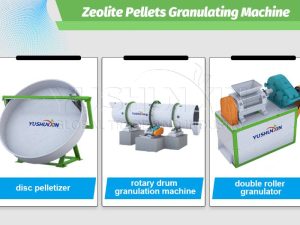
fertilizer pellet machine


Which Factors Increase or Reduce Operating Costs?

After installation, daily operation becomes another part of your project calculation. Energy use, labor requirements, maintenance access and spare parts availability can influence long-term expenses.

For larger projects, an industrial fertilizer granulation plant may include more automation to create a smoother production flow. Features such as automatic feeding, centralized control and integrated packaging can reduce manual handling during operation.

Your local conditions also matter. Available power supply, workshop space and material storage methods may change the final design.

How Can You Plan a More Suitable Fertilizer Granulation Project?

Before requesting a quotation, you can prepare several basic details: your raw material type, daily production target, fertilizer formula, available site area and expected packing method.

A professional fertilizer granulator supplier can then review these conditions and suggest a configuration closer to your actual needs.

The goal is not simply to choose the cheapest equipment. A well-matched granulation plant gives you a clearer production route and helps avoid unnecessary investment in unused functions.

If you want to learn more about equipment selection, process design and complete solutions, Click here for more details.

You can also review the complete fertilizer granulation solutions here: https://www.shunxin.eu/fertilizer-granulation-plant/

Why Dry Granulation Technology Is So Popular in Compound Fertilizer Production

In recent years, dry granulation technology has gained increasing attention in the compound fertilizer industry, especially in NPK fertilizer manufacturing. Compared with traditional wet granulation, dry granulation offers a simpler process, lower operating cost, and greater flexibility for fertilizer producers.

This article explains why dry granulation is widely used in compound fertilizer production and introduces the key equipment behind this technology.

What Is Dry Granulation in Compound Fertilizer Manufacturing?

Dry granulation, also known as roller compaction granulation, is a process that forms fertilizer granules without adding water or liquid binders. Powdered raw materials are compacted under high pressure and then crushed and screened into uniform fertilizer particles.

This dry granulation process for compound fertilizer is especially suitable for moisture-sensitive materials and formulas with high nitrogen content.

Key Reasons Dry Granulation Is Widely Used

One major advantage of compound fertilizer dry granulation technology is its low moisture requirement. Since no drying stage is needed, producers can significantly reduce energy consumption and production time.

Another reason is process simplicity. A typical dry granulation fertilizer line consists of batching, mixing, roller compactor granulation, screening, and packaging. This compact layout makes it ideal for small to medium-scale fertilizer plants.

Dry granulation also offers excellent formula flexibility. Producers can easily adjust NPK ratios and add functional ingredients without worrying about moisture balance, making it suitable for customized compound fertilizers. Click here to get more! 

Roller Compactor Granulator: Core Equipment of Dry Granulation

The heart of dry granulation technology is the roller compactor granulator, also known as a double roller press granulator. This machine uses two counter-rotating rollers to compress fertilizer powder into dense flakes or sheets.

After compaction, the material is crushed and screened to obtain uniform granules. Modern roller compactor fertilizer granulation machines are designed with adjustable pressure, wear-resistant roller skins, and stable transmission systems to ensure consistent granule quality.

This type of dry granulation equipment for compound fertilizer is widely used in NPK fertilizer plants, BB fertilizer lines, and specialty fertilizer production.


Comparing Dry Granulation with Wet Granulation

Compared with wet granulation technology, dry granulation requires less infrastructure, no drying system, and lower labor input. While wet granulation is suitable for organic-rich formulas, dry granulation is often preferred for chemical and compound fertilizers due to its efficiency and cost control. Learn more!  

Conclusion

The popularity of dry granulation technology in compound fertilizer production is driven by its energy efficiency, flexible formulation, and simplified process. With the support of reliable roller compactor granulation equipment, fertilizer manufacturers can achieve stable output and scalable production.

As fertilizer markets continue to demand efficiency and customization, dry granulation remains a practical and proven solution for modern compound fertilizer plants. If you need a dry granulation machine, welcome to visit: https://www.fertilizerequipmentprice.com/roller-compactor-granulator-cost/