Producing high-quality carbon-based fertilizers from chicken dung and biochar requires a series of specialized equipment. This blog explores the key machinery involved in the production process, focusing on the specific needs of carbon-based fertilizer manufacturing. By understanding the equipment necessary for this production line, manufacturers can optimize their operations to produce effective and sustainable fertilizers.
What Raw Materials Are Ideal for Carbon-Based Fertilizer Production?
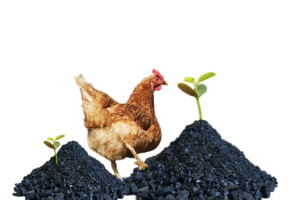
Carbon-based fertilizers primarily utilize organic materials like chicken dung and biochar. Chicken dung is a nutrient-rich waste product that, when properly processed, serves as an excellent base for organic fertilizers. Biochar, produced through the carbonization of organic matter, acts as a powerful soil amendment due to its ability to retain nutrients and improve soil structure.
These materials need careful processing to be transformed into uniform granules or pellets suitable for agricultural use. Granulation is a critical step in this transformation, ensuring that the fertilizer is easy to handle, store, and apply. The combination of chicken dung with biochar enhances the fertilizer’s nutrient profile while also providing the benefits of carbon sequestration, making it a sustainable choice for modern agriculture.
What Machinery Is Essential for Chicken Dung and Biochar Fertilizer Production?
Producing carbon-based fertilizers from chicken dung and biochar requires a range of specialized machinery. Each piece of equipment plays a vital role in converting raw materials into high-quality granules or pellets. Key machines include carbonization equipment, crushing machines, granulators, and drying machines.
Carbonization equipment, such as a carbonization furnace, is used to convert organic waste into biochar. This process involves heating the organic material in an oxygen-limited environment, transforming it into a stable form of carbon that can be used as a fertilizer component. The furnace must operate at precise temperatures to ensure the biochar retains its beneficial properties.

Once biochar is produced, it needs to be mixed with chicken dung and other additives. A crushing machine is typically employed at this stage to break down any large particles, ensuring a consistent and uniform mixture. This step is crucial for achieving even granulation, as it prepares the raw materials for the next stage in the production process.
Granulation machinery, such as a disc granulator or rotary drum granulator, is then used to form the mixture into granules. These granulators work by rotating the material, causing it to form into spherical granules. The granulation process not only shapes the fertilizer but also increases its density, improving storage and application properties.
How Does the Choice of Equipment Impact Fertilizer Quality?
The production of carbon-based fertilizer from chicken manure is directly influenced by the efficiency and precision of the machinery used in its production. For instance, the drying machine plays a critical role in reducing the moisture content of the granules, which is essential for preventing clumping and ensuring long-term storage stability. Efficient drying also enhances the durability of the granules, making them more resistant to breaking during handling and transportation.
Furthermore, the integration of a high-performance packing machine at the end of the production line ensures that the final product is securely packaged, protecting it from environmental factors such as moisture and contamination. This step is essential for maintaining the fertilizer’s quality until it reaches the end-user.
Why Trust Yushunxin Equipment for Carbon-Based Fertilizer Production?
Manufacturers looking to invest in high-quality equipment for producing carbon-based fertilizers can rely on Yushunxin, a professional fertilizer equipment manufacturer. Yushunxin’s machines are designed to meet the specific demands of carbon-based fertilizer production, offering efficiency, reliability, and superior performance. With advanced features and robust construction, Yushunxin’s equipment ensures that producers can achieve consistent results while optimizing their production processes.
In conclusion, producing chicken dung and biochar fertilizer involves a carefully coordinated process that requires specialized equipment. From carbonization and crushing to granulation and drying, each step is crucial for transforming raw materials into effective, high-quality carbon-based fertilizers. By selecting the right machinery, producers can enhance the efficiency of their operations and produce fertilizers that meet the needs of modern agriculture. You can visit: https://www.charbasedfertilizermachine.com/product/chicken-dung-and-biochar-as-fertilizer/