How Does Wet Granulation Technique Enhance the Quality of NPK Fertilizers?

In the realm of agriculture, NPK fertilizers hold the key to robust and fruitful harvests. The quality of these fertilizers plays a pivotal role in ensuring optimal growth and yield. Which one standout technique to enhance NPK fertilizer quality is wet granulation.

At its core, wet granulation involves the agglomeration of fine NPK particles with the addition of a liquid binder to form larger, denser granules. This process has transformed the fertilizer industry, with products such as those offered by Shunxin, a leading manufacturer of wet granulation machines. SX rotary drum and disc granulators are examples of equipment that utilize this technique to produce high-quality NPK fertilizers.

NPK Fertilizer Granulators

One of the primary benefits of wet granulation technique is the improved nutrient content uniformity. In traditional fertilizer blending processes, the particles of different nutrients often vary in size and density, leading to segregation during handling and application. However, through wet granulation, nutrients are uniformly distributed within each granule, ensuring that every application delivers a balanced nutrient supply to the crops. This uniform distribution is a hallmark of the granules produced by Shunxin’s drum granulation machine, which meticulously combines the raw materials in a rolling motion to achieve homogeneity.

Rotary Drum Granulator

Another advantage of NPK fertilizer wet granulation process is the reduction of dust pollution. The fine dust particles that are prevalent in powdered fertilizers can cause respiratory issues for workers and lead to environmental pollution. With wet granulation, these fine particles are encapsulated within the granules, significantly reducing airborne dust. Shunxin’s pan pelletizer, with its state-of-the-art design, ensures that the granulation process is tightly controlled, thus minimizing dust emissions and making the handling of fertilizers much safer.
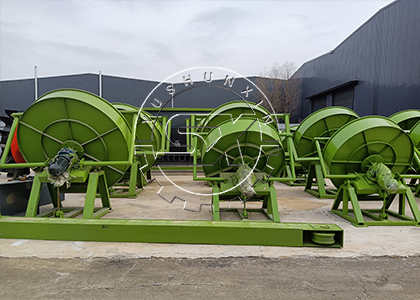
disc pelletizer models

The process of wet granulation also improves the physical properties of the NPK fertilizers. The resulting granules are harder and more resistant to breakage during transport, storage, and application. This durability is crucial in maintaining the integrity of the nutrient composition until it reaches the soil. Shunxin’s npk fertilizer granulation equipment are engineered to produce granules with optimal hardness and size, ensuring that the fertilizers remain effective from production to field application.

Furthermore, wet granulation is a versatile technique suitable for a variety of raw materials. Whether the source is synthetic or organic, the process can be adjusted to suit the specific properties of the input materials. NPK fertilizer wet granulation technology, is designed to handle a wide range of raw materials, making it an ideal choice for fertilizer manufacturers looking to diversify their product offerings.

NPK Fertilizer Manufacturing Process

In conclusion, the wet granulation technique is a game-changer in enhancing the quality of NPK fertilizers. It offers uniform nutrient distribution, reduces dust pollution, improves physical properties, and ensures better nutrient solubility. With companies like Shunxin leading the way with their innovative wet granulation machines, the agricultural businesses can look forward to not only more effective but also more environmentally sustainable fertilizer production. You can visit this website for more details: https://www.fertilizerproductequipment.com/npk-fertilizer-production-technology/


Process of NPK Fertilizer Production

NPK Fertilizer Production is the process of creating three key nutrients required for healthy plant growth: nitrogen, phosphorus, and potassium. These ingredients are combined in a particular ratio to make a fertilizer that provides optimal sustenance for plant growth. Phosphates, potash, and urea are among the basic minerals utilized in the production of NPK fertilizers. The entire NPK fertilizer production line is highly automated and efficient, allowing farmers to produce their own fertilizer without any difficulties.

The production of NPK fertilizers is an important step in ensuring that crops reach their full potential, which is why it is crucial to comprehend the entire process. The following is a detailed description of the NPK fertilizer manufacturing process:

Mixing of Raw Materials

The first step in producing high-quality NPK fertilizer is mixing basic components. During the mixing process, a variety of vital components and minerals are combined to create a strong, nutrient-rich fertilizer. This material mix must be regularly monitored and altered to ensure the highest quality end product. The fundamental components are measured and combined in precise ratios to make a well-balanced fertilizer that supports robust, vigorous plant growth while enhancing soil health. When used properly, NPK fertilizer can increase crop yields, improve soil fertility, and provide a regular source of nutrients for your plants. Here, SX can provide you with quality npk fertilizer making machines to finish it easily and quickly.

Granulation of NPK Fertilizer

This complex procedure is necessary to guarantee that the fertilizer is of fantastic quality and can be utilized effectively. Many pieces of compound fertilizer granulation equipment and cutting-edge technologies are needed for the granulation process, such as a drum granulator, rotary granulator, disc pelletizer, or extruder. Each of these machines creates granules of various sizes, enhancing the flexibility for NPK fertilizers pellets manufacturing.

NPK fertilizer granules produced by drum pelletizer

Drying of NPK Fertilizer

NPK fertilizer drying is a critical stage in manufacturing this key nutrient-rich fertilizer. This is the third stage of NPK fertilizer production, and it is critical to ensure that the fertilizer is of good quality and safe for use on plants and crops. The NPK fertilizer is rigorously dried during this process to reduce moisture content and guarantee it stays in good form for use. This is accomplished by passing the fertilizer through hot air, which removes all of the moisture.  Click here to know more about npk fertilizer processing

Cooling of NPK Fertilizer

The NPK fertilizer is placed in big rotary cooling machine that are outfitted with a slew of fans. The fans cool the NPK fertilizer as it tumbles in the drums. This cooling method guarantees that the NPK fertilizer retains its fine texture and content for longer periods of time. Cooling NPK fertilizers is an important phase in the manufacturing process and is critical for producing high-quality fertilizer that is useful for crops and gardens.

Packaging of NPK Fertilizer

The final step in the production of NPK fertilizer is packaging, which is just as critical as the previous steps. Packaging ensures that the fertilizer is free of contaminants and convenient to transport. The packaging must be strong and resilient enough to withstand the demands of transportation and storage. It must also be appealing in order to captivate potential consumers. Furthermore, the package must be capable of providing clear and accurate information about the product and its application. If you need more details of how to make npk fertilizer, you can visit https://fertilizerequipmentmanufacturer.com/npk-fertilizer-production-line/