Every food factory that dries product faces the same question: which method should we use? Freeze drying, air drying, and dehydration all remove moisture, but they do it in very different ways and produce very different results. Choosing the wrong method can mean poor rehydration, lost color and aroma, or a cost structure that never pays back. This guide compares the three methods and explains how to choose.
How Freeze Drying Works
Freeze drying freezes the product first, then removes the ice through sublimation under vacuum. The freeze-drying process runs in three stages — freezing, primary drying, and secondary drying — and never uses high heat. The product keeps its structure, color, and aroma, and it rehydrates quickly. This is the most expensive method per kilogram, but it produces the highest-quality result and supports premium pricing.
How Air Drying Works
Air drying uses heated air to evaporate moisture from the product. It is simple, widely used, and relatively inexpensive. Hot air drying is common for grains, herbs, and some vegetables, and it works well when the product does not need to keep its original shape. The trade-off is that heat can shrink the product, darken its color, and reduce heat-sensitive nutrients. Rehydration is slower than with freeze drying.
How Dehydration Works
Dehydration uses low-temperature air over a longer time, often in a dehydrator or drying cabinet. It is gentle enough for some products but still relies on evaporation, so it cannot match the structure and aroma retention of freeze drying. Dehydration is popular for small producers because the equipment is affordable and easy to operate, but it is a slow batch process with limited throughput.
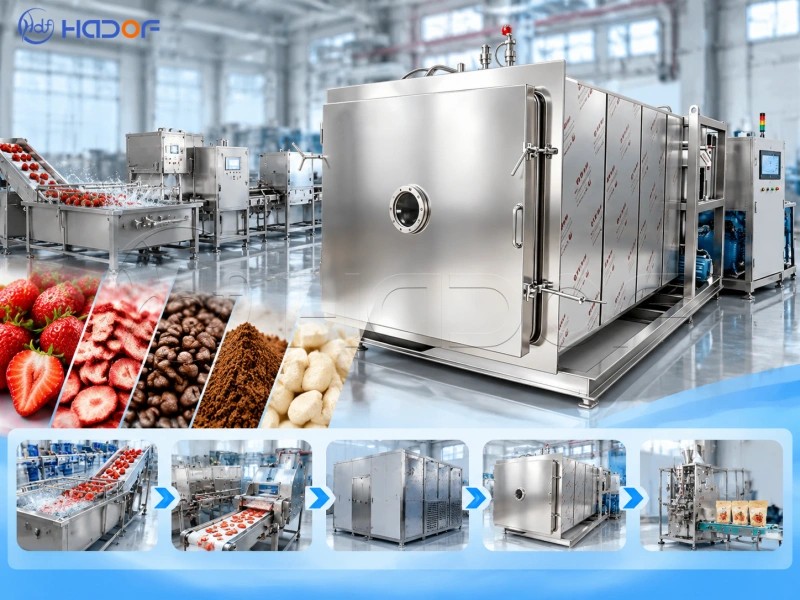
30kg batch Freeze Drying Project
Key Differences
The three methods differ in several important ways:
- Temperature: freeze drying runs cold; air drying and dehydration use heat.
- Quality: freeze drying preserves shape, color, and aroma best; air drying can shrink and darken.
- Rehydration: freeze-dried products rehydrate fastest and most completely.
- Cost: freeze drying is the most expensive per kilogram; air drying and dehydration are cheaper.
- Throughput: air drying can be continuous and fast; freeze drying and dehydration are batch processes.
- Product fit: freeze drying suits high-value pieces; air drying and dehydration suit powders, grains, and simple ingredients.
How the Choice Affects Product Quality
Quality is usually the deciding factor. Freeze-dried products keep their original shape and color, and they rehydrate so quickly that they closely resemble fresh food. Air-dried and dehydrated products are often darker, smaller, and slower to rehydrate, though they can still be perfectly suitable for soups, powders, and ingredients where appearance matters less. Before choosing a method, define what “good quality” means for your product: shape, color, aroma, rehydration speed, or nutrient retention. That definition will point to the right method.
Cost and Throughput Comparison
Freeze drying has the highest processing cost per kilogram because of its long cycles and energy demand, but it supports the highest selling price. Air drying is faster and cheaper, and continuous systems can handle large volumes. Dehydration sits between the two: affordable equipment and gentle drying, but slow throughput. The right comparison is not cost per kilogram alone, but margin per kilogram of finished product. A premium freeze-dried snack can earn more per kilogram than a cheaper air-dried ingredient, even with a higher processing cost.
When to Choose Freeze Drying
Choose freeze drying when quality, aroma, and rehydration are the priorities — for premium fruit snacks, ready-meal ingredients, pet food, seafood, and herbal products. An industrial freeze dryer is the right choice when the product must keep its shape and command a premium price. The higher cost is offset by the product quality and the markets it opens.
When to Choose Air Drying
Choose air drying when the product can tolerate heat, when throughput matters, and when cost per kilogram is the main constraint. An air dryer is often used as a pre-processing step to remove surface water before freezing and drying, which reduces the load on the freeze dryer and improves efficiency.
When to Choose Dehydration
Choose dehydration for small-batch production, simple products, and situations where the capital budget is limited. It is a good way to start, but producers often upgrade to air drying or freeze drying as volume and quality requirements grow.
Can You Combine Methods?
Yes. Many factories use more than one method. Air drying can remove surface water before freeze drying, and dehydration can handle products that do not need premium quality. The key is to match each product to the method that gives the best balance of quality and cost, rather than forcing everything through one process.
Common Mistakes
The first mistake is choosing a method before defining the product and the market. The second is comparing only equipment price and ignoring operating cost and product quality. The third is using air drying for products that need to keep their shape and aroma. The fourth is under-sizing the production line around the dryer. Finally, skipping trial batches makes it hard to confirm that the method produces the quality customers expect.
Conclusion
Freeze drying, air drying, and dehydration are different tools for different products. Freeze drying delivers the highest quality and supports premium prices; air drying and dehydration are cheaper options for products that can tolerate heat. HADOF Food Processing Manufacture supplies freeze dryers, air dryers, and complete production lines, and can help you choose the right method for your product. Tell us what you make and how much you need, and we will help you plan the right process.